



HMEI Established Positions
HMEI offers fully funded internships in the natural sciences, social sciences, humanities and engineering—here on campus, and in the field from Colorado to Costa Rica. Princeton undergraduates from all departments are invited to apply. HMEI covers international flights and provides a weekly stipend.
Princeton first-year students, sophomores and juniors are invited to apply for up to three positions. HMEI Internships are full-time commitments and fully funded.
Visit our Past Interns page to read about students’ experiences in their own words. Find process and requirement details here.
If you experience any technical difficulties or have any questions, please email envintern@princeton.edu. Follow HMEI on Instagram for updates on internships and more.
Summer 2027 Application Deadlines
- November 23, 2026 — Applications open in Global Programs System (GPS)
- January 12, 2027, 2pm — Application deadline for HMEI Established Internships
- February 18, 2027 – Application deadline for Student-Initiated Internships via Student Funding (SAFE).
Applications for the internships below are closed.
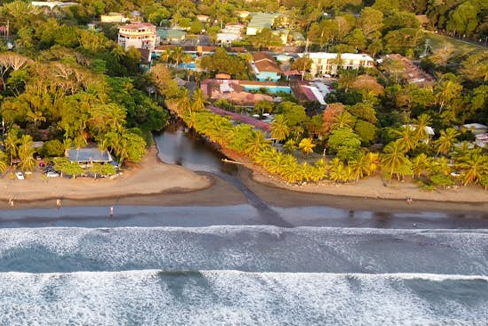
Coastal Development, Communities, and Conservation in Costa Rica
Conservation Science & Urban Ecology Lab (Rivera Lab)
Costa Rica
International
Urban Sustainabilty
Fieldwork
Roughly 40% of the world’s population lives within 100 km of the coast and 15% live within 10 km. Researchers predict a continued and accelerating growth in human coastal populations with subsequent anthropogenic impacts on Earth’s systems. Given rapid global change, there are calls for more holistic approaches to coastal development that explicitly consider the aspirations and needs of local communities alongside biodiversity conservation goals. Costa Rica, a small country in Central America, plays a leading role in the conservation arena at national and international scales. Coastal development in the country is rapidly increasing, bringing with it significant environmental and…
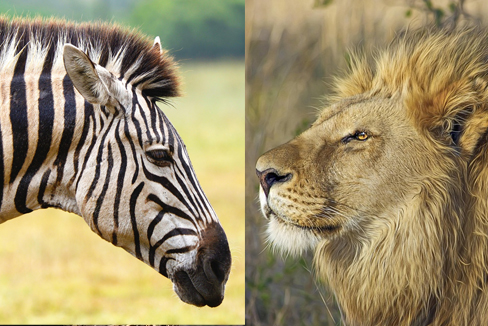
Computational Biology to Support Lion and Zebra Conservation
Rubenstein Lab, Princeton University
Mpala Research Centre, Kenya
International
Biodiversity and Conservation
Computational Modeling/Data Analysis, Fieldwork
This project investigates how wild lions and zebra herds coordinate their movements during hunts and escapes, combining ecological fieldwork with cutting-edge drone and computer vision technologies. Beyond revealing the mechanics of predator–prey interactions, the work aims to support lion conservation and coexistence strategies by improving our understanding of how hunting behavior adapts to environmental change and human pressures. We will address three central ecological questions: Do wild lions follow the same geometric pursuit strategies observed in controlled captive settings, or do natural conditions produce more adaptive and flexible hunting tactics? Do lions coordinate as a team—exhibiting spatial organization or role…

Creating a Timeline: Past Abundance, Instances of Loss, and Stories of Recovery in New Jersey and the Greater Region
Princeton University Library, Science and Engineering
Princeton University
On campus
Biodiversity and Conservation
Literature Review/ Data Curations
The primary goal of the interns would be to search for, discover, and select significant events in New Jersey’s ecological and conservation history in order to populate a state or regional timeline for Princeton’s iteration of Maya Lin’s memorial: “What is Missing?”. These events would demonstrate instances of species loss and loss of abundance, stories of restoration and recovery, and significant conservation milestones.

Decoding the Ocean’s Laughing Gas: N₂O Emissions in the Pacific Ocean
Resplandy Research Group
Princeton University
On campus
Climate and Environmental Science
Computational Modeling/Data Analysis
The ocean is a major source of nitrous oxide (N₂O), a potent greenhouse gas and ozone-depleting substance that influences climate and life on Earth. Most intense emissions originate from oxygen minimum zones (OMZs) in the Pacific Ocean – ocean areas with vanishingly low oxygen levels. This project tackles a puzzle: why do the OMZs in the North and South Pacific exhibit dramatically different N₂O emissions? We propose to compare N₂O emissions in observations and multiple ocean numerical simulations and evaluate the drivers that explain the differences between these regions.
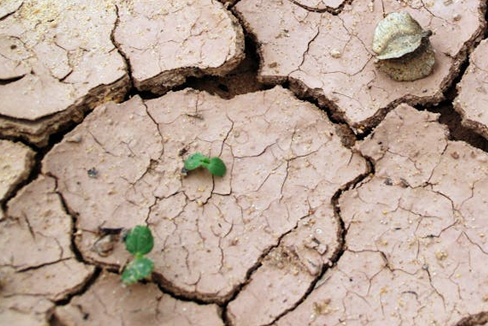
Designing Synthetic Microbial Communities to Alleviate Drought Stress in Plants
Conway Lab, Princeton University
Princeton University
On campus
Climate and Environmental Science
Labwork
Plants grow in intimate association with a microbiome, a collection of microbes above- and below-ground that significantly impact the growth, productivity, and resilience of the plant host. As climate change increases the frequency and severity of drought, understanding plant-microbe interactions during drought stress is a growing area of study. The Conway Lab seeks to identify bacteria that alleviate drought stress in plants and understand the genetic mechanisms of these plant-microbe interactions. We have identified several candidate bacterial strains that are enriched in corn and soybean roots during drought. Using a collection of soil bacteria, we will construct synthetic microbial communities,…

Drivers and Biogeochemical Impacts of Atlantic Sargassum Blooms
Deutsch Lab
Princeton University
On campus
Climate and Environmental Science
Computational Modeling/Data Analysis
In recent years, massive blooms of seaweed have spread across the tropical Atlantic. These floating mats of Sargassum can provide food and habitat for marine life, but very large blooms may also disrupt marine ecosystems and affect coastal environments. Satellites can detect where Sargassum appears, but we still do not fully understand what caused these blooms to become so pervasive or how they influence the ocean below the surface. This project will combine satellite maps with data from autonomous ocean observing platforms that dive through the water and record temperature, oxygen, and nutrients. The student will map where Sargassum occurs,…

Earth’s First Animal-built Reefs – Mapping the Cambrian Explosion with Hammer, Camera, and Machine Learning
Maloof Earth History Group
Flinders Ranges, Australia; Princeton University campus
International, On campus
Biodiversity and Conservation
Fieldwork, Labwork
Today, coral reefs are the cradle of marine biodiversity, but very little is know about the role metazoan reefs played in more ancient animal evolution and extinction. ~520 million years ago, virtually all of the animal body plans still around today were invented in one very short period of time called the Cambrian explosion. In this internship, you will test the hypothesis that the first animal-built reefs roughened the seafloor, creating new habitat, nutrient supplies, and shelter, driving the unique Cambrian radiation of diversity and disparity, and setting off the next 500 million years of coevolution between animals and climate…
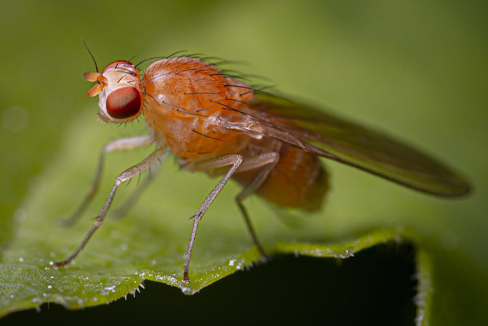
Eco-Evolutionary Dynamics in Diverse Communities
Levine Lab, Princeton University
Princeton University
On campus
Climate and Environmental Science
Fieldwork, Labwork
In recent work, we have shown that in pairs of competing orchard flies, species evolve in response to competition with one another, and this can powerfully affect species’ competitive trajectories and potential to coexist. Whether the knowledge of these eco-evolutionary dynamic processes we have gained from studying pairs applies in more diverse communities is unknown, not just in our system but in the field as a whole. In this project, we will perform mesocosm experiments in which focal species compete in pairs with a suite of different competitor species. Measuring evolution across these many pairs will give us expectations for…
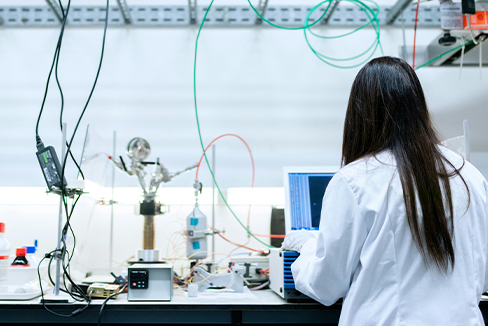
ElectroCapture: Advanced Electrochemical Pathways for CO₂ Removal and Conversion
Hatzell Research Group
Princeton University
On campus
Energy
Computational Modeling/Data Analysis, Labwork
This research project explores cutting-edge electrochemical technologies aimed at addressing one of the world’s most pressing challenges — carbon dioxide removal and sustainable carbon utilization. The project focuses on developing novel materials, electrodes, and systems that enable direct air capture (DAC) of CO₂ and its electrochemical conversion into valuable fuels and chemicals. By integrating materials science, catalysis, and electrochemical engineering, this work seeks to advance scalable negative emissions technologies that can help achieve global carbon neutrality. Participants will gain hands-on laboratory experience in materials synthesis, electrochemical testing, and product characterization, working with state-of-the-art equipment and guided mentorship. All training will…
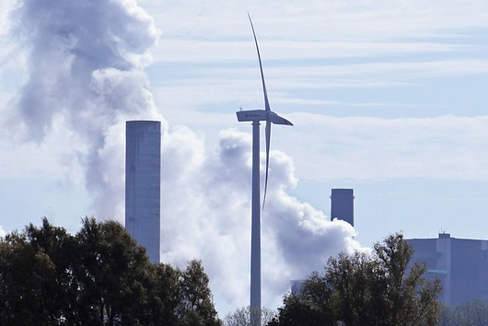
Evaluating Energy Demand in a Warming Climate and Its Reversibility Under CO2 Removal Scenarios
Vecchi Research Group
Princeton University
On campus
Climate and Environmental Science
Computational Modeling/Data Analysis
Anthropogenic climate change is altering global and regional temperature distributions, with direct consequences for energy demand associated with space heating and cooling. This project will analyze how these demands—quantified using Heating Degree Days (HDD) and Cooling Degree Days (CDD)—evolve under both future warming scenarios and subsequent CO2 removal pathways. Using global climate model output, the intern will quantify changes in HDD and CDD across baseline (pre-industrial or present), peak-warming, and climate-restoration periods. Preliminary analyses indicate substantial regional asymmetries: in many regions of the Global South, increasing cooling demand may lead to higher economic and infrastructure burdens, while parts of the…

