



HMEI Established Positions
HMEI offers fully funded internships in the natural sciences, social sciences, humanities and engineering—here on campus, and in the field from Colorado to Costa Rica. Princeton undergraduates from all departments are invited to apply. HMEI covers international flights and provides a weekly stipend.
Princeton first-year students, sophomores and juniors are invited to apply for up to three positions. HMEI Internships are full-time commitments and fully funded.
Visit our Past Interns page to read about students’ experiences in their own words. Find process and requirement details here.
If you experience any technical difficulties or have any questions, please email envintern@princeton.edu. Follow HMEI on Instagram for updates on internships and more.
Summer 2027 Application Deadlines
- November 23, 2026 — Applications open in Global Programs System (GPS)
- January 12, 2027, 2pm — Application deadline for HMEI Established Internships
- February 18, 2027 – Application deadline for Student-Initiated Internships via Student Funding (SAFE).
Applications for the internships below are closed.
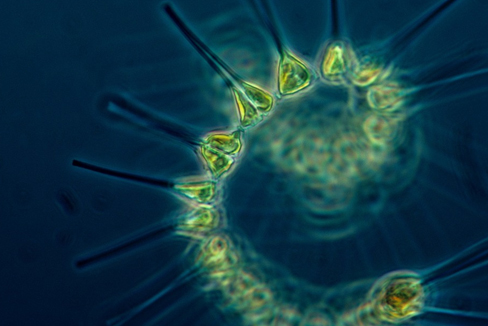
The Role of Nitrification to Support Primary Production in the Ocean
Ward Lab, Department of Geosciences, Princeton University
Princeton University
On campus
Climate and Environmental Science
Labwork
Of the major nutrients required for primary production, nitrogen is the one that is usually in short supply in ocean surface waters, such that nitrogen can be said to limit primary production. There are two sources of “new” nitrogen to support the growth of photosynthetic phytoplankton in the surface ocean. 1) Nitrate (NO3-) is produced by the process of nitrification, the oxidation of ammonium (NH4+) to nitrite (NO2-) and then to nitrate. 2) Nitrogen fixation, in which dinitrogen gas (N2) is converted to ammonium by microbial nitrogen fixers, makes the vast reservoir of atmospheric dinitrogen accessible to phytoplankton, which mostly…

The Role of Storms in Southern Ocean Air-sea Heat and Carbon Exchange
University of Edinburgh, Ocean Dynamics Lab
Edinburgh, UK
International
Climate and Environmental Science
Computational Modeling/Data Analysis
The Southern Ocean accounts for a significant portion of the total ocean uptake of heat and carbon. Therefore, air-sea fluxes in this region are crucial to the entire global climate system. However, collecting observations in this remote and extreme environment is extremely difficult. The longest record of sustained air-sea flux measurements in the Southern Ocean is from a flux mooring south of Tasmania. This dataset is important because it captures variations in air-sea heat and carbon fluxes across a wide range of time scales. Preliminary analysis suggests that extreme heat loss and carbon outgassing events can be tied to synoptic…
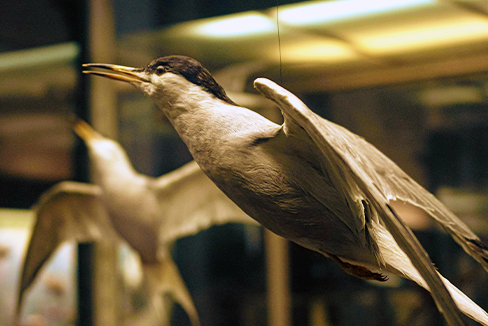
The Science of Specimens: Behind the Scenes in the Princeton Bird Collection
Stoddard Lab
Princeton University
On campus
Biodiversity and Conservation
Fieldwork, Labwork
Students will have the opportunity to assist with curatorial work and research in the Princeton Bird Collection, a remarkable collection of approximately 6,000 taxidermy bird specimens that will move to a new facility in Briger Hall in 2026. Working alongside postdoctoral researchers, students will help update and organize the collection, creating a state-of-the-art, geo-referenced inventory of specimens in the process. Students will also have the opportunity to assist with hands-on research, including advanced 3D imaging of specimens, and will help design outreach and education activities for the Princeton University community and beyond.

Toward Simultaneous Use of Transition Metal Dichalcogenide and Organic Semiconductors for Hybrid Systems
Rand Lab
Princeton University
On campus
Energy
Labwork
This project will explore both organic and 2D transition metal dichalcogenide (TMD) semiconductors – and in particular their interfaces – for heterogeneous photoredox catalysis. Organic chromophores have been widely developed for this application, but have several limitations that TMDs might be able to address. For example, hybrids of these two materials that operate in close analogy with photosynthetic systems might be able to lower the rather large exciton binding energies of organics that hold back applicability. Also, the higher mobility of excitons and charge carriers in TMDs could aid recycling of catalysts in heterogeneous schemes.

Toxic Metal Contamination of Favorite Berries
Myneni Research Group
Princeton University
On campus
Food and Agriculture
Fieldwork, Labwork
Toxic element contamination of soils from human induced activities is of a major global environmental problem. Many of these elements/metals, such as arsenic, selenium, cadmium, mercury, lead, are common in such contaminated soils. Under low soil pH and high organic matter content, many of these elements become highly soluble and enter the food web, first through the plants and then ultimately to humans. Interestingly the geochemical behavior of many of these toxic metals is similar to those of important plant nutrients, such as calcium, iron and phosphorous, and plant does not distinguish these elements well. Among plants, blue berries (Vaccinium…
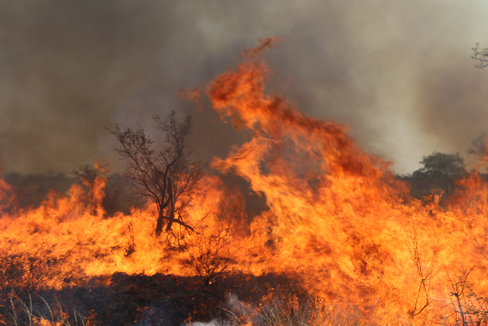
Trait Responses to Fire Frequency Gradients Across Eastern US Savannas and Forests
Carla Staver group
Eastern US; Multiple sites ; Princeton University
Off-campus US, On campus
Climate and Environmental Science
Fieldwork
This project will compare the composition of fire related traits in forests and savannas in the eastern United States. This region spans a diversity of ecosystems and associated fire regimes, from the high fire frequency, highly flammable long-leaf pine savannas to lower fire frequency, but still fire-tolerant hardwood oak-hickory forests, and to mesic, fire-suppressing forests. Depending on the fire regime they experience, tree species across the region likewise possess a range of traits for living with fire, ranging from actively promoting fire spread to actively suppressing it. This project will combine species composition data from long-term fire experiments across the…

U-Th Dating of Avian Eggshells
Niespolo Lab
Princeton University
On campus
Climate and Environmental Science
Computational Modeling/Data Analysis, Labwork
Sub-Saharan Africa hosts the earliest known evidence of modern human behaviors starting ~300 thousand years ago (ka)1–3, while the transition to and proliferation of more complex cultural material may also co-occur with the successful geographic range expansion of H. sapiens4–6 of out Africa. However, the role of H. sapiens in bringing cultural innovation to Eurasia is debated in part due to the lack of precise dating on either human fossils and/or archaeological sites. While many sites hosting these technologies remain poorly dated at present, they also host ostrich eggshells (OES) which may be dated by a novel application of uranium…

Understanding Low-pressure near Vacuum Gas Flows
Sun Group, Tsinghua University
Beijing, China
International
Energy
Labwork
Understanding low-pressure/near-vacuum gas flows is important for many environmental science and technology. For example, the upper atmosphere is a typical low-pressure environment, whose study helps clarify transport and diffusion phenomena of trace gases that play key roles in regulating ozone and the greenhouse effect. Closer to ground level, understanding low-pressure gas flow can enable more precise air quality monitoring for safety and health, as well as monitoring and control of pollutants in extreme or enclosed environments, such as in semiconductor production processes. Finally, many emerging environmental technologies involve low-pressure gas flows, such as carbon capture and storage, vacuum-based waste treatments,…
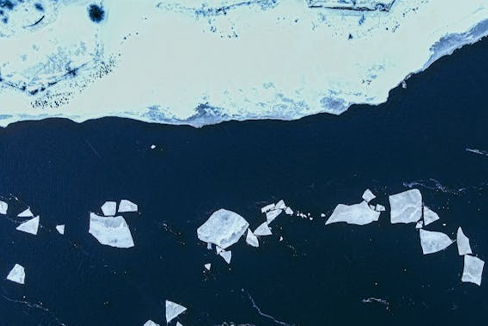
Variations in Ocean Heat Transport Toward the Antarctic Ice Sheet
University of Edinburgh, Ocean Dynamics Lab
Edinburgh, UK
International
Climate and Environmental Science
Computational Modeling/Data Analysis
Antarctic Ice Sheet (AIS) melting has accelerated in recent decades and could contribute up to one meter of global sea level rise by the end of the century. AIS melt is primarily driven by oceanic heat. In particular, by warm, offshore waters that intrude toward the ice sheet in troughs that cut across the continental shelf. Therefore, these warm water intrusions are very variable in space and in time. Therefore, understanding what controls the timing and frequency of these heat intrusions is crucial to understanding fluctuations in ice sheet melting, and the vulnerability of the AIS under climate change. This…
Vegetation: A Link Between Carbon and Water Cycles
Euro-Mediterranean Center on Climate Change (CMCC)
Bologna, Italy
International
Water
Computational Modeling/Data Analysis
Vegetation phenology, which refers to the study of cyclic and seasonal vegetation events and their relationship with climate, is essential for understanding the behaviour of terrestrial ecosystems and their connection to broader processes and variability within the climate system. Changes in vegetation phenology can have a significant impact on the exchange of carbon, water, and energy between the land surface and the atmosphere, thereby influencing surface conditions, ecosystem function, and climate feedbacks. At the same time, soil temperature and moisture conditions are among the key drivers of plant phenology, meaning that accurately representing these variables is critical for the correct…
