




Trait Responses to Fire Frequency Gradients Across Eastern US Savannas and Forests
Carla Staver group
Eastern US; Multiple sites ; Princeton University
Climate and Environmental Science
Fieldwork
January 7, 2026 2:00 pm EST
Internship / Research Project Information
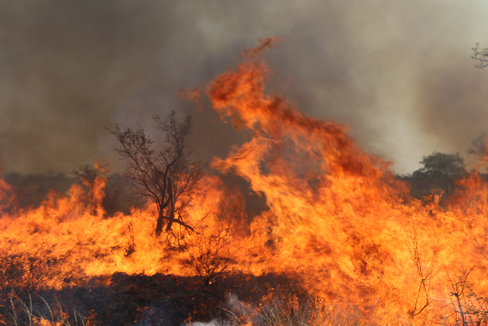
This project will compare the composition of fire related traits in forests and savannas in the eastern United States. This region spans a diversity of ecosystems and associated fire regimes, from the high fire frequency, highly flammable long-leaf pine savannas to lower fire frequency, but still fire-tolerant hardwood oak-hickory forests, and to mesic, fire-suppressing forests. Depending on the fire regime they experience, tree species across the region likewise possess a range of traits for living with fire, ranging from actively promoting fire spread to actively suppressing it. This project will combine species composition data from long-term fire experiments across the eastern United States with trait data to understand how species facing different fire regimes respond to fire, both within and across ecosystem types. The intern will accompany a graduate student who will lead fieldwork at multiple research stations across the eastern United States. The internship will therefore involve travel between sites (most likely via driving). Some lab work may also occur at Princeton.
The student will work closely with a graduate student to catalog which species need to be sampled, identify tree species, and sample traits including bark thickness (inner and outer), wood density, resprouting ability, bud protection, specific leaf area, and litter depth, bulk density and moisture. There is also the potential that some work will need to be carried out in labs either at the research stations or at Princeton, primarily drying and weighing of samples.
Student will become familiar with the fire regimes and fire-tolerant ecosystems of the eastern United States, gain experience in sampling tree traits and an understanding of the roles of different traits in helping plants survive fires. They will also learn to identify many of the common tree species of the eastern United States.
Faculty Sponsor(s) / Host Information
Carla Staver Group
Ecology and Evolutionary Biology (EEB)
Internship Requirements
EEB 211 or GEO 202/203
Ability to work outside in challenging conditions, particularly heat and with insects. Works well with others, particularly in small groups.
Ability to spend most of the day outdoors moving around.
Student should have clothing appropriate for outdoor work in the summer. Camping equipment would be a bonus but can be borrowed.
- Selected students are required to meet with internship mentors prior to the internship start date. Reading materials may also be provided.
- Students are responsible for securing accommodations for the duration of their internship. On-campus summer housing is typically available the first week of June until the first week of August (details to become available in Spring 2026). If the internship falls outside of on-campus housing availability, students will need to secure alternate housing.
- Selected students are required to register their travel with the University through the Enroll My Trip system. Information related to the University’s Permissible Travel Guidelines can be found here. Funding is contingent on travel registration and approval.
Internship / Project Supervisor(s)
Marie Norwood, Ph.D Candidate, EEB
Internship Dates And Funding Information
800
1
8
June 1, 2026 to July 31, 2026