



HMEI Established Positions
HMEI offers fully funded internships in the natural sciences, social sciences, humanities and engineering—here on campus, and in the field from Colorado to Costa Rica. Princeton undergraduates from all departments are invited to apply. HMEI covers international flights and provides a weekly stipend.
Princeton first-year students, sophomores and juniors are invited to apply for up to three positions. HMEI Internships are full-time commitments and fully funded.
Visit our Past Interns page to read about students’ experiences in their own words. Find process and requirement details here.
If you experience any technical difficulties or have any questions, please email envintern@princeton.edu. Follow HMEI on Instagram for updates on internships and more.
Summer 2027 Application Deadlines
- November 23, 2026 — Applications open in Global Programs System (GPS)
- January 12, 2027, 2pm — Application deadline for HMEI Established Internships
- February 18, 2027 – Application deadline for Student-Initiated Internships via Student Funding (SAFE).
Applications for the internships below are closed.

A New Source of Atmospheric Nitrous Oxide from the Ocean
Ward Lab
Princeton University
On campus
Climate and Environmental Science
Labwork
Nitrous oxide (N2O) is a potent greenhouse gas and the number one destroyer of ozone in the stratosphere. About 20 – 25% of the total atmospheric emissions come from the ocean and most of that source has always been assumed to be due to microbial metabolism. However, a new source has recently been discovered: Ultraviolet light catalyzes the production of nitrous oxide in surface waters, both oceanic and freshwaters (lakes and reservoirs). This process is called photochemodenitrification (PCD) and it is totally abiotic, i.e., not controlled by microbes. Its discoverer, Dr. Elizabeth Leon-Palmero, will be the lead scientist on this…
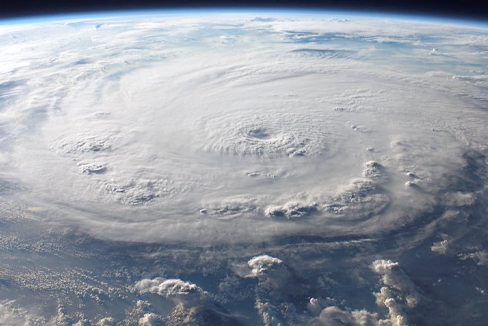
Analyzing the ECMWF Ensemble Forecasts Data of Intense Events Originated in the Southern European Seas
Euro-Mediterranean Center on Climate Change (CMCC)
Bologna, Italy
International
Climate and Environmental Science
Computational Modeling/Data Analysis
CMCC (Euro-Mediterranean Center on Climate Change) within the Copernicus Marine Service, provides daily ocean dynamics analysis and forecasts up to 10 days forced by the ECMWF atmospheric analysis and forecast data. The two operational systems developed and maintained by CMCC are: the MedFS (Mediterranean Forecasting System) and the BSFS (Black Sea Forecasting system), both based on a 2-way coupled wave-current (NEMO-WW3) deterministic system. The MedFS showed good skills in predicting the storm surge associated with extreme atmospheric events (Medicane Ianos – August 2020, Venice acqua alta – November 2022). The forecasting system will evolve towards an oceanic forecasts ensemble forced…
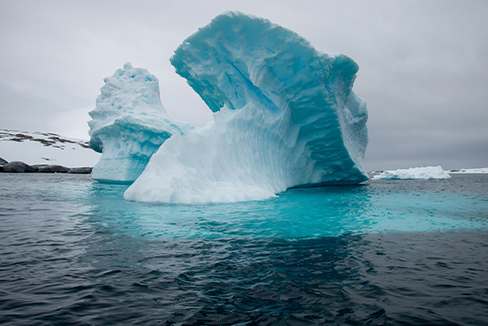
Antarctic Bottom Water Production During the Past 2 Million Years – A Study of Marine Sediments from Cape Darnley, East Antarctica
Sigman Research Laboratory
Princeton University
On campus
Climate and Environmental Science
Labwork
Antarctic Bottom Water (AABW) is composed of dense (cold and salty) seawater produced uniquely around Antarctica. Its formation is a driver of Earth’s thermohaline ocean circulation, redistributing ocean heat around the globe. AABW forms in only four known locations around the Antarctic margin, and was recently discovered off Cape Darnley in East Antarctica. Until early 2023, no sediment cores had been collected that provide records of past changes in AABW production offshore Cape Darnley through geologic time. CANYONS voyage to the East Antarctic margin (January-March 2023) recovered a sediment core from the slope off Cape Darnley to provide palaeoceanographic records…
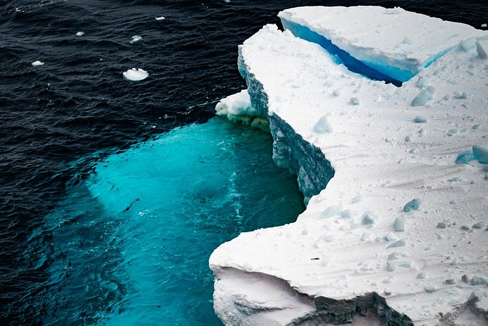
Arctic Sea Ice Diversity in CMIP Climate Models
Euro-Mediterranean Center on Climate Change (CMCC)
Bologna, Italy
International
Climate and Environmental Science
Computational Modeling/Data Analysis
Arctic sea ice is a key component of the Earth’s climate system, strongly influencing heat exchange, ocean circulation, and surface albedo. Its seasonal and interannual variability plays a critical role in shaping polar and global climate feedbacks. However, climate models still struggle to capture the full diversity of sea ice states — from newly formed thin ice to thick multiyear ice — and their spatial and temporal evolution. The Coupled Model Intercomparison Project Phase 6 (CMIP6) provides an extensive suite of global climate simulations that allows researchers to evaluate how sea ice diversity is represented across models and how it…

Basement to Roof in Geosciences for the Environment (R)
Global Geophysics
Princeton Unversity
On campus
Climate and Environmental Science
Computational Modeling/Data Analysis
Populate the roof and the basement lab with geophysical (including meteorological, seismic, geodetic, radiometric, etc) instruments and analyze the incoming data stream, and render it useful for science and accessible for public consumption.
Biodiversity Recovery Monitoring in a Restored Floodplain Ecosystem
Duke Farms
Hillsborough, NJ
Off-campus US
Biodiversity and Conservation
Fieldwork
The Ecology and Nature Tech Solutions team at Duke Farms is developing a long-term biodiversity monitoring program to assess ecological recovery following the Raritan River Floodplain Reforestation Project in Hillsborough, New Jersey. This 112-acre restoration site, established in partnership with the U.S. Fish and Wildlife Service and the New Jersey Department of Environmental Protection, is transforming former agricultural fields into a complex network of forested wetlands, vernal pools, and riparian habitats. For this internship, the student will assist researchers in implementing baseline biodiversity surveys to document responses to restoration efforts. The work will include field sampling of multiple taxa, such…
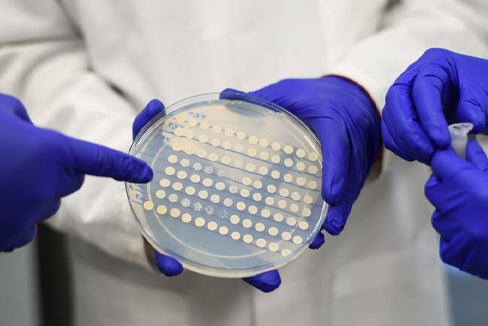
Bioengineered Yeast to Convert CO2 into Plastic Monomers
Avalos Lab, ODBI Bioengineering Institute
ODBI Bioengineering Institute, Princeton University
On campus
Energy
Labwork
Yeast engineering to convert CO2 to plastics.
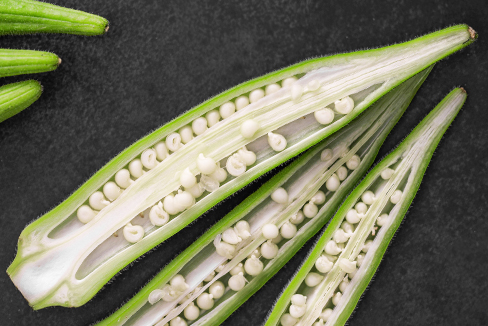
Breeding Okra (Abelmoschus esculentus) to Improve Seed Oil Content and Identifying Related Genetic Markers
Conway Lab, Princeton University
Princeton University
On campus
Food and Agriculture
Fieldwork, Labwork
Okra (Abelmoschus esculentus) is a climate-resilient crop that can tolerate many harsh growing conditions (drought, heat, etc.). In addition to using immature okra pods as food, okra seed oil is of interest as an alternative cooking and food oil. However, the current average okra oil content is ~20%, which is lower than that in some common oilseed crops, e.g. rapeseed (~40%). The goal of this project is to breed okra by crossing diverse parent lines to improve seed oil content in offspring lines, develop methods for measuring and characterizing the oil in okra seeds using Time Domain-Nuclear Magnetic Resonance (TD-NMR),…
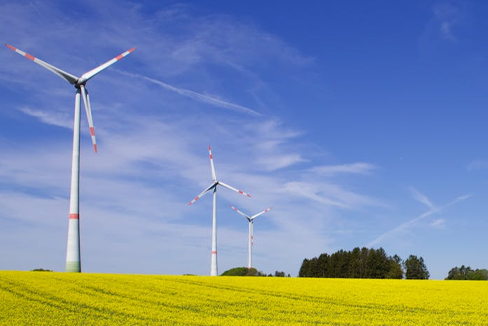
Buildout of an Industrial Decarbonization Dataset for Macro-Energy Systems Modeling
ZERO Lab
Princeton University
On campus
Energy
Computational Modeling/Data Analysis
Industrial decarbonization represents a new frontier in energy-systems research, posing unique challenges distinct from the electricity and transportation sectors. Modeling the industrial decarbonization pathway is essential but challenging, as the term “industry” includes thousands of distinct subsectors, each with complex material flows, and diverse process technologies. A critical barrier to advancing industrial decarbonization modeling is data availability. Many of the datasets required to represent industrial processes (including investment and operational costs, facility or process unit age, energy balances, and production data) are proprietary or inconsistently reported, and may vary widely between plants. Without this information, it is impossible to realistically…
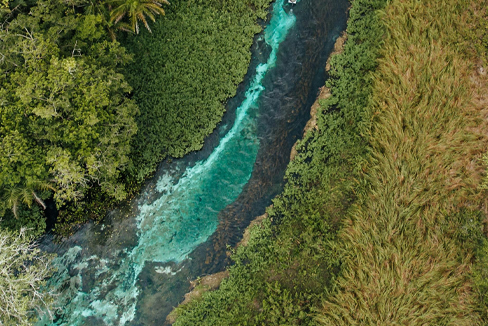
Climate Change, River Nutrient Loading, and Coastal Dead Zones
Resplandy Research Group
Princeton University
On campus
Climate and Environmental Science
Computational Modeling/Data Analysis
Coastal “dead zones”, areas with dangerously low oxygen levels, are expanding worldwide due to the combined effects of climate change and human-driven nutrient enrichment. This project will investigate how river nutrient loading influences seasonal and long-term oxygen depletion. Using high-resolution ocean biogeochemistry model simulations and observational datasets, the student will quantify patterns of deoxygenation and identify hotspots of emerging hypoxia linked to major river systems such as the Amazon and Ganges-Brahmaputra rivers.
