




Arctic Sea Ice Diversity in CMIP Climate Models
Euro-Mediterranean Center on Climate Change (CMCC)
Bologna, Italy
Climate and Environmental Science
Computational Modeling/Data Analysis
January 7, 2026 2:00 pm EST
Internship / Research Project Information
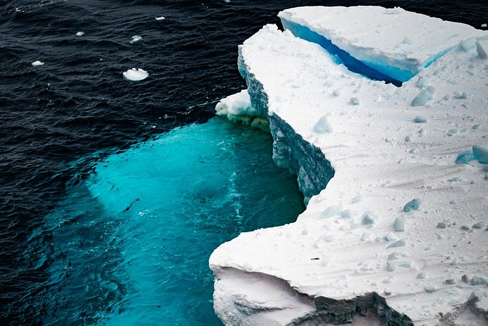
Arctic sea ice is a key component of the Earth’s climate system, strongly influencing heat exchange, ocean circulation, and surface albedo. Its seasonal and interannual variability plays a critical role in shaping polar and global climate feedbacks. However, climate models still struggle to capture the full diversity of sea ice states — from newly formed thin ice to thick multiyear ice — and their spatial and temporal evolution.
The Coupled Model Intercomparison Project Phase 6 (CMIP6) provides an extensive suite of global climate simulations that allows researchers to evaluate how sea ice diversity is represented across models and how it compares with satellite and reanalysis data. A systematic analysis of Arctic sea ice types (e.g., young, multi-year, seasonal, consolidated ice) in CMIP6 can help identify model biases, understand the causes of inter-model spread, and guide improvements in the parameterization and coupling of sea ice with the ocean and atmosphere within Earth System Models. Such insights are essential for enhancing the reliability of future climate projections in polar regions.
The student will carry out an in-depth analysis of CMIP6 sea ice outputs, focusing on all available sea ice properties, and applying a range of ice classification approaches, from traditional schemes based on ice concentration to more complex and innovative definitions that will be developed and implemented during the project. The student will learn to process large NetCDF datasets, perform statistical and spatial analyses, and visualize results through maps, time series, and derived metrics using Python-based tools (e.g., xarray, pandas, matplotlib, cartopy, and CDO). The student will investigate inter-model differences within the CMIP6 ensemble to assess how model physics and air-ice-sea interaction influence sea ice diversity and variability. A key part of the work will involve comparing model outputs with satellite-based observational products (e.g., ESA CCI, NSIDC) to evaluate model performance and identify systematic biases in the representation of different sea ice types. The internship will also include the design of a new classification framework for sea ice based on physical or thermodynamic properties, and its application to selected CMIP6 simulations and future climate scenarios. Depending on the student’s interests, the design of this framework may explore the use of AI techniques for the automatic identification of sea ice types and patterns from CMIP6 outputs or observational datasets.
As a result of participating in this internship, the student will acquire both technical and scientific skills relevant to the analysis of climate model data and the study of sea ice in the Arctic. The internship will provide practical experience in working with large climate datasets, using programming tools for data processing, visualization, and statistical interpretation. The student will learn how to analyze spatial and temporal patterns in sea ice variability and how to present the results effectively through visual and written outputs.
From a scientific perspective, the student will gain a solid understanding of the processes that control the formation and evolution of Arctic sea ice and how these are represented in state-of-the-art climate models. Overall, the internship will help the student build a foundation in climate data analysis, scientific reasoning, and the interpretation of model-based research in polar climate studies.
Faculty Sponsor(s) / Host Information
Dorotea Iovino
Institute for Earth System Predictions (IESP) - Earth System Modelling and Data Assimilation Division
Internship Requirements
Applicants should have an academic background in climate science, environmental science, oceanography, physics, meteorology, geophysics, or a related field. A general understanding of Earth System dynamics and the role of sea ice in the climate system is desirable but not mandatory.
Students should have a basic understanding of data analysis and programming, ideally in Python. Some familiarity with data visualization, statistical methods, or the handling of large datasets (e.g., in NetCDF format) would be advantageous. An interest or some prior exposure to AI techniques is considered an asset.
Workstations are available on site, although students may use their own laptops for data analysis and coding activities. All required software and packages will be open-source, and installation instructions will be provided at the start of the internship. Access to high-performance computing (HPC) resources or remote servers will be arranged if needed for processing large CMIP6 datasets.
- Students will meet with internship mentors in the spring, prior to the internship start date. Reading materials may also be provided.
- Student(s) are responsible for securing accommodations for the duration of the internship.
- Students will need to consult UHS for travel medical requirements. It is the responsibility of the student to be aware of entry requirements and to obtain any necessary documentation. Valid passport required. Students are required to register their travel with the University through Enroll My Trip. Information related to the University’s Permissible Travel Guidelines can be found here. Funding is contingent on travel registration and University approval.
International Travel Requirements
Yes
No
No
Internship / Project Supervisor(s)
Dorotea Iovino, Senior scientist, CMCC
Francesco Cocetta, Postdoctoral researcher, CMCC
Internship Dates And Funding Information
$800 (plus int’l travel award)
1
8
June 1, 2026 to July 24, 2026