



HMEI Established Positions
HMEI offers fully funded internships in the natural sciences, social sciences, humanities and engineering—here on campus, and in the field from Colorado to Costa Rica. Princeton undergraduates from all departments are invited to apply. HMEI covers international flights and provides a weekly stipend.
Princeton first-year students, sophomores and juniors are invited to apply for up to three positions. HMEI Internships are full-time commitments and fully funded.
Visit our Past Interns page to read about students’ experiences in their own words. Find process and requirement details here.
If you experience any technical difficulties or have any questions, please email envintern@princeton.edu. Follow HMEI on Instagram for updates on internships and more.
Summer 2027 Application Deadlines
- November 23, 2026 — Applications open in Global Programs System (GPS)
- January 12, 2027, 2pm — Application deadline for HMEI Established Internships
- February 18, 2027 – Application deadline for Student-Initiated Internships via Student Funding (SAFE).
Applications for the internships below are closed.

Modeling Decarbonization Pathways for South Korea
Peng Research Group / Energy Systems Analysis Group
Princeton University / Korea Advanced Institute of Science & Technology (KAIST) in Daejeon, South Korea
International, On campus
Energy
Computational Modeling/Data Analysis, Policy Analysis
We are looking for two interns to contribute to the Net-Zero Korea project, an ongoing collaborative project between Princeton’s Andlinger Center for Energy and Environment and Korea Advanced Institute of Science and Technology. Many countries, including the Republic of Korea, have set net-zero emission goals. But few have developed comprehensive plans for achieving such goals, in part due to the lack of techno-industrial, spatial, and temporal granularity that characterizes most models used to date to inform high-level goals. The scientific goal of Princeton’s “Net-Zero X” initiative, under which this internship is offered, is to develop and demonstrate improved modeling tools…

Modeling Helium-3 Extraction from Lunar Regolith for Clean Fusion Energy
Deng Group
Princeton University
On campus
Energy
Computational Modeling/Data Analysis, Literature Review/ Data Curations
Fusion reactors fueled by helium-3 (³He) and deuterium offer a promising pathway to carbon-free energy with minimal radioactive byproducts. While ³He is scarce on Earth, it is implanted in lunar regolith by the solar wind. Developing sustainable strategies for extracting ³He on the Moon could dramatically reduce the environmental footprint of terrestrial mining and large-scale solar and wind farms. This project will engage two interns in computational mineral physics and planetary materials modeling to investigate how helium is stored and released from lunar minerals. Interns will: Use density functional theory (DFT) datasets and machine-learning interatomic potentials to study helium diffusion…

Modeling Magnesium-Carbonate Ion Pairing in Water with Machine-Learning-Accelerated Molecular Dynamics Based on Density Functional Theory and Beyond
Carter Research Group
Princeton University
On campus
Climate and Environmental Science
Computational Modeling/Data Analysis
Carbon dioxide mineralization in seawater produces calcium carbonate (CaCO₃), a stable and abundant sink for atmospheric CO₂. However, magnesium carbonate (MgCO₃) also plays an important role in oceanic carbon cycling, particularly in regions with high Mg²⁺/Ca²⁺ ratios. Gaining molecular-level insight into the Mg²⁺-CO₃²⁻ ion pairing process is foundational for understanding both CO₂ mineralization in seawater and the kinetics of dolomite formation, a long-standing puzzle in geochemistry. This project will employ machine-learning potential molecular dynamics (MLP-MD) to investigate Mg²⁺-CO₃²⁻ ion pairing in aqueous solution. Machine-learning potentials provide near-quantum mechanical accuracy at a fraction of the computational cost, enabling simulations of long-timescale…

Movement Ecology and Disease Dynamics of Translocated Eastern Box Turtles
Duke Farms
Hillsborough, NJ
Off-campus US
Biodiversity and Conservation
Fieldwork
The Ecology and Nature Tech Solutions team at Duke Farms is studying the movement, health, and survival of translocated eastern box turtles to better understand the ecological and physiological challenges associated with translocation as a conservation tool. Translocation is increasingly used to restore or augment wildlife populations, yet its outcomes can vary depending on how animals adjust to unfamiliar environments. This project will use GPS tracking and health assessments to compare resident and translocated box turtles within a quasi-experimental design. The study will evaluate differences in movement patterns, space use, and resource tracking, and will investigate how disease status may…
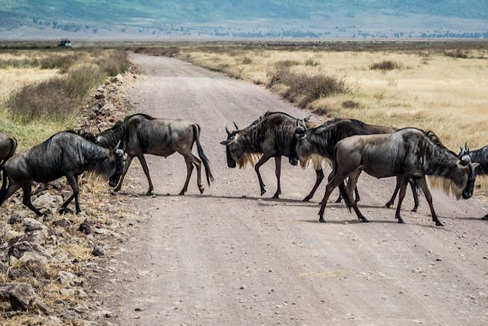
Mpala Road-Based Animal Density Surveys
Pringle Lab, Princeton University
Mpala Research Centre, Kenya
International
Biodiversity and Conservation
Fieldwork
This project aims to generate updated, fine-scale, community-wide density estimates of both wildlife and domestic animals across the Mpala landscape. Existing data are outdated or limited, making it difficult to interpret ongoing research. Interns will participate in systematic road-based distance sampling surveys along predefined transects, recording observations of wildlife and domestic animals, and collecting spatial and contextual data. The resulting dataset will support comparative studies, long-term ecological experiments, and collaborative research at Mpala. Students will gain direct exposure to field-based ecological research and contribute to a shared resource that enhances ongoing and future collaborations.
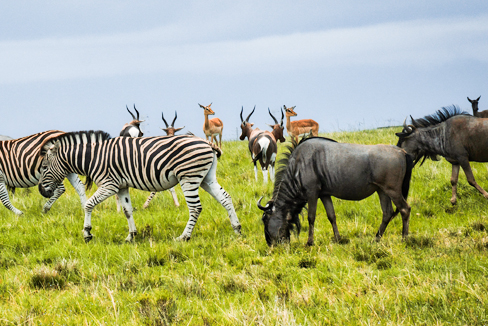
Multi-predator Effects on Large Mammalian Herbivore Behavior in KwaZulu-Natal, South Africa
Pringle Lab
KwaZulu-Natal, South Africa (Hluhluwe-iMfolozi Park, Thanda Game Reserve, and Pongola Game Reserve)
International
Biodiversity and Conservation
Fieldwork
As ecosystems face accelerating biodiversity loss globally, a fundamental ecological question persists: what factors maintain species diversity? Predation has long been considered a key ecological process in diversity maintenance, facilitating coexistence among prey species by depleting dominant competitors, thus relaxing interspecific competition. However, recent theoretical and empirical evidence suggests that the relationship between predation and interspecific competition is much more complex; predation can instead undermine prey coexistence depending on factors such as prey mobility and refuge availability, among others. Still, empirical tests of these dynamics– particularly in natural systems comprising a multitude of interacting predator and prey species– remain scarce.…

Net-Zero Brazil
Energy Systems Analysis Group, Andlinger Center for Energy and the Environment
Princeton University; Campinas, Brazil; Sao Paulo, Brazil.
International, On campus
Energy
Computational Modeling/Data Analysis
Princeton’s Net-Zero America (NZA) study (https://netzeroamerica.princeton.edu/the-report) was a path-breaking, impactful energy-transition modeling effort that vividly communicated alternative technological pathways by which the U.S. economy could reach net-zero greenhouse gas emissions by 2050. The NZA leaders are now collaborating with research teams worldwide developing Net-Zero “X” studies for other countries. Internships with the Net-Zero Brazil (NZB) project are available for three students. One internship will be in Princeton with the Andlinger Center’s Energy Systems Analysis Group (ESAG). Two internships will be with collaborators in Brazil, one at the University of Campinas (UNICAMP) and one with the non-governmental Institute of Energy and…

Net-Zero China
Energy Systems Analysis Group, Andlinger Center for Energy and the Environment
Princeton University
On campus
Energy
Computational Modeling/Data Analysis
Princeton’s Net-Zero America (NZA) study (https://netzeroamerica.princeton.edu/the-report) was a path-breaking, impactful energy-transition modeling effort that vividly communicated alternative technological pathways by which the U.S. economy could reach net-zero greenhouse gas emissions by 2050. The NZA leaders are now collaborating with research teams worldwide developing Net-Zero “X” studies for other countries. One internship with the Net-Zero China (NZC) project is available with the Andlinger Center’s Energy Systems Analysis Group (ESAG). ESAG includes a multidisciplinary group of researchers using engineering-based tools to assess and model technologies and technology strategies for solving major energy-related societal problems—including climate change, air pollution, lack of energy access…
Ocean Biogeochemistry of the Ross Sea during Winter from BGC-Argo
University of Washington
Seattle, WA
Off-campus US
Climate and Environmental Science
Computational Modeling/Data Analysis
The Ross Sea near Antarctica hosts one of the world’s largest and most pristine ocean ecosystems. This region is also a key formation site for Antarctic Bottom Water (AABW), which plays a central role in Earth’s climate system and impacts global carbon and oxygen cycles. Due to its remote location and harsh conditions, however, relatively little is known about ocean properties and dynamics in the Ross Sea during winter. In recent years, Biogeochemical-Argo floats, autonomous ocean robots that drift with the currents, have collected several years worth of data from the Ross Sea, including wintertime measurements under the sea ice.…

Ocean Impacts and Response to Arctic Sea Ice Variability
University of Edinburgh, Ocean Dynamics Lab
Edinburgh, UK
International
Climate and Environmental Science
Computational Modeling/Data Analysis
Sea ice mediates atmosphere-ocean exchange and helps regulate Earth’s energy budget. Therefore, accurately modelling sea ice extent is necessary to produce reliable climate projections. However, Arctic sea ice is undergoing rapid changes due to anthropogenic forcing, and predicting these changes is difficult since sea ice concentration is controlled by a complex combination of atmospheric and oceanic processes. Coupling between sea ice and the upper ocean occurs through various thermodynamic and mechanical processes. For example, sea ice dampens surface gravity waves and wind-driven momentum transfers. Quantifying these different interactions is difficult because of the difficulty of collecting ocean measurements in the…

