



HMEI Established Positions
HMEI offers fully funded internships in the natural sciences, social sciences, humanities and engineering—here on campus, and in the field from Colorado to Costa Rica. Princeton undergraduates from all departments are invited to apply. HMEI covers international flights and provides a weekly stipend.
Princeton first-year students, sophomores and juniors are invited to apply for up to three positions. HMEI Internships are full-time commitments and fully funded.
Visit our Past Interns page to read about students’ experiences in their own words. Find process and requirement details here.
If you experience any technical difficulties or have any questions, please email envintern@princeton.edu. Follow HMEI on Instagram for updates on internships and more.
Summer 2027 Application Deadlines
- November 23, 2026 — Applications open in Global Programs System (GPS)
- January 12, 2027, 2pm — Application deadline for HMEI Established Internships
- February 18, 2027 – Application deadline for Student-Initiated Internships via Student Funding (SAFE).
Applications for the internships below are closed.

Organic Contaminants and Dissolved Organic Matter in Aquatic System
Interfacial Water Group
Princeton University
On campus
Water
Labwork, Literature Review/ Data Curations
This project will evaluate the properties of dissolved organic matter and/or organic contaminants in aquatic systems. Previous HMEI interns have focused particularly on organic contaminants (particularly PFAS, so-called “forever chemicals”) and the properties that control their behavior in soils, their transport through the atmosphere, and their removal using water treatment systems. Another potential focus would be on examining properties that control the stability of organic matter in soils and in sediments, in order to inform estimates of the land carbon sink. Depending on the interests of the intern(s), this project will involve either teamwork or individual work and either molecular…
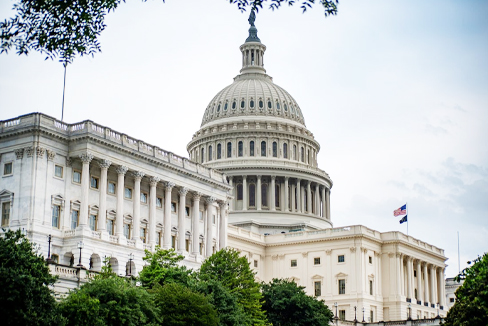
Politics of Local Infrastructure Investment in the US
Levin Lab / Behavioral Science for Policy Lab (BSPL)
Princeton University
On campus
Environmental Policy
Computational Modeling/Data Analysis, Literature Review/ Data Curations, Policy Analysis
Across the US, there is a resounding call to transition critical public infrastructure systems to facilitate broader sustainability goals, including climate adaptation, clean energy, water quality, affordability, and fair economic access. Yet, such transitions must grapple with the complex politics of infrastructure investment. In the US and abroad, there has been, a well-documented gap in investment in infrastructure directly attributable to political context and contingencies. In the US, local governments face a significant portion of the responsibility for such investment, but considerable heterogeneity in capacity or regulatory constraints complicates the political context. Overall, two reasons for investment hesitancy are uncertainty…
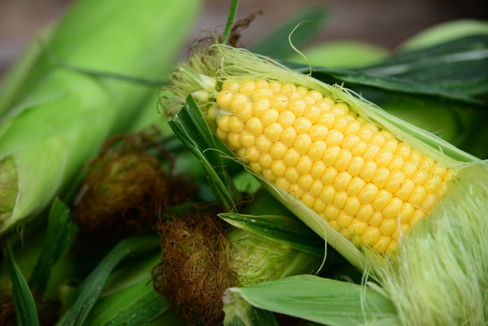
Preserving and Maintaining Agrobiodiversity through Culturally-meaningful Crops
Desmond Lab, The Seed Farm at Princeton
Stony Ford Research Station in Lawrence, NJ
Off-campus US
Food and Agriculture
Fieldwork
Sitting on 3.5 acres at the Stony Ford Research Station, The Seed Farm at Princeton is a collaborative research and farming initiative focused on preserving and maintaining agrobiodiversity through the cultivation of rare, culturally-meaningful crops. Students, scholars, and community partners come together to learn from each other by pursuing relevant research questions about the art and science of heirloom plants. Though we come together from a wide range of disciplines and life experiences, we share a common focus: our work deals with questions of repair and mutualism including repairing relationships with land, soil, plants, the environment, and each other and…
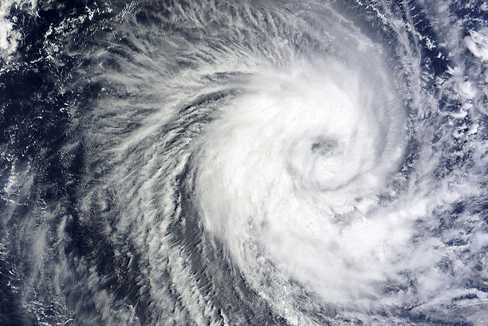
Proxy Sensing of Extreme Winds using Low-cost Wave Buoy Observations
Egan Lab
Princeton University
On campus
Climate and Environmental Science
Computational Modeling/Data Analysis
Tropical cyclones are extreme weather events that pose enormous risks both to human life and built infrastructure. Most of the destruction wrought by tropical cyclones occurs once they reach land; however, the development and intensification of tropical cyclones occurs over the ocean, where in situ observations are sparse due to the challenging sampling environment. One potential avenue towards filling this data gap is the use of small, durable, low-cost wave measurement buoys, which can measure wave and ocean properties through extreme conditions. Recent research has shown that these buoys are also capable of inferring wind speed based on their wave…
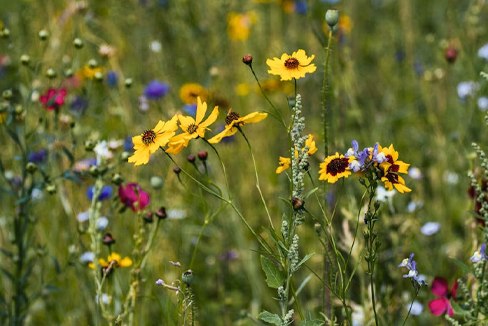
Rapid Evolution to Climate in a Community of California Annual Plants
Levine Lab
University of California Sedgwick Reserve, Santa Barbara County, California; Princeton University, Princeton, New Jersey.
Off-campus US, On campus
Biodiversity and Conservation
Fieldwork, Labwork
Annual wildflowers in California occur in remarkably diverse communities. Each year, these communities face drastically different environmental conditions, including the timing and amount of rainfall. The goal of this project is to measure how different rainfall conditions and competitive environments might cause natural selection on yearly timescales. In principle, these evolutionary changes could help explain how diverse communities coexist and how they might respond to climate change. Yet, while rapid evolution has been described in several species, its effects on entire communities and their ecological dynamics are poorly understood. Therefore, we are setting up a field experiment to manipulate rainfall…

Reconstructing Ancient Seawater Lithium Isotope Composition Using Marine Halites and Dolostones
Niespolo Lab
Princeton University
On campus
Climate and Environmental Science
Computational Modeling/Data Analysis, Labwork
Understanding the long-term evolution of seawater chemistry is central to reconstructing Earth’s climate, tectonic, and carbon-cycle history. Lithium (Li) isotopes are a powerful tracer of silicate weathering, hydrothermal alteration of oceanic crust, and global silicon and carbon cycling, yet direct records of ancient seawater lithium isotope composition remain sparse, particularly prior to the Phanerozoic. This project focuses on reconstructing the lithium isotope composition of seawater over the past ~3 billion years using chemical sedimentary archives, specifically marine dolostones and fluid inclusions preserved in marine halite. These archives uniquely preserve primary seawater chemistry and provide a direct window into ancient oceans…

Small Clean Fusion Reactors
Princeton Plasma Physics Lab (PPPL)
Princeton Plasma Physics Lab
On campus
Energy
Computational Modeling/Data Analysis, Labwork, Policy Analysis
Our research efforts focus on scientific and technical aspects of small, ca. 1 MW, fusion reactors that can burn advanced fuels, specifically a mixture of deuterium and Helium-3. The characteristics of our fusion reactor concept are predicted to result in far fewer neutrons generated compared to the mainline fusion reactor designs. Such advanced-fuel reactors would have fewer radioactivity, material degradation, and the associated safety and cost problems than the mainline concepts. We are presently operating the second research device at Princeton to investigate plasma physics of one candidate advanced-fuel reactor called the field-reversed configuration (FRC). These reactors have applications in…
Software Development of Data Pipeline for Energy Systems Optimization Models
ZERO Lab
Princeton University
On campus
Energy
Computational Modeling/Data Analysis
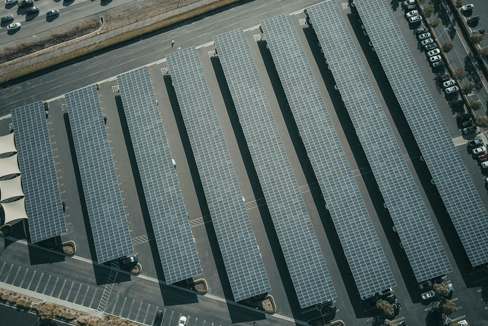
Energy system optimization models are a critical analytical framework for evaluating the cost, emissions, and reliability implications of future energy system pathways under a range of technological and policy scenarios. These models rely on extensive, high-resolution datasets to represent complex energy systems that may encompass multiple sectors, including electricity, energy-intensive industries, and biomass. Input data typically include technology cost and performance parameters, retrofit and adoption decisions, demand projections, and infrastructure characteristics for the transport of energy and material commodities. To accurately capture system dynamics and produce meaningful results that can inform climate and energy policy, much of this data must…
StreamWatch Water Quality Monitoring Program
The Watershed Institute
Pennington, NJ / Throughout the Millstone Watershed of Central NJ
Off-campus US
Water
Fieldwork, Labwork
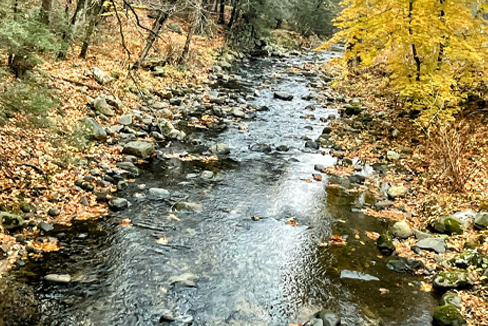
The Watershed Institute’s StreamWatch volunteer water quality monitoring program utilizes the help of trained community scientists to collect data on freshwater stream and lake conditions throughout central New Jersey. In 2021, we relaunched a new subprogram- the Bacterial Action Team (BACT) – to study the extent of fecal bacterial and toxic cyanobacterial contamination in our region. For 15 weeks during the summer, Watershed volunteers will collect weekly water samples from approximately 50 stream and lake sites for analysis in the Watershed lab for E. coli and nutrients and conduct a visual assessment of indicators of harmful algal blooms (HABs) and…

The Physics of Sinking Ocean Particles
Deutsch Lab
Princeton University
On campus
Climate and Environmental Science
Computational Modeling/Data Analysis
Particles of organic matter formed by life in the surface ocean do not stay at the ocean surface forever. Their gravitational settling to the deep ocean acts to regulate Earth’s climate, but the nature of that process involves complex interactions between particles of different types and sizes and these particle interactions remain poorly understood. Small particles sink slowly, but when they collide and stick together, they form larger pieces that sink much faster. These larger pieces can also break apart into smaller fragments through turbulence or grazing by marine organisms, slowing their sinking speed. How quickly particles grow or break…

