




Proxy Sensing of Extreme Winds using Low-cost Wave Buoy Observations
Egan Lab
Princeton University
Climate and Environmental Science
Computational Modeling/Data Analysis
January 7, 2026 2:00 pm EST
Internship / Research Project Information
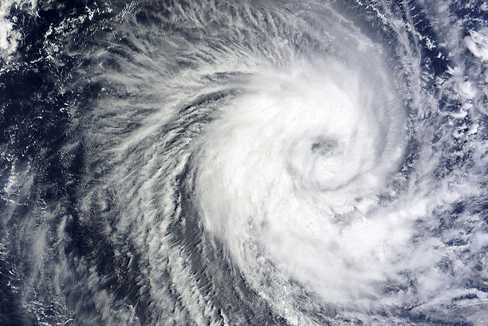
Tropical cyclones are extreme weather events that pose enormous risks both to human life and built infrastructure. Most of the destruction wrought by tropical cyclones occurs once they reach land; however, the development and intensification of tropical cyclones occurs over the ocean, where in situ observations are sparse due to the challenging sampling environment. One potential avenue towards filling this data gap is the use of small, durable, low-cost wave measurement buoys, which can measure wave and ocean properties through extreme conditions. Recent research has shown that these buoys are also capable of inferring wind speed based on their wave measurements, though at present this technique breaks down under the strong winds characteristic of tropical cyclones.
In an effort to improve our ability to measure tropical cyclone winds over the ocean in real time, this project will focus on improving existing algorithms (and potentially developing new algorithms) to infer wind speed from wave buoy data. This will rely on a combination of physics-based and data-driven modeling, and will leverage buoy data collected during the passage of Hurricane Helene along with a calibrated tropical cyclone hindcast simulation.
The student will analyze ocean observations and the output of numerical simulations, and apply machine learning methods and knowledge of wave physics to develop an algorithm for predicting wind speed from buoy data under tropical cyclone conditions.
The student will gain general experience with the Python programming language, along with specific experience working with ocean observations and the output of numerical models. They will also learn about the physics of wind-wave coupling, and gain experience developing data-driven algorithms using modern machine learning techniques.
Faculty Sponsor(s) / Host Information
Galen Egan
Geosciences (GEO)
Internship Requirements
Calculus, programming, and an interest in oceanography
Python will be used throughout, so some experience is suggested, but familiarity with another scientific programming language (e.g., MATLAB, Julia) should be sufficient.
Laptop.
- Students are responsible for securing accommodations for the duration of their internship. On-campus summer housing is typically available the first week of June until the first week of August (details to become available in Spring 2026). If the internship falls outside of on-campus housing availability, students will need to secure alternate housing.
Internship / Project Supervisor(s)
Galen Egan (GEO)
Internship Dates And Funding Information
$800
2
9
June 1, 2026 to July 31, 2026