



HMEI Established Positions
HMEI offers fully funded internships in the natural sciences, social sciences, humanities and engineering—here on campus, and in the field from Colorado to Costa Rica. Princeton undergraduates from all departments are invited to apply. HMEI covers international flights and provides a weekly stipend.
Princeton first-year students, sophomores and juniors are invited to apply for up to three positions. HMEI Internships are full-time commitments and fully funded.
Visit our Past Interns page to read about students’ experiences in their own words. Find process and requirement details here.
If you experience any technical difficulties or have any questions, please email envintern@princeton.edu. Follow HMEI on Instagram for updates on internships and more.
Summer 2027 Application Deadlines
- November 23, 2026 — Applications open in Global Programs System (GPS)
- January 12, 2027, 2pm — Application deadline for HMEI Established Internships
- February 18, 2027 – Application deadline for Student-Initiated Internships via Student Funding (SAFE).
Applications for the internships below are closed.
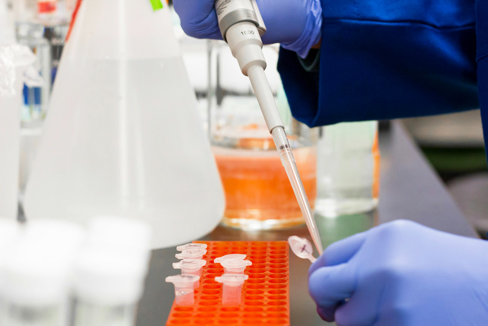
Evaluating Horizontal Gene Transfer Systems for Deploying Metabolic Circuits in Microbial Communities
Atkinson Lab
Princeton University
On campus
Climate and Environmental Science
Labwork
The project will use synthetic biology approaches to evaluate the genetic accessibility of microbes within natural and synthetic communities using diverse bacterial conjugation systems to establish a toolkit for deploying genetic and metabolic circuits into environmental microbes. This will enable us to selectively engineer microbiomes to perform designer metabolic functions (e.g. polymer synthesis, biodegradation, biosensing, mineral extraction). This will also provide insight into the mechanisms underlying the spread of antimicrobial resistance in diverse ecosystems.
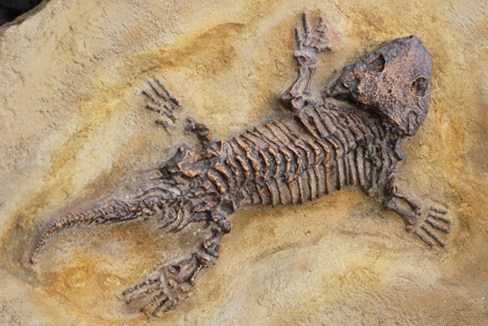
Exploring New Vertebrate Microfossil Sites from the Triassic-aged Rocks of Texas
Griffin Lab
Amarillo, TX / Princeton, NJ
Off-campus US, On campus
Climate and Environmental Science
Fieldwork, Labwork
The Late Triassic (230-201 million years ago) was a time of intense climate change, during which most of the major groups of terrestrial vertebrates first evolved, including mammals, lepidosaurs, frogs, salamanders, crocodylomorphs, and dinosaurs. Most of these groups originate at small body sizes, meaning that targeting accumulations of vertebrate microfossils is key to answering major questions regarding the coevolution of life and the Earth system during this key interval. The intern will accompany my group for two weeks of fieldwork in west Texas, collecting both macrofossils and sediment from microfossil assemblages from several new sites we have discovered in this…
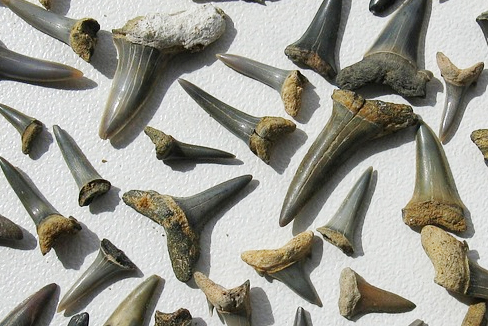
Exploring the Relationship Between Ocean Circulation and Climate Change in the Late Cretaceous
Zhang Geomicrobiology and Biogeochemistry Lab
Princeton University
On campus
Climate and Environmental Science
Labwork
The overarching goal of this project is to assess the relationship between ocean circulation and climate change during one of the hottest periods in Earth’s history, the Late Cretaceous, using neodymium isotopes sourced from fossilized fish teeth as a tracer for past ocean circulation patterns.
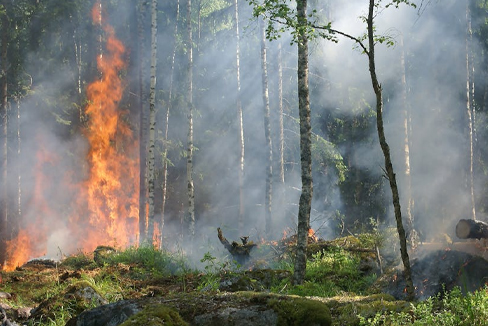
Fire-related Weather and Climate Change and Variability in Observations and Climate Models
Vecchi Research Group
Princeton University
On campus
Climate and Environmental Science
Computational Modeling/Data Analysis
Wildfires have become more frequent and severe in recent years and been found to be linked to the increase of vapor pressure deficit (VPD), the difference (deficit) between the amount of moisture in the air and how much moisture the air can hold when it is saturated. Yet it is unclear to what extent this trend is due to long term climate change or internal climate variability and whether it would continue in the future. To address these questions, we propose to examine VPD over global land areas by looking into both observations and a suite of high-resolution climate model…
Forest Carbon Stock Monitoring at The Watershed Institute
Porporato Lab
Hopewell, New Jersey
On campus
Climate and Environmental Science
Fieldwork
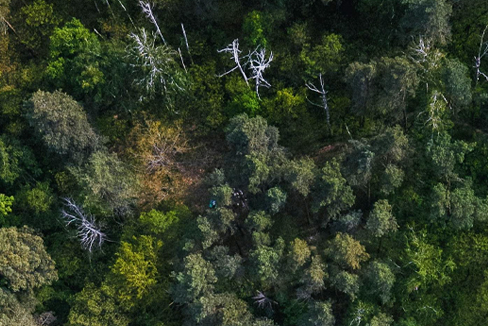
This project will establish four 1-hectare permanent forest plots at The Watershed Institute (Hopewell, NJ) to monitor forest structure, carbon stocks, and their contribution to ecosystem carbon fluxes. These plots will form a long-term ecological monitoring network following GEOTrees protocol, enabling comparisons with similar plots worldwide. The data collected will serve as a foundation for future research on forest dynamics, biodiversity, and carbon cycling, and will directly support The Watershed Institute’s mission to advance environmental stewardship through science, conservation, and education. This initiative also aims to provide a hands-on research experience for Princeton students interested in ecology, climate science, and…
From Lab to Field: Investigating PFAS Biodegradation in AFFF-Impacted Sediments
Environmental Biochemistry Research Group
Princeton University
On campus
Water
Labwork
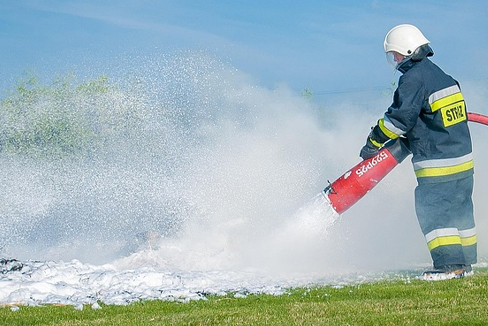
This internship provides an opportunity to participate in cutting-edge environmental microbiology research focused on the bioremediation of PFAS contamination in aqueous film-forming foam (AFFF) impacted sediments. Students will contribute to studies involving Acidimicrobium sp. A6, a unique bacterium capable of transforming PFAS through an iron-coupled ammonium oxidation process known as Feammox. The research emphasizes bench-scale laboratory experiments designed to understand the environmental factors that promote A6 activity and enhance PFAS degradation. Students will help investigate how conditions such as temperature, pH, nutrient supply, and iron availability influence microbial growth and defluorination efficiency. This experience will provide valuable insight into how…
Global Patterns of Phosphorus Release from Ocean Sediments
Deutsch Lab
Princeton University
On campus
Climate and Environmental Science
Computational Modeling/Data Analysis
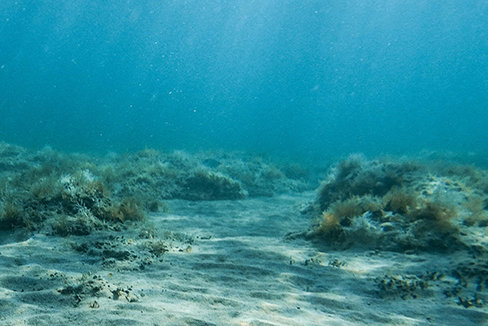
Ocean life depends on phosphorus, a nutrient whose inventory can rise and fall over geologic time scales. Normally, phosphorus is removed from the ocean by getting buried in seafloor sediments. However, in very low-oxygen environments, sediments can leak phosphorus back into the ocean instead of storing it. This return of phosphorus can help sustain biological production, yet the magnitude of this release — and how it varies with environmental conditions such as temperature, bottom-water oxygen, and nutrient levels — is still not well quantified. The intern will compile real measurements of phosphorus, oxygen, nutrients, temperature, and iron from pore water…
Greenhouse Gas and Air Pollutant Emissions
Atmospheric Chemistry and Composition Group
Princeton University
On campus
Climate and Environmental Science
Fieldwork
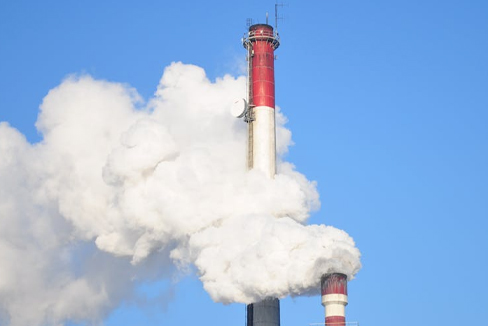
Students will measure greenhouse gas and air pollutant emissions from sectors including the ammonia supply chain for the hydrogen economy, agriculture, and wastewater treatment plants. All of these sectors have highly uncertain emissions, and new sensing approaches and technologies allow for a better understanding of their spatiotemporal variabilities. Students will prepare for field sampling campaigns, conduct measurements, and analyze data to understand emissions characteristics of these sources.
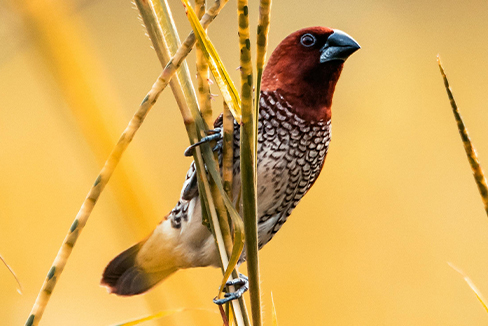
Host Switching by an Introduced Brood Parasitic Bird in California
Riehl Lab, Princeton University
Southern California
Off-campus US
Biodiversity and Conservation
Fieldwork
Introduced species are everywhere. Human activity in the current century has transported organisms thousands of miles away from their native ranges, resulting in the establishment of thousands of introduced species in the U.S. alone. Introduced species often interact with the native environment in harmful ways, reducing biodiversity. What happens when two introduced species from different home ranges interact competitively with each other? The Pin-tailed Whydah (Vidua macroura), native to Africa, is an obligate brood parasite: it lays its eggs in nests of other bird species and relies on them to care for its eggs and young. Whydahs have been introduced…
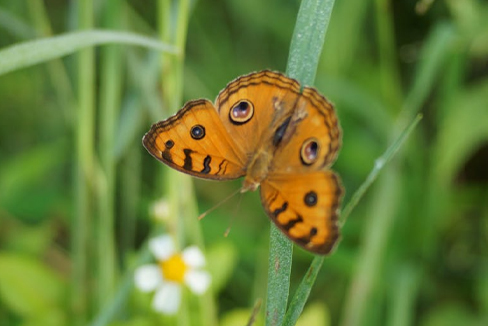
Insect Biodiversity Across Restored and Working Grasslands
Duke Farms
Hillsborough, NJ
Off-campus US
Biodiversity and Conservation
Fieldwork
In human-dominated landscapes, working lands and restored habitats are vital for sustaining biodiversity as urbanization fragments natural ecosystems. Agricultural fields, grazed pastures, and managed meadows must serve not only economic purposes but also act as refuges for wildlife. How these lands are managed ultimately shapes vegetation and floral resource availability, influencing which fauna persist. Understanding these dynamics is essential for balancing production and recreation with conservation. Using Duke Farms as a model landscape, this project will examine how three management approaches, grazing, mowing, and passive management, filter insect community composition across grasslands. We will characterize insect and plant community composition…

