




Greenhouse Gas and Air Pollutant Emissions
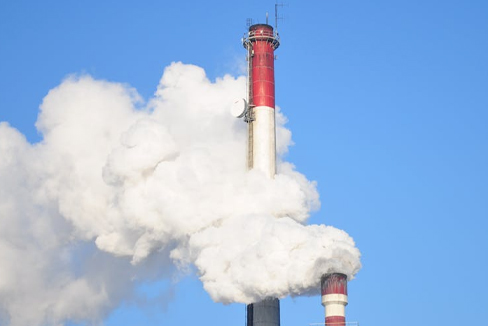
Atmospheric Chemistry and Composition Group
Princeton University
Climate and Environmental Science
Fieldwork
January 7, 2026 2:00 pm EST
Internship / Research Project Information
Students will measure greenhouse gas and air pollutant emissions from sectors including the ammonia supply chain for the hydrogen economy, agriculture, and wastewater treatment plants. All of these sectors have highly uncertain emissions, and new sensing approaches and technologies allow for a better understanding of their spatiotemporal variabilities. Students will prepare for field sampling campaigns, conduct measurements, and analyze data to understand emissions characteristics of these sources.
Students will be involved in all aspects of field measurement preparations, design, sampling, and post-processing. Students will be exposed to novel optical technologies and calibrate the sensors prior to the field mission. Students will examine public record databases to identify characteristics of the chosen field sites to be sampled and design sampling plans. Platforms to be used include a mobile laboratory equipped with a suite of trace gas sensors, drone-based sensors, and high-performance handheld sensors. Field measurements will be conducted at nearby sites that likely will involve two overnight trips within a day’s drive of Princeton in collaboration with other research group members. Students will conduct quality control analyses of the data and analyze the measurements in the context of meteorological data to deduce emissions through inverse modeling approaches. Students will present to the research group on their project status every week.
Students will be able to gain experience in the following objectives:
- to be able to identify and manage public records databases to gain information on facilities
- to design and conduct a field sampling experiment using given public roads networks and local meteorology
- to be familiar with the operations of commercial and custom optical-based sensors
- to be able to conduct a calibration using gas handling equipment
- to conduct field measurements of trace gases in an efficient, safe, and legal manner
- to convert measured concentrations to emissions through inverse Gaussian approaches
- to communicate results to technical personnel as well as the general public
- to understand the strengths and limitations of various sampling paradigms and how to maximize the accuracy and minimize uncertainties in proper analyses
- to better understand sector emissions of carbon and nitrogen gases important to climate and air quality
- to work with a team of scientists and engineers on an interdisciplinary project
Faculty Sponsor(s) / Host Information
Mark Zondlo
Civil and Environmental Engineering (CEE)
Internship Requirements
Calculus, differential equations are required; coursework from SEAS, GEO/AOS, or CHM expected
Computer programming expertise in Matlab, python, R, LabView, or similar
University Lab Safety Training ;Laser Safety
Field sampling will likely occur in the summer in daytime environments which may include heat, dust, insects; some field sampling may occur in the early morning and late evening timeframes (non-standard hours)
Laptop is required
- Students will meet with internship mentors in the spring, prior to the internship start date. Reading materials may also be provided.
- Students are responsible for securing accommodations for the duration of their internship. On-campus summer housing is typically available the first week of June until the first week of August (details to become available in Spring 2026). If the internship falls outside of on-campus housing availability, students will need to secure alternate housing.
- Undergraduate students will need to be come “van certified” to drive the mobile laboratory.
Internship / Project Supervisor(s)
Mark Zondlo, CEE
Lars Wendt, Research Manager, Princeton Materials Institute
Internship Dates And Funding Information
$800
2
9
June 1, 2026 to July 31, 2026