




Exploring New Vertebrate Microfossil Sites from the Triassic-aged Rocks of Texas
Griffin Lab
Amarillo, TX / Princeton, NJ
Climate and Environmental Science
Fieldwork, Labwork
January 7, 2026 2:00 pm EST
Internship / Research Project Information
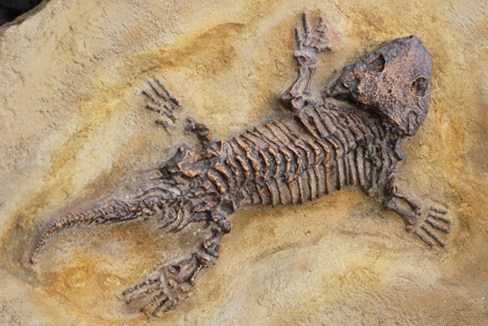
The Late Triassic (230-201 million years ago) was a time of intense climate change, during which most of the major groups of terrestrial vertebrates first evolved, including mammals, lepidosaurs, frogs, salamanders, crocodylomorphs, and dinosaurs. Most of these groups originate at small body sizes, meaning that targeting accumulations of vertebrate microfossils is key to answering major questions regarding the coevolution of life and the Earth system during this key interval. The intern will accompany my group for two weeks of fieldwork in west Texas, collecting both macrofossils and sediment from microfossil assemblages from several new sites we have discovered in this area. Once back in the lab at Princeton, the intern will screen wash the sediment and ‘pick’ the resulting disaggregated matrix (look through the matrix under a microscope for fossils), identifying and cataloging all new fossils found here, creating a picture of the ecosystem that up to now has not been available for this region.
Fieldwork will involve hiking, some heavy lifting, hammering/chiseling, and digging. Lab work will involve screen washing blocks of sediment in a sink, and carefully going through the sediment under a microscope looking for fossils. The intern will learn anatomy such that they will be able to identify fossils to particular groups and subgroups of vertebrates.
In addition to gaining paleontological field skills, the intern will learn detailed comparative vertebrate anatomy during the internship.
Faculty Sponsor(s) / Host Information
Christopher Griffin
Geosciences (GEO)
Internship Requirements
None, but STEM background preferred
Hiking, fairly hot temperatures, physical labor (carrying bags of rocks, tools, backpacks)
- Students will meet with internship mentors in the spring, prior to the internship start date.
- For travel to Texas – students are required to register their travel with the University through Enroll My Trip. Information related to the University’s Permissible Travel Guidelines can be found here. Funding is contingent on travel registration and University approval.
- Students and reasearch group will stay in a rented house in Amarillo, about 50 minutes from the field site, so no camping is required. This is a joint field program with the Yale Peabody Museum, and so students and staff from Yale will also participate.
- When interning on the Princeton campus, students are responsible for securing accommodations for the duration of their internship. On-campus summer housing is typically available the first week of June until the first week of August (details to become available in Spring 2026). If the internship falls outside of on-campus housing availability, students will need to secure alternate housing.
Internship / Project Supervisor(s)
Christopher Griffin, GEO
Will Reyes, Presidential Postdoctoral Fellow, GEO
Internship Dates And Funding Information
$800
1
9
June 1, 2026 to August 3, 2026