



HMEI Established Positions
HMEI offers fully funded internships in the natural sciences, social sciences, humanities and engineering—here on campus, and in the field from Colorado to Costa Rica. Princeton undergraduates from all departments are invited to apply. HMEI covers international flights and provides a weekly stipend.
Princeton first-year students, sophomores and juniors are invited to apply for up to three positions. HMEI Internships are full-time commitments and fully funded.
Visit our Past Interns page to read about students’ experiences in their own words. Find process and requirement details here.
If you experience any technical difficulties or have any questions, please email envintern@princeton.edu. Follow HMEI on Instagram for updates on internships and more.
Summer 2027 Application Deadlines
- November 23, 2026 — Applications open in Global Programs System (GPS)
- January 12, 2027, 2pm — Application deadline for HMEI Established Internships
- February 18, 2027 – Application deadline for Student-Initiated Internships via Student Funding (SAFE).
Applications for the internships below are closed.
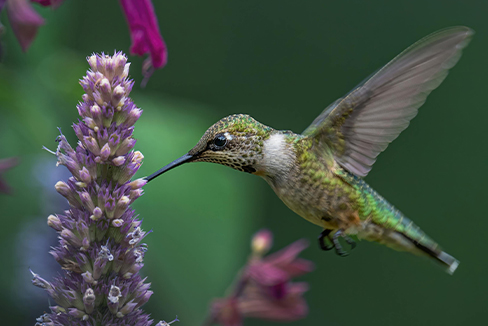
Investigating Hummingbird Behavior, Wildflower Interactions and Climate Change in the Rocky Mountains
Stoddard Lab
Rocky Mountain Biological Laboratory in Gothic, Colorado; Surrounding areas in Gunnison County, Colorado
Off-campus US
Climate and Environmental Science
Fieldwork
We study wild Broad-tailed Hummingbirds at the Rocky Mountain Biological Laboratory in Gothic, Colorado. These migratory hummingbirds are critical pollinators of wildflowers at this high-elevation montane site (2,900 m). Changes in the timing of snowmelt (attributed to climate change) in recent years have contributed to shifts in the timing of floral bloom. Changes in flower phenology are likely to impact pollinators: the arrival of hummingbirds at their breeding site in the Rockies might be mismatched with floral bloom. Our goal is to obtain a clearer picture of hummingbird pollination behavior. Which flowers do hummingbirds visit, and how does this change…
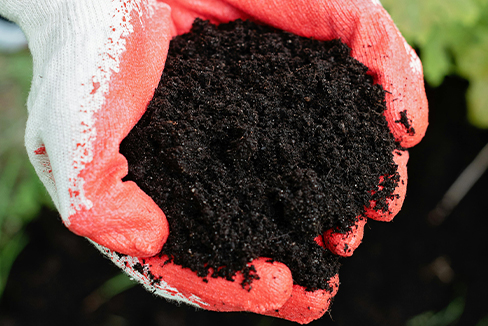
Is the Soil-age a Factor in How Well Soils Retain Organic Carbon?
Myneni Research Group
Princeton University with a week of sampling in Hawaii
Off-campus US, On campus
Climate and Environmental Science
Fieldwork, Labwork
Soils are the largest repositories of stable organic carbon on the surface of our planet. Progressive alteration of plant and microbial biomass leads to the production of this organic carbon pool in soils. Many studies have evaluated how soils retain and preserve organic carbon and shown that physical and chemical disturbances to this ecosystem can release this organic carbon back into the atmosphere as CO2, leading to changes in the global temperatures. Although soil organic carbon can exist by itself (particulate organic carbon, POC), a significant pool exists as coatings on inorganic materials, such as clay minerals and disordered Fe/Al…
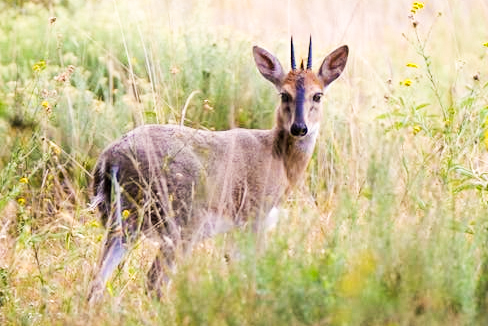
Large Mammals Under Climate Change: Capturing and Monitoring Antelope in Gorongosa National Park, Mozambique
Pringle Lab
Gorongosa National Park, Mozambique
International
Biodiversity and Conservation
Fieldwork
African savannas contain the highest diversity of large mammals in the world. How will Africa’s mammals respond to climate change, and what are the implications of these responses for the composition of large herbivore communities? Ecological theory suggests that species varying in body size have different constraints—larger species are less vulnerable to predators, yet more sensitive to heat and have higher energy requirements than smaller species. By studying how antelope varying in size behave to navigate these constraints, we aim to predict how communities of savanna herbivores will be affected by climate change. Since 2014, the Pringle Lab has conducted…
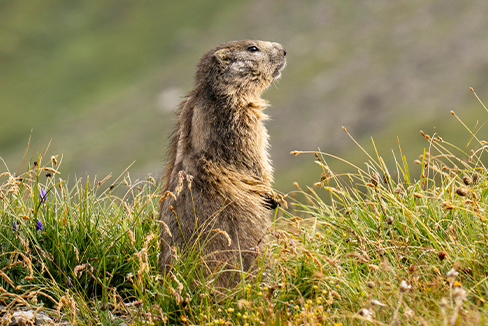
Long-term Climate and Behavioral Change in a Wild Yellow-bellied Marmot Population in the Western Rocky Mountains
The vonHoldt lab in collaboration with the Marmot Group (lead by Dan Blumstein, UCLA)
Rocky Mountain Biological Laboratory, Gothic, Colorado, USA
Off-campus US
Biodiversity and Conservation
Fieldwork
The intern(s) will join a team of graduate and undergraduate student researchers on a long-term study of a population of marmots living in the western Rocky Mountains near the Rocky Mountain Biological Laboratory (RMBL), ongoing since 1962. The study involves daily field work, hiking, gravel biking, trapping and handling of live animals, and observing and recording marmot behaviors using field notes and audio recorders. The student will assist with and at times lead a 2-person team in marmot live trapping and handling of adult and juveniles animals (pups). The student will assist with annual collection of biological samples including blood,…

Machine Learning Applications for Quantifying Urban Infrastructure and Environmental Systems in India
Urban Nexus Lab, Princeton University
Princeton University
On campus
Urban Sustainabilty
Computational Modeling/Data Analysis
Professor Ramaswami’s Urban Nexus Lab is leading several projects that use Machine Learning (ML) and Computer Vision (CV) to quantify global infrastructure, including buildings and roads, as well as environmental features such as trees and green cover. The internship will focus on such topics in India, with the possibility of expanding to other countries depending on the intern’s experience and progress. Interns will work with diverse datasets, including remote sensing and localized data sources (e.g., building permits). While much of the groundwork has been laid by the lab’s previous work, the group encourages creativity and new ideas to connect data…
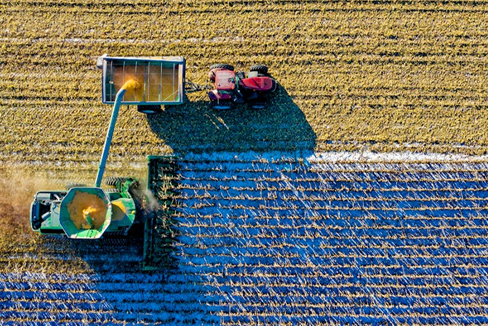
Mapping Biocultural Vulnerability of Neglected and Understudied Crops
Levin Lab, Princeton University
Princeton University
On campus
Food and Agriculture
Literature Review/ Data Curations
Traditional farming landscapes, often managed by Indigenous and local communities represent some of the world’s largest remaining reservoirs of biodiversity, agrobiodiversity, and biocultural heritage. Yet, the knowledge systems that sustain them are increasingly threatened by climate change, agricultural modernization, and genetic erosion. The goal of this project is to map and assess the biocultural vulnerability of neglected and understudied crops that hold socio-ecological and cultural significance. Many of these species function as cultural keystone species, linking ecosystems, livelihoods, and identities. Following a biocultural framework, the study treats crop decline not only as a loss of genetic resources but also as…

Marine Microplastic Transport and Collection in Surface Waves
DiBenedetto Fluids Lab
Princeton University
On campus
Water
Labwork
Microplastics are a persistent pollutant found throughout the environment that have been shown to negatively affect ecosystems and human health. Many microplastics are less dense than water and will accumulate in the surface of lakes, rivers, and oceans where they can potentially be remediated and removed. The goal of this work is to study how microplastics are transported in waves at the free surface and how wavy flows can be generated to aid collection of microplastics. The research will be conducted in a lab with floating particles in a tank and a prototype floating robotic microplastic collector. Topics include the…

Microbes That Use Nitrous Oxide Instead of Oxygen for Respiration
Ward Lab, Department of Geosciences, Princeton University
Princeton University
On campus
Climate and Environmental Science
Labwork
Nitrous oxide (N2O) is produced and consumed by microbes that thrive only in environments where oxygen is either very depleted or absent. Therefore, we were surprised to find that both of these processes could be measured in the oxygenated surface ocean! We are now pursuing the question of what kind of microbes are respiring nitrous oxide under these conditions. Isolates will be obtained by rigorous stepwise enrichment and testing for the capacity for nitrous oxide respiration. We have one set of isolates already purified from the Pacific Ocean and another set of enrichment cultures underway from the Atlantic. These cultures…
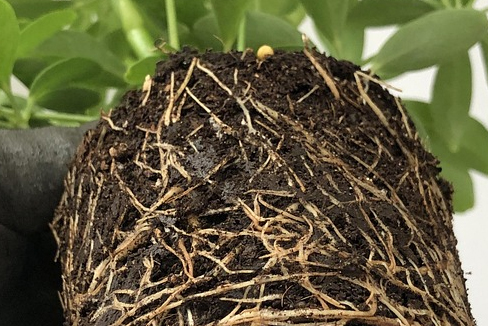
Microbial Community Assembly and Its Role in Plant Root Colonization
Conway Lab, Princeton University
Princeton University
On campus
Climate and Environmental Science
Labwork
This project investigates how combinations of beneficial and harmful bacteria influence each other’s ability to colonize plant roots. The student will work with simplified synthetic microbial communities to study how community composition affects which strains successfully establish on the plant. Using sterile plant growth systems and DNA-based tracking tools, the student will measure changes in strain abundance during colonization experiments. The results will help reveal general principles of microbial community assembly and identify features that enable beneficial microbes to persist on plant hosts.
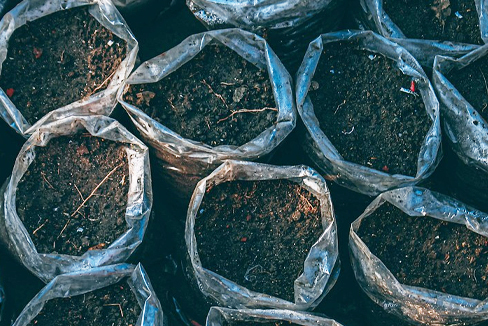
Microbial Controls on the Global Hydrogen Budget in a Hydrogen-based economy
Zhang Geomicrobiology and Biogeochemistry Lab
Princeton University; Pine Barrens, NJ
On campus
Climate and Environmental Science
Labwork
Hydrogen (H₂) is a climate-active trace gas, with its global warming potential more than an order larger than carbon dioxide. Despite the expected increase in hydrogen emissions from a global hydrogen economy, its impact on climate change remains uncertain. This uncertainty stems from a limited understanding of soil microbial H₂ consumption, which is the largest sink of atmospheric H₂ and responsible for over 70% of its removal. How the soil microbial H₂ consumption responds to soil moisture and temperature, which are key climate sensitive factors controlling microbial activity, are under investigation. Physiological factors, such as responses to nutrient availability and…

