




Large Mammals Under Climate Change: Capturing and Monitoring Antelope in Gorongosa National Park, Mozambique
Pringle Lab
Gorongosa National Park, Mozambique
Biodiversity and Conservation
Fieldwork
January 7, 2026 2:00 pm EST
Internship / Research Project Information
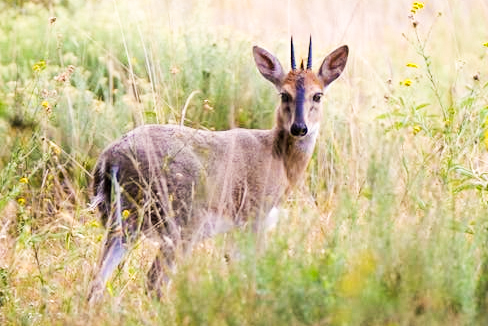
African savannas contain the highest diversity of large mammals in the world. How will Africa’s mammals respond to climate change, and what are the implications of these responses for the composition of large herbivore communities? Ecological theory suggests that species varying in body size have different constraints—larger species are less vulnerable to predators, yet more sensitive to heat and have higher energy requirements than smaller species. By studying how antelope varying in size behave to navigate these constraints, we aim to predict how communities of savanna herbivores will be affected by climate change. Since 2014, the Pringle Lab has conducted a long-term GPS collaring study in Gorongosa National Park, Mozambique. During the internship, students will have a one-of-a-kind opportunity to join our antelope capture team in the park, gaining hands-on experience with wildlife captures and GPS collar research. Following the captures, we will track the collared antelope to monitor their behavior via drone, survey herds across the park, and measure landscape-level climate and vegetation data to investigate how heat sensitivity, food, and fear shape large mammal behavior.
Interns will join an international field team to capture and install GPS collars on bushbuck, during which they will be responsible for recording detailed measurements about each captured animal. Throughout the summer, students will then drive through the Gorongosa National Park to conduct surveys of large mammal herds across the landscape, learn to track GPS collared antelope using radio transmitters, and perform drone-based behavioral observations. Depending on field season progress, interns may also participate in vegetation sampling and identification, weather station installation, and visits to local schools and communities to participate in science communication initiatives. No experience with any of these activities is necessary—students will have the opportunity to learn about these field techniques and data management protocols during the internship. Interns will also be encouraged to engage with the scientific method and assist in the development of fieldwork protocols and research questions.
- Gain an appreciation for the natural world and for working outdoors in a hands-on environment.
- Develop general fieldwork skills and specific experience with key field ecology methods, including GPS collaring, radio tracking, and behavioral observations.
- Strengthen science communication skills by participating in local outreach and education events.
- Learn protocols for collecting and managing field data.
- Strengthen collaborative skills by participating in a multidisciplinary, international field team.
- Become familiar with the scientific method and how to read and analyze scientific papers.
- Understand how behavior shapes large mammal communities.
Faculty Sponsor(s) / Host Information
Rob Pringle
Ecology and Evolutionary Biology (EEB)
Internship Requirements
No academic background or course prerequisites are necessary, although it is encouraged that students have taken EEB 321. Students will learn the relevant academic background by reading scientific literature prior to the internship. We are looking for students that, beyond an interest in wildlife and the natural world, are passionate about ecology and enthusiastic about the scientific process. Students of all years may apply, although those earlier in their degree will benefit from potentially expanding their summer work into a senior thesis project.
We are looking for students who have exceptional attention to detail, organization, and enthusiasm. Fieldwork will require patience, as we will work in adverse conditions requiring strong collaborative skills. Students who are self-motivated, passionate about ecology and working outdoors, and excited to learn about scientific research will excel in this role. Experience operating camera drones is an asset but not a requirement.
Health and Safety for Animal Workers (IACUC)
The internship will involve potentially strenuous activities in a rugged environment and warm climate. This includes hiking and installing equipment off-trail and driving off-road for significant portions of the day (students will not be asked to drive a vehicle). Students will be expected to wake up early (~7 am) to spend a full day in the field (8 hours).
Portuguese is spoken throughout Mozambique. Experience speaking Portuguese is not a requirement but is an asset.
Students should bring a laptop, water bottle, binoculars (can be provided if needed), and clothing appropriate for outdoor fieldwork (e.g., field shoes, long pants, hat). A suggested packing list will be provided to students prior to the internship. Food will be provided, but students are highly encouraged to bring their own snacks as we will have limited ability to purchase food while in the field.
- Students will meet with internship mentors in the spring, prior to the internship start date. Reading materials may also be provided.
- Selected student(s) are encouraged to select accommodations that fit within their budget. Recommendations can be provided.
- Students are also required to familiarize themselves with the data collection protocols and platforms (e.g., ArcGIS Field Maps) prior to fieldwork.
- Students will need to consult UHS for travel medical requirements. It is the responsibility of the student to be aware of entry requirements and to obtain any necessary documentation. Valid passport required. Students are required to register their travel with the University through Enroll My Trip. Information related to the University’s Permissible Travel Guidelines can be found here. Funding is contingent on travel registration and University approval.
International Travel Requirements
Yes
No
No
Internship / Project Supervisor(s)
Henry Gage, Ph.D Candidate, EEB
Beto Tenente, Gorongosa National Park (GNP)
Internship Dates And Funding Information
$800 (plus int’l travel award)
1
8
June 15, 2026 to August 3, 2026