




Mpala Road-Based Animal Density Surveys
Pringle Lab, Princeton University
Mpala Research Centre, Kenya
Biodiversity and Conservation
Fieldwork
January 7, 2026 2:00 pm EST
Internship / Research Project Information
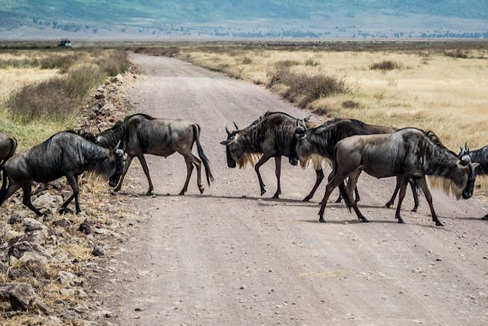
This project aims to generate updated, fine-scale, community-wide density estimates of both wildlife and domestic animals across the Mpala landscape. Existing data are outdated or limited, making it difficult to interpret ongoing research. Interns will participate in systematic road-based distance sampling surveys along predefined transects, recording observations of wildlife and domestic animals, and collecting spatial and contextual data. The resulting dataset will support comparative studies, long-term ecological experiments, and collaborative research at Mpala. Students will gain direct exposure to field-based ecological research and contribute to a shared resource that enhances ongoing and future collaborations.
- Assist with survey transects, recording sightings of animals, including species, group size, age class, and behavioral observations.
- Note locations of observations using GPS and assist with rangefinder, compass, and spotlight use.
- Help manage and organize field data, ensuring accuracy and completeness.
- Participate in monthly surveys and contribute to preliminary data analyses.
- Participate in activities with the UHURU exclosure plot team.
- Engage with the research community at Mpala and collaborate with other researchers and field technicians.
- Understand and implement field-based wildlife survey protocols.
- Gain experience in systematic data collection, management, and quality control.
- Interpret patterns in animal abundance, distribution, and behavior.
- Learn how ecological research informs conservation and land-management decisions..
- Understand how to compare contemporary data with historical data.
- Engage in a collaborative, international research setting.
- Experience hands-on application of quantitative and spatial ecology methods.
Faculty Sponsor(s) / Host Information
Robert Pringle
Ecology and Evolutionary Biology
Internship Requirements
No prior research or field experience required. Students with a background in ecology or EEB courses (e.g., EEB 321) are encouraged but not required. Enthusiasm and curiosity about wildlife and ecosystems are essential.
- Ability to work outdoors in hot conditions and rough terrain.
- Attention to detail, patience, and strong organizational skills.
- Comfortable working in teams and independently in a field environment.
Health and Safety for Animal Workers (IACUC); On-site training for field protocols, safety, and data collection.
- Full-day fieldwork (~8 hours/day), walking or driving along transects up to 2 km.
- Exposure to high temperatures (~30°C) and variable weather conditions.
English is the lingua franca. Knowledge of Kiswahili or local languages is a plus but not required.
Laptop, water bottle, sun hat, sunscreen, field clothing, and hiking boots.
- Students will meet with internship mentors in the spring, prior to the internship start date. Reading materials may also be provided.
- The cost of international travel and room and board at the Mpala facility will be covered by HMEI. In addition, the selected student will receive a stipend for the summer to defray incidental costs.
- Students will need to consult UHS for travel medical requirements.
- It is the responsibility of the student to be aware of entry requirements and to obtain necessary documentation, including visas and research permits as applicable. Valid passport required.
- Students are required to register their travel with the University through Enroll My Trip. Information related to the University’s Permissible Travel Guidelines can be found here. Funding is contingent on travel registration and University approval.
- Fieldwork involves minimal risk, but students must remain aware of wildlife and environmental hazards.
International Travel Requirements
Yes
Yes
Yes
Internship / Project Supervisor(s)
Megan Sullivan, Postdoctoral Research Associate, HMEI
Internship Dates And Funding Information
$100
1
8
June 1, 2026 to July 30, 2026