




Breeding Okra (Abelmoschus esculentus) to Improve Seed Oil Content and Identifying Related Genetic Markers
Conway Lab, Princeton University
Princeton University
Food and Agriculture
Fieldwork, Labwork
January 7, 2026 2:00 pm EST
Internship / Research Project Information
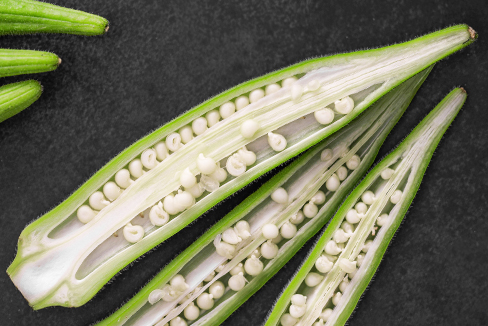
Okra (Abelmoschus esculentus) is a climate-resilient crop that can tolerate many harsh growing conditions (drought, heat, etc.). In addition to using immature okra pods as food, okra seed oil is of interest as an alternative cooking and food oil. However, the current average okra oil content is ~20%, which is lower than that in some common oilseed crops, e.g. rapeseed (~40%). The goal of this project is to breed okra by crossing diverse parent lines to improve seed oil content in offspring lines, develop methods for measuring and characterizing the oil in okra seeds using Time Domain-Nuclear Magnetic Resonance (TD-NMR), and find genetic markers for high seed oil content through genotyping by sequencing (GBS) approach. These measurements will help achieve okra lines with higher seed oil content, identify the okra genes associated with the high oil content, and adapt this crop plant for improved agriculture in the face of a changing climate.
The student will 1) work collaboratively with The Seed Farm at the Stony Ford Research Station site to grow ~500 okra plants for harvest and analysis, maintain watering systems, weeding planted beds, etc, 2) collect okra leaf samples, 3) extract DNA from these samples and previous samples, 4) construct DNA libraries for GBS analysis, including the process of DNA with a restriction endonuclease enzyme, conduction of polymerase chain reaction (PCR), and running gel electrophoresis, and 5) use TD-NMR to measure okra seed oil content.
Students will be trained to grow okra plants in the seed farm, extract okra leaf DNA, construct sequencing libraries, genotype okra lines by sequencing, and apply TD-NMR to measure okra oil content. Through the internship, students will gain knowledge for carrying out plant research in the field and laboratory settings. The main goals of this internship are to establish baseline methodologies that can be used to characterize okra as plant breeding progresses and help to grow plant crosses from the previous growing seasons to explore oil content genetic variability.
Faculty Sponsor(s) / Host Information
Jonathan Conway
Chemical & Biological Engineering (CBE)
Internship Requirements
Major in Science or Engineering discipline
Basic laboratory skills are preferred, but not required.
Work will periodically be done in the field at Stony Ford Research Station outdoors during hot summer weather. The majority of work will be done in the lab on campus.
Students should have a computer for data analysis and presentation. Access to a personal car for transportation to/from Stony Ford Research Station can be helpful, but is not required.
- Stony Ford Research Station is a 10-15 minute drive from Princeton’s campus. Students can drive a personal vehicle or will be required to obtain Princeton driver certification to be authorized to drive a University-owned vehicle to move to and from the farm site – this is helpful, but not required.
- Students will meet with internship mentors in the spring, prior to the internship start date. Reading materials may also be provided.
- Students are responsible for securing accommodations for the duration of their internship. On-campus summer housing is typically available the first week of June until the first week of August (details to become available in Spring 2026). If the internship falls outside of on-campus housing availability, students will need to secure alternate housing.
Internship / Project Supervisor(s)
Chao Liao, Postdoctoral Research Associate, CBE
Internship Dates And Funding Information
$800
1
9
June 1, 2026 to August 1, 2026