




The Role of Nitrification to Support Primary Production in the Ocean
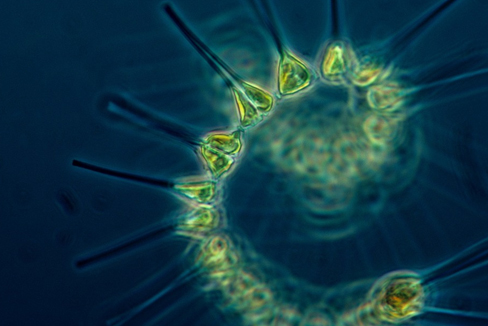
Ward Lab, Department of Geosciences, Princeton University
Princeton University
Climate and Environmental Science
Labwork
February 16, 2026 2:00 pm EST
Internship / Research Project Information
Of the major nutrients required for primary production, nitrogen is the one that is usually in short supply in ocean surface waters, such that nitrogen can be said to limit primary production. There are two sources of “new” nitrogen to support the growth of photosynthetic phytoplankton in the surface ocean. 1) Nitrate (NO3-) is produced by the process of nitrification, the oxidation of ammonium (NH4+) to nitrite (NO2-) and then to nitrate. 2) Nitrogen fixation, in which dinitrogen gas (N2) is converted to ammonium by microbial nitrogen fixers, makes the vast reservoir of atmospheric dinitrogen accessible to phytoplankton, which mostly do not possess the enzymes to fix N2 themselves. The relative contributions of these two sources depend on the availability of other nutrients, such as iron and phosphate, and the composition of the phytoplankton and microbial communities.
The North Atlantic is the most studied of all the ocean basins, and hundreds of measurements of nitrogen fixation have been made there. By contrast only a few dozen measurements of nitrite oxidation rates have been reported for the entire Atlantic basin. Thus, it is impossible to estimate the biological nitrogen budget for the Atlantic, or to hypothesize how it might change with global warming. Warming is predicted to cause changes in ocean stratification and circulation, which will affect the distribution of nutrients and thus the functioning of microbial and phytoplankton communities.
To address this knowledge gap, we carried out a research cruise in the North Atlantic, performing incubation experiments to measure nitrification rates on a transect across the central North Atlantic (~37oN). Another cruise is planned for 2026 to sample an equatorial transect (0oN) in the Atlantic. This project will analyze the experimental samples from the first cruise and measure the profiles of nitrification rates and concentrations of associated nitrogen nutrients. The results of the project provide the first measurements of nitrite oxidation in the North Atlantic, and will allow us to build a nitrogen budget for the basin.
The Intern will have the opportunity to be involved in analyzing the isotope incubation samples on the isotope ratio mass spectrometer to measure the amount of nitrite and nitrate formed in the experiments; measuring concentrations of dissolved inorganic nitrogen species involved in the reactions using UV/Vis spectrophotometry, plotting and analyzing the data.
The intern will learn about the important pathways of the marine nitrogen cycle, understanding the environmental controls on the various processes, by reading relevant scientific papers and participating in lab group meetings. Technical expertise will be acquired, including precision micropipetting, performing nutrient analyses using UV/Vis spectrophotometry and fluorometry, running the mass spectrometer for high precision measurements of the amount and isotopic composition of nitrate and nitrite. Computational and plotting skills including Excel and R as appropriate for the task will be developed.
Faculty Sponsor(s) / Host Information
Bess Ward
Geosciences (GEO) / High Meadows Environmental Institute (HMEI)
Internship Requirements
Introductory biology and chemistry
Basic computer skills, introductory level laboratory skills
Students should provide their own laptop
- Students will meet with internship mentors in the spring, prior to the internship start date. Reading materials may also be provided.
- Students are responsible for securing accommodations for the duration of their internship. On-campus summer housing is typically available the first week of June until the first week of August (details to become available in Spring 2026). If the internship falls outside of on-campus housing availability, students will need to secure alternate housing.
Internship / Project Supervisor(s)
Bess Ward, GEO
Samantha Fortin, Postdoctoral Research Associate, GEO
Internship Dates And Funding Information
$800
1
9
June 1, 2026 to July 30, 2026