




Drivers and Biogeochemical Impacts of Atlantic Sargassum Blooms
Deutsch Lab
Princeton University
Climate and Environmental Science
Computational Modeling/Data Analysis
January 7, 2026 2:00 pm EST
Internship / Research Project Information
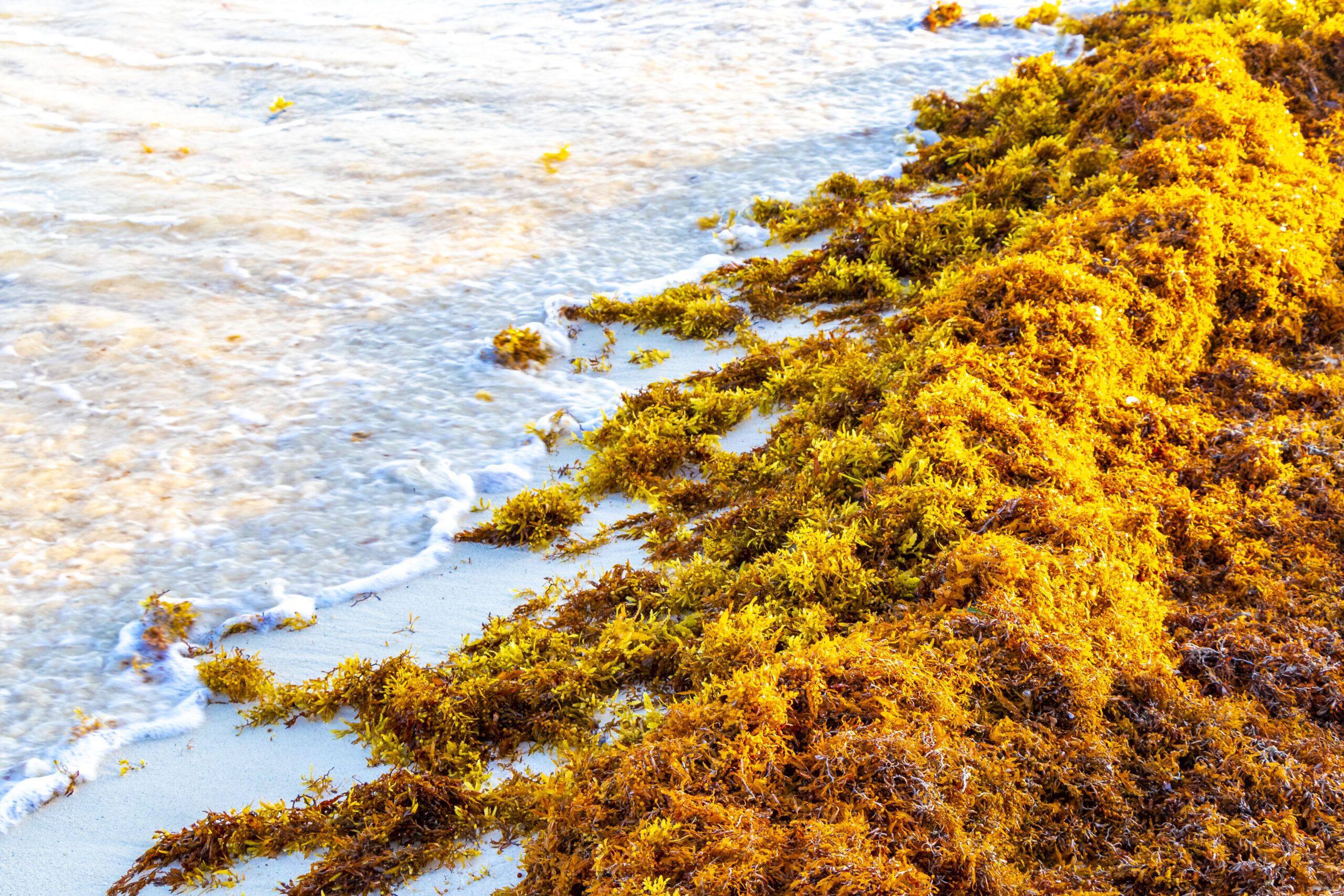
In recent years, massive blooms of seaweed have spread across the tropical Atlantic. These floating mats of Sargassum can provide food and habitat for marine life, but very large blooms may also disrupt marine ecosystems and affect coastal environments. Satellites can detect where Sargassum appears, but we still do not fully understand what caused these blooms to become so pervasive or how they influence the ocean below the surface.
This project will combine satellite maps with data from autonomous ocean observing platforms that dive through the water and record temperature, oxygen, and nutrients. The student will map where Sargassum occurs, identify ocean conditions that seem to promote blooms, and compare underwater measurements in regions with and without Sargassum. This will help reveal both the drivers of the blooms and their biogeochemical consequences for the ocean environment.
This project can support one or two students: one focusing on why the blooms form (i.e., drivers), and one focusing on their consequences (i.e., biogeochemical impacts)
The student will assemble and analyze a new database combining satellite observations of Sargassum with measurements collected by ocean-observing platforms. A first key responsibility will be the careful documentation of data sources and processing steps. The student will map where and when Sargassum appears, identify ocean conditions that seem to cause blooms, and compare underwater measurements in regions with and without Sargassum. The results will be visualized through maps, depth profiles, and simple statistical comparisons. Findings will be summarized in figures and written explanations, with the potential for a student-authored presentation or publication.
The intern will learn how to assemble, curate, visualize, and interpret large environmental datasets from satellites and ocean-observing platforms. They will develop or strengthen skills in scientific data analysis using tools such as MATLAB or Python. The student will gain experience exploring how ocean conditions can influence where and why Sargassum forms and what biogeochemical consequences the blooms may have. Throughout the project, the intern will practice communicating scientific ideas clearly through figures, writing, and discussion.
Faculty Sponsor(s) / Host Information
Curtis Deutsch
Geosciences (GEO) / High Meadows Environmental Institute (HMEI)
Internship Requirements
Some exposure to ocean or Earth science beneficial.
Some experience working with large datasets in a programming language (e.g. R, Python, Matlab) is beneficial but not necessary.
Student must bring a laptop.
- Student will be assigned a few papers to read prior to the start of the internship.
- Students are responsible for securing accommodations for the duration of their internship. On-campus summer housing is typically available the first week of June until the first week of August (details to become available in Spring 2026). If the internship falls outside of on-campus housing availability, students will need to secure alternate housing.
Internship / Project Supervisor(s)
Curtis Deutsch, GEO / HMEI
Yi Liu, Postdoctoral Research Associate, HMEI
Internship Dates And Funding Information
$800
2
8
June 1, 2026 to July 31, 2026