




Eco-Evolutionary Dynamics in Diverse Communities
Levine Lab, Princeton University
Princeton University
Climate and Environmental Science
Fieldwork, Labwork
January 7, 2026 2:00 pm EST
Internship / Research Project Information
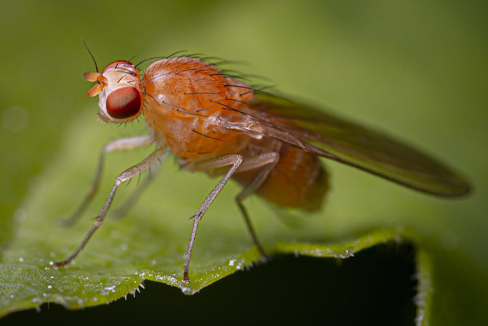
In recent work, we have shown that in pairs of competing orchard flies, species evolve in response to competition with one another, and this can powerfully affect species’ competitive trajectories and potential to coexist. Whether the knowledge of these eco-evolutionary dynamic processes we have gained from studying pairs applies in more diverse communities is unknown, not just in our system but in the field as a whole. In this project, we will perform mesocosm experiments in which focal species compete in pairs with a suite of different competitor species. Measuring evolution across these many pairs will give us expectations for how evolution may operate in more diverse communities. Measuring evolution in separate, high-diversity mesocosms will allow us to test these expectations.
The project will involve both field and lab work. The field work will include setting up and maintaining outdoor mesocosms and maintaining experimental treatments. The lab work may include: maintaining populations of lab-reared flies; making fly media; taking measurements of fly phenotypes; sorting fly species for outdoor experiments. Students will have the opportunity to do an independent project related to competition and evolution of orchard flies. The student and mentor will also read relevant papers together.
Students will learn about historical and contemporary research on competition, rapid evolution, and eco-evolutionary dynamics. Practically, the student will learn about experimental design and gain skills in species identification, ecological field sampling, maintenance of fly populations in the lab, laboratory techniques for measuring phenotypic change, and statistics and data analysis in R. Students will have the opportunity to conduct and potentially design their own experiments.
Faculty Sponsor(s) / Host Information
Jonathan Levine
Ecology and Evolutionary Biology (EEB)
Internship Requirements
Prior technical skills are not required -- all skills can be taught during the internship. The most important prerequisite is very careful attention to detail while completing repetitive tasks. The ability to work well in both teams and independently is also critical.
Working outside in hot and humid Princeton weather can be challenging. Maintenance of experimental mesocosms may include carrying weight up to approximately 30 lb.
Any necessary gear will be provided at no cost to students.
- Dates of the internship are flexible.
- Selected students are required to meet with internship mentors prior to the internship start date. Reading materials may also be provided.
- Students are responsible for securing accommodations for the duration. Please note that on-campus summer housing is typically available the first week of June until the first week of August (details to become available in Spring 2026). If the internship falls outside of on-campus housing availability, students will need to secure alternate housing.
Internship / Project Supervisor(s)
Jamie Leonard, Ph.D Candidate, EEB
Internship Dates And Funding Information
2
9
May 31, 2026 to July 31, 2026