




Coastal Development, Communities, and Conservation in Costa Rica
Conservation Science & Urban Ecology Lab (Rivera Lab)
Costa Rica
Urban Sustainabilty
Fieldwork
January 7, 2026 2:00 pm EST
Internship / Research Project Information
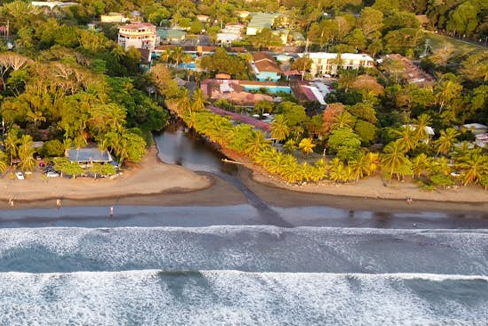
Roughly 40% of the world’s population lives within 100 km of the coast and 15% live within 10 km. Researchers predict a continued and accelerating growth in human coastal populations with subsequent anthropogenic impacts on Earth’s systems. Given rapid global change, there are calls for more holistic approaches to coastal development that explicitly consider the aspirations and needs of local communities alongside biodiversity conservation goals. Costa Rica, a small country in Central America, plays a leading role in the conservation arena at national and international scales. Coastal development in the country is rapidly increasing, bringing with it significant environmental and social challenges. Among these challenges is balancing economic growth with impacts on biodiversity and local communities. To date, conservation research in Costa Rica has primarily focused on ecological impacts, resulting in research gaps in our understanding of the socioeconomic and cultural impacts of coastal development.
Given rapid coastal development and the importance of Costa Rica for biodiversity conservation, the main goals of the internship and related activities are to:
- Understand the perceived impacts of coastal development (e.g. urbanization, tourism, gentrification, resource extraction) on biodiversity, cultural diversity, and local livelihoods in Costa Rica’s Pacific Coast;
- document local values, perspectives, and needs related to coastal development and conservation in Costa Rica;
- develop an agenda for future research on the social, ecological, and biocultural dimensions of coastal development in Costa Rica.
Selected interns will serve as field research assistants to the principal investigator/supervisor, Prof. Christian Rivera. They will accompany Prof. Rivera to key coastal communities along Costa Rica’s Pacific Coast.
Primary activities and responsibilities will focus on applying conservation social science methods to understanding the relationships among coastal development, local communities, and conservation, including:
- Documenting coastal development projects via written notes (detailed/thick description) and photography/video.
- Administering structured surveys with local residents, business owners, and tourists.
- Documenting local environmental knowledge and change through structured social science methods (e.g. oral history interviews, species lists).
- Engaging in frequent discussion and reflection on fieldwork and observations with the supervisor and research team.
- Compiling, standardizing, and maintaining an organized record of the collected data.
- Participating in a workshop to develop a research agenda on the social, ecological, and biocultural dimensions of coastal development in Costa Rica.
Students will gain knowledge and skills in:
- Conducting conservation social science research with humans via surveys, interviews, and participant observation.
- Collection and management of diverse types of data (field notes, interview, visual, audio).
- Systems thinking and knowledge on the links between cultural and biological diversity (biocultural diversity) in coastal systems.
- Knowledge of how diverse coastal development processes (e.g. urbanization, tourism, gentrification) affect conservation and local livelihoods in tropical systems.
Faculty Sponsor(s) / Host Information
Christian Rivera
University of Massachusetts Boston, School for the Environment
Internship Requirements
There are no specific prerequisites, but coursework in anthropology, environmental studies, ecology, and/or conservation biology is preferred.
At least one team member should have some experience in photography/video, though this is not required.
Protecting Human Research Participants (IRB)
Costa Rica’s Pacific coast can be very hot and humid during the rainy season (May-November). Selected interns should be comfortable living for 8 weeks in beach towns and communities (sand, heat, unpredictable rain, humidity, ocean, insects, wildlife, varied infrastructure). Work days may be physically demanding due to the weather and travel to and within coastal communities.
Working knowledge of Spanish (speaking, reading, writing).
Interns will be required to have a laptop. Interns will also need to bring clothing appropriate for the weather and other field necessities (e.g. water bottle, bug spray, sunscreen; most, if not all, of these can be purchased in Costa Rica).
- Students will meet with internship mentors in the spring, prior to the internship start date. Reading materials (primarily from literature in biocultural diversity and conservation science) will be required.
- Students will need to consult UHS for travel medical requirements. It is the responsibility of the student to be aware of entry requirements and to obtain any necessary documentation. Valid passport required. Students are required to register their travel with the University through Enroll My Trip. Information related to the University’s Permissible Travel Guidelines can be found here. Funding is contingent on travel registration and University approval.
- Students will make sure to make an appointment with University Health Services for international travel health and immunization information/requirements.
- The internship is well-suited for students with an interest in developing skills in social science research methods (e.g. administering surveys, conducting interviews, observational field notes)
- The students should feel very comfortable approaching and engaging with people from diverse cultures and backgrounds on a daily basis. Full cultural immersion is expected (language, food, activities).
- The direct supervisor will coordinate housing, internet, transportation, and other key logistics. Housing will be a co-living arrangement for the research team.
- Students will work at least 35-40 hours per week but should expect to have very flexible schedules. Fieldwork may take place on the weekends and early mornings, but there will be time for rest, primarily in the evenings.
- Students will work very closely with the direct supervisor and fellow team members during the internship period and will be expected to possess a strong sense of adaptability, flexibility, teamwork, maturity, resilience, and cultural sensitivity.
International Travel Requirements
No
No
Yes
Internship / Project Supervisor(s)
Christian Rivera, UMass Boston, School for the Environment
Internship Dates And Funding Information
$800 (plus int’l travel award)
2-3
8
June 1, 2026 to July 24, 2026