





HMEI Biodiversity Challenge awards $600,000 to inaugural projects exploring the roots of and pressures on biodiversity
The High Meadows Environmental Institute (HMEI) has awarded nearly $600,000 in inaugural funds from the Thomas A. and Currie C. Barron Family Biodiversity Research Challenge Fund — or Biodiversity Challenge — to six projects led by Princeton University faculty that will examine the effects of environmental change on biodiversity, while exploring what can be done to stem the loss of species.
Faculty, postdoctoral researchers, and graduate and undergraduate students from seven University academic units will undertake research intended to provide a clearer understanding of how extreme weather can influence evolution through natural selection; the extent to which competition drives biodiversity; the impact of domestic-animal pathogens on native wildlife; the molecular processes behind biodiversity; the effect of environmental change on the diversity of microorganisms; and the history of biodiversity as a concept in the life sciences and humanities.
Each of the two-year projects incorporates innovative research into an educational component such as undergraduate and graduate courses, independent undergraduate research, and hands-on summer research opportunities through HMEI’s Environmental Internship Program.
The Biodiversity Challenge is the newest research cooperative to be added as part of HMEI’s Grand Challenges program and was established in 2020 through a gift to Princeton from Currie C. and Thomas A. Barron. The initiative builds upon the University’s decades-long leadership in studying how biodiversity arises, how it is maintained, and how to sustain it in the face of growing demands for natural resources.
Brief descriptions of the projects, which were funded as an outcome of a campus-wide call for proposals announced earlier this year, are below.
Biodiversity Conservation and Health at the Human-Domestic Animal-Wildlife Interface in Madagascar
C. Jessica E. Metcalf, an associate professor of ecology and evolutionary biology and public affairs, will lead this project evaluating the impact of domestic-animal pathogens on the native wildlife of Madagascar and — in light of COVID-19 — the potential consequences for human health. Building upon facilities and contacts Metcalf established for her 2018 Urban Challenge project, the researchers will collect samples from endangered carnivores within the island’s protected habitats to determine the impact of the parasite Toxoplasma gondii, which is transmitted by domestic cats. They will then help design control programs to limit initial T. gondii infection in housecats, while also documenting the diversity of animal pathogens and the transmission modes that drive disease in Madagascar’s native carnivores.
The project will provide undergraduates with opportunities for field, laboratory and computational research in Princeton and Madagascar through HMEI’s Environmental Internship Program. Metcalf also will add a Planetary Health module to the Global Health Program undergraduate course, “Epidemiology: An Ecological and Evolutionary Perspective,” in which students will have an opportunity to work virtually with conservation students in Madagascar on the pathogenic threats to Madagascar’s biodiversity and the potential for mitigation strategies.

Endless Forms Most Beautiful: Uncovering the Molecular Basis of Diversity in the Vertebrate Lung
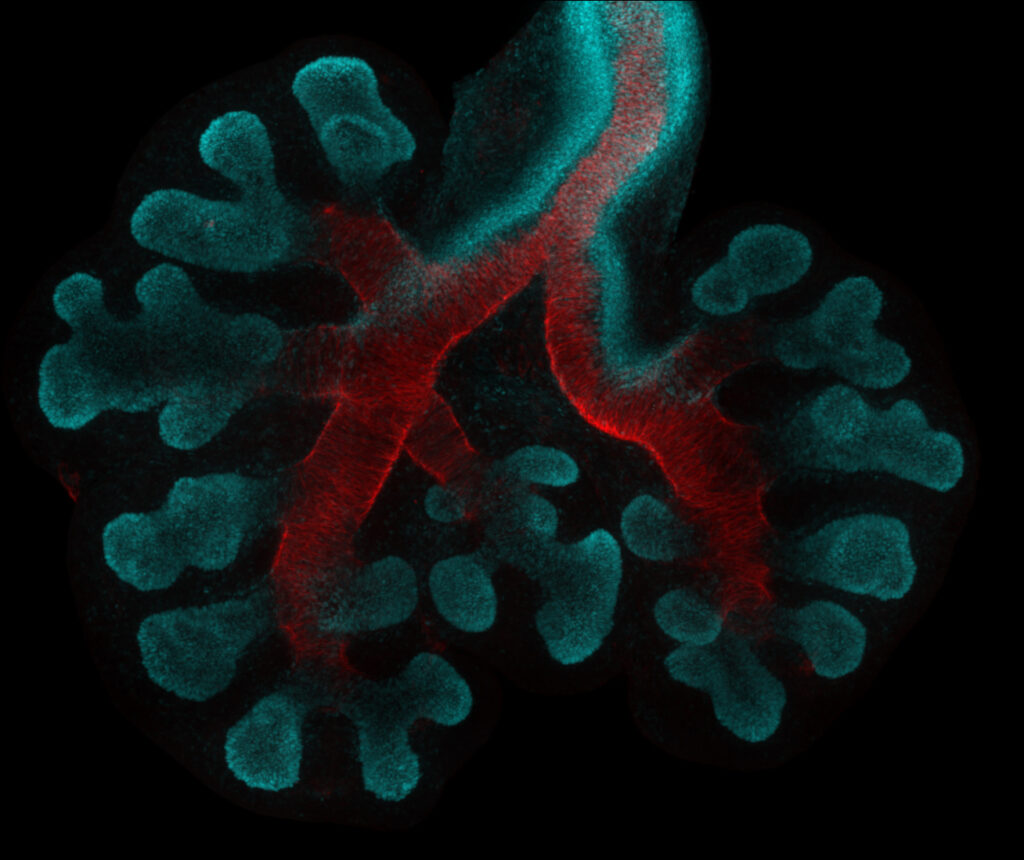
Celeste M. Nelson, the Wilke Family Professor in Bioengineering and Professor of Chemical and Biological Engineering, and Ricardo Mallarino, an assistant professor of molecular biology, will explore the “beautiful biodiversity” of lung structure in vertebrates to better understand the molecular and evolutionary processes behind biodiversity. The researchers will first construct an atlas of the genes that act to govern the differentiation of airway smooth muscle, a key tissue in establishing lung architecture. Then, they will work to uncover the regulatory sequences that control the activity of smooth-muscle genes across vertebrate classes, and identify genomic patterns of natural selection. Nelson and Mallarino plan to segue their data into proposals for federally funded projects focused on the mechanisms that give rise to biodiversity across organ systems.
Nelson and Mallarino will host undergraduate students pursuing independent research in bioinformatics, comparative genomics, bioengineering, and fieldwork, as well as develop a hands-on workshop on biodiversity and evolutionary developmental biology for Princeton Wintersession 2022.
Histories of Biodiversity
Erika Lorraine Milam, the Charles C. and Emily R. Gillespie Professor in the History of Science and professor of history, will explore the history of biodiversity as a concept in the life sciences and humanities. She will build on her previous work charting the history of long-term field sites dedicated to the study of animal behavior, and the origins of behavioral ecology as a discipline, by interviewing preeminent behavioral ecologists around the world. Milam will document the scientists’ shared experiences as they established, expanded and confronted the future of their landmark projects, all while witnessing dramatic changes in climate, land use, and human-animal interactions over the years. Milam will draw from her project to incorporate a field component to her history/environmental studies course, “History of Ecology and Environmentalism.”

Impacts of Hurricane Events on the Evolution of a Diverse Genus of Neotropical Lizards
Shane Campbell-Staton, an assistant professor of ecology and evolutionary biology, will lead a project that could provide a powerful toolkit for understanding the lasting biological impacts of hurricanes and extreme weather events. In 2017, surveys of the common tree lizard Anolis scriptus after Hurricanes Irma and Maria found that surviving individuals exhibited relatively larger adhesive toepads, as well as longer fore-limbs and shorter hindlimbs — traits that were passed on to the next generation. The researchers will test whether these and other physical traits provide an advantage in withstanding hurricane-force winds by evaluating the clinging performance of hundreds of individuals from three species of Anolis in an experimental setup. The researchers will then analyze tissue samples from each lizard to identify the regions of their genome that possibly determine hurricane-resilient traits and investigate whether they show predictable patterns in response to extreme weather events.
This project will provide undergraduates with opportunities to engage in integrative biological experimentation in support of their independent research, while also facilitating the collaborative collection of data and the building of a specialized toolkit. Undergraduates in the Campbell-Staton Group also will be expected to participate in semester-long discussions related to evolution in the Anthropocene.

The Maintenance of Species Diversity Through the Rapid Evolution of Competitive Ability
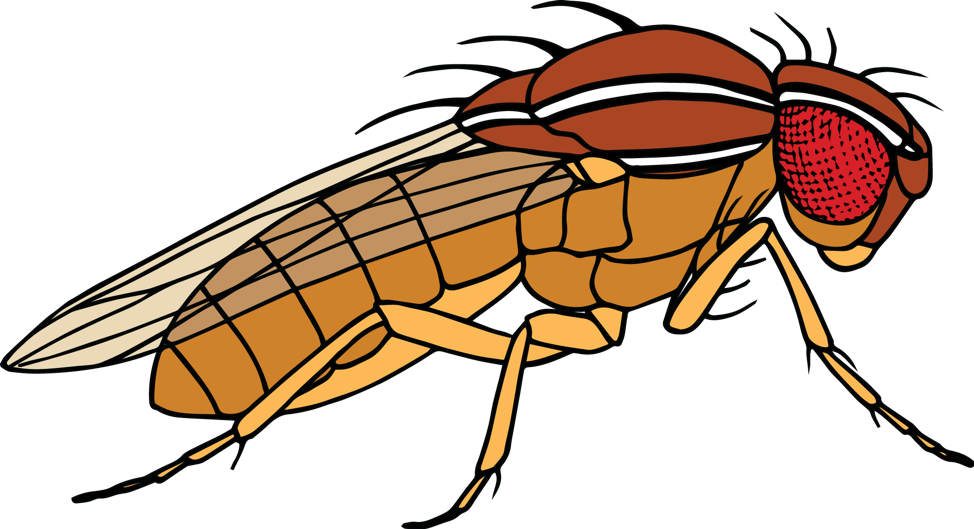
Jonathan Levine, professor of ecology and evolutionary biology, will test the extent to which competitive interactions foster biodiversity by introducing flies into populations with little genetic diversity or with genetically diverse populations. He will then monitor the abundances of the different species to examine how evolution regulates their coexistence. Levine will next run competition trials to test how much more competitive flies that evolve when they are in the minority become compared to flies that evolve when they are in the majority. Finally, Levine will compare competition-relevant traits such as body size, fertility and maturation rate for each species to explore the competitive mechanism behind his results.
Levine will recruit undergraduate students to work with him in field and laboratory settings, as well as develop independent research projects related to the eco-evolutionary dynamics driving coexistence. Students will have the opportunity to work in the populations genetics lab of his collaborator, Paul Schmidt, professor of biology at the University of Pennsylvania. Levine will translate this project into a case study for the undergraduate lecture and lab course, “Life on Earth: Mechanisms of Change in Nature.”
What Controls the Biodiversity and Function of Cryptogam Microbiomes?
Xinning Zhang, assistant professor of geosciences and the High Meadows Environmental Institute, will lead this study of how environmental change affects the diversity and function of the microorganisms that inhabit cryptogams — the Earth’s “living skin” of lichens, mosses and liverworts. The researchers will analyze samples of the lichen species Peltigera and associated mosses from the Appalachian Mountains and the Northeast to determine how elevation and local environmental conditions determine microbiome composition. They will then investigate the role of these microorganisms in the critical ecosystem functions cryptograms perform, particularly global nitrogen cycling, ecological succession, and acting as bioindicators of pollution. Finally, the researchers will relocate moss and lichen samples to warmer, more polluted locations in order to better understand the fate of cryptogams, microbiome diversity, and high-altitude ecosystems in a world increasingly shaped by climate change, pollution and habitat loss.
Zhang expects to host an HMEI environmental summer intern as a member of the research team, as well mentor undergraduate students conducting independent research related to the project. Zhang will integrate the microbial analysis of lichens and mosses collected into her course, “Microbial Geobiology.” To help the public better understand the importance of cryptogams, the researchers plan to recruit a student from the humanities for a summer project based in HMEI that will develop artistic representations of cryptogam diversity and function, possibly for inclusion in a field guide to be distributed at The Watershed Institute, a local NGO with which HMEI collaborates on topics of mutual interest.
