




Professor Luc Deike wins Experimental Physics Investigators Initiative award from The Gordon and Betty Moore Foundation
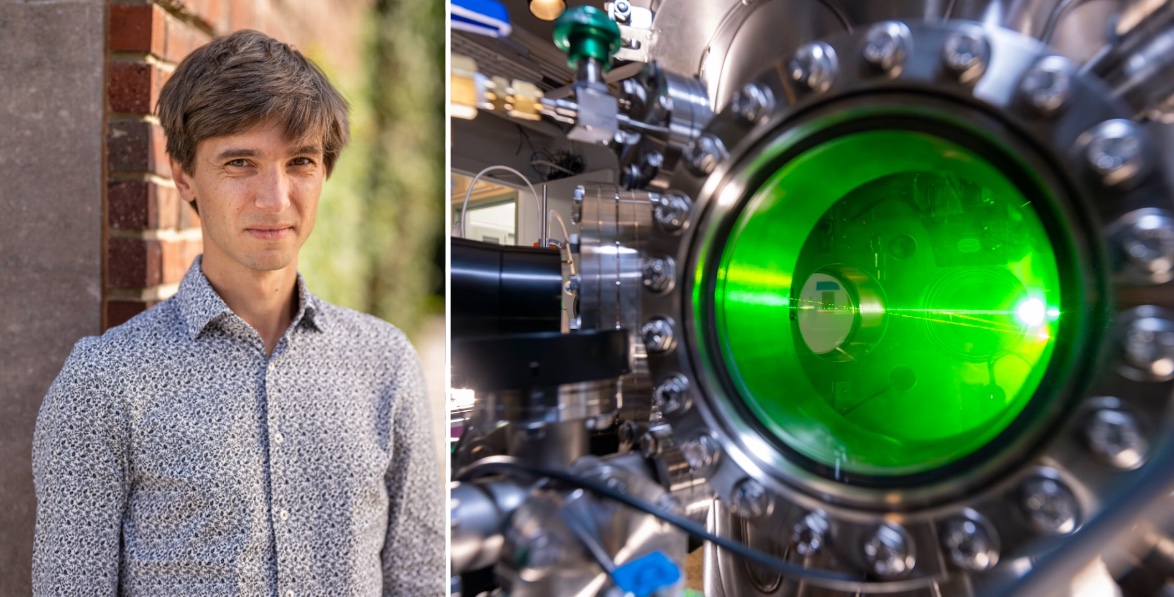
Luc Deike, professor of mechanical and aerospace engineering and HMEI, has won an Experimental Physics Investigators Initiative award from The Gordon and Betty Moore Foundation.
Deike’s research focuses on fundamental fluid dynamics, including surface waves, drops and bubbles in turbulence, motivated by their importance in ocean-atmosphere interaction, oxygen and carbon fluxes in the ocean, marine aerosol emissions and atmospheric cloud processes. The Moore Foundation award, announced today, will support Deike’s research using a unique new facility housed in his lab to study cloud microphysics at cold temperature.
The Moore Foundation award supports tenured, mid-career faculty doing experimental work in physics. Deike is one of 21 researchers from across the United States to receive the award, which will provide a total of $1,350,000 over the next five years.
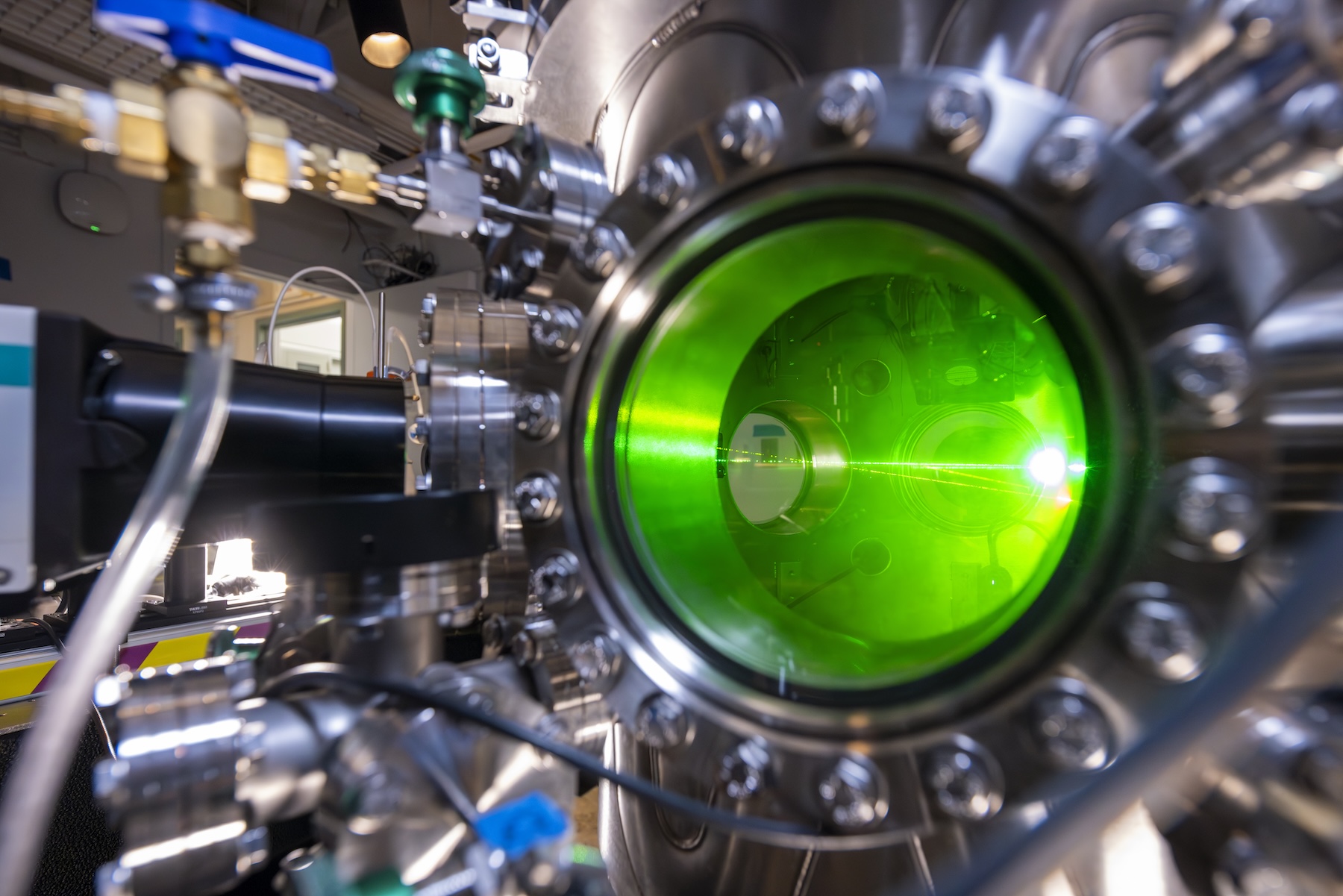
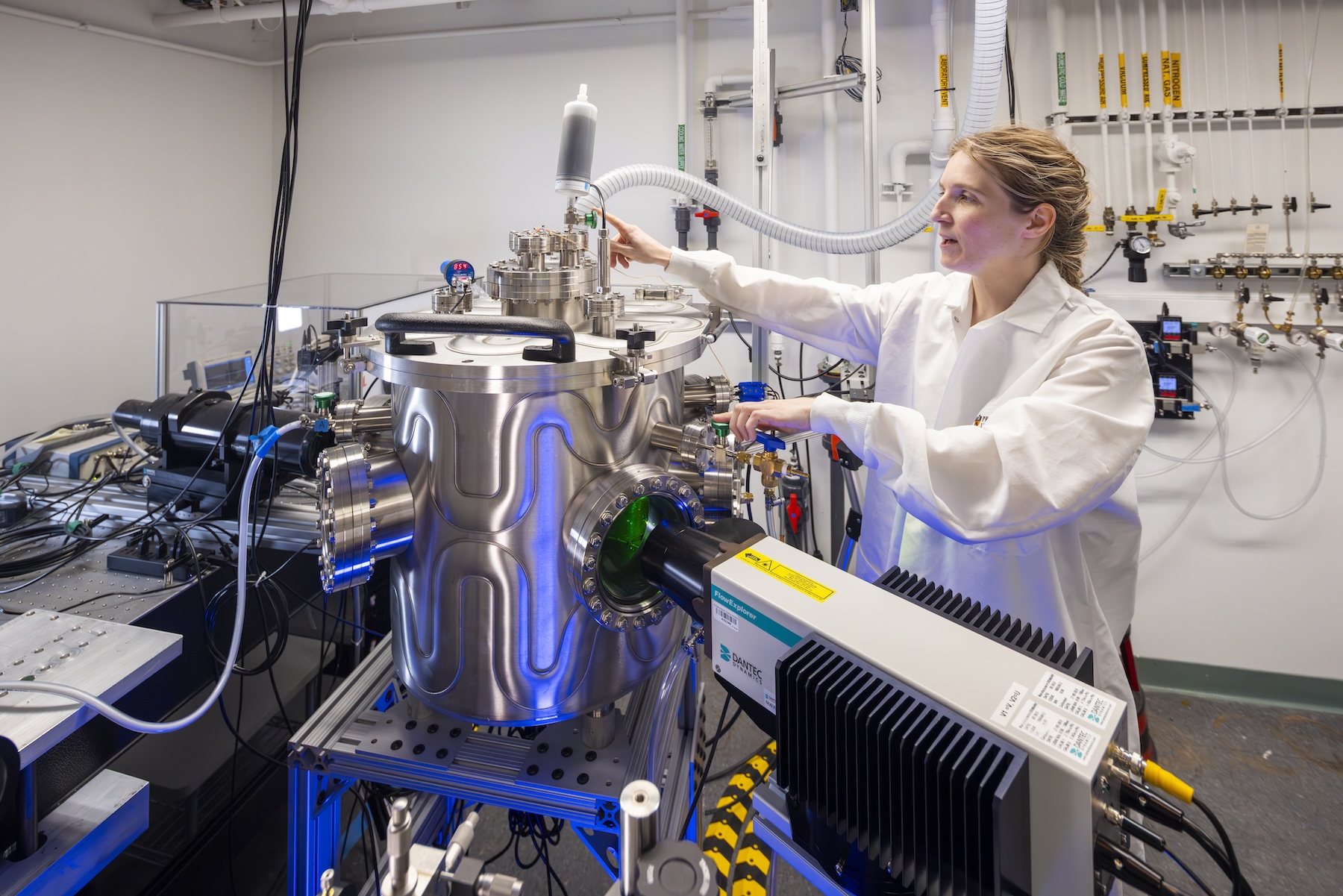
Clouds and airborne particles remain one of the largest sources of uncertainty in atmospheric science because they can either cool or warm the planet depending on where they are and how they form. A central challenge is understanding how tiny particles in the atmosphere initiate ice formation and how that process shapes the behavior of clouds. Deike’s group plans to address this problem using a rapid-expansion cloud chamber that can recreate a wide range of atmospheric conditions in the laboratory. By varying temperature, humidity, pressure, particle type, and turbulence, they will compare clouds made mostly of ice with lower-altitude clouds that contain both droplets and ice. Optical measurements will allow the researchers to watch cloud particles form and evolve in real time, helping reveal when ice begins to form, how crystals grow, and how turbulence changes the balance between liquid and icy cloud states.
Deike’s work could provide a stronger experimental basis for understanding how ice forms in clouds and for testing competing ideas about cloud behavior. In time, these measurements could improve the physical descriptions used in atmospheric models and offer a clearer picture of how airborne particles influence cloud lifetime, brightness, and warming or cooling effects. More broadly, the project could help clarify how clouds respond to changing atmospheric conditions, contributing to a better understanding of one of atmospheric science’s most persistent uncertainties.
Luc Deike, is Professor in the department of Mechanical and Aerospace Engineering and the High Meadows Environmental Institute. He is currently serving as Acting Director of the High Meadows Environmental Institute (July 2026-January 2027). He joined the Princeton faculty in 2017, coming from the Scripps Institution of Oceanography, University of California-San Diego, where he served as a postdoctoral researcher from 2013 to 2016. Deike received his Ph.D. from the University Paris Diderot in 2013 and his M.Sc. and B.Sc. from the École Normale Supérieure in Paris. He received the NSF CAREER award in 2019, the Francois Frenkiel award from the APS-DFD in 2023, the Milton van Dyke award from the APS-DFD in 2021 and 2025, and was 2025 Cozzarelli Prize Finalist, from the National Academy of Sciences. His commitment to mentoring was recognized by the Graduate Mentoring Award in 2023, from the Princeton University Graduate School and the McGraw Center for Teaching and Learning.