




Resplandy named 2019 Sloan Research Fellow
February 25, 2019 ・ Morgan KellyLaure Resplandy, assistant professor of geosciences and the Princeton Environmental Institute (PEI), has received a 2019 Sloan Research Fellowship in the field of ocean sciences from the New York City-based Alfred P. Sloan Foundation. Fellows receive a two-year $70,000 grant to pursue any lines of…
Houston’s urban sprawl increased rainfall, flooding during Hurricane Harvey
November 11, 2018 ・ Lynn Anderson Davy & Morgan KellyHouston’s urban landscape directly contributed to the torrential rainfall and deadly flooding experienced during Hurricane Harvey in August 2017, according to Princeton and University of Iowa researchers. The researchers report in the journal Nature Nov. 14 that Houston’s risk for extreme flooding…
Ocean’s heat cycle shows that atmospheric carbon may be headed elsewhere
June 19, 2018A Princeton-led study suggests that existing studies may have misgauged how carbon is distributed around the world
PEI Discovery Day 2018 exhibits array of student research in environmental studies
May 21, 2018 ・ Morgan KellyNinety-six students representing 20 academic departments showcased their research and discussed their findings with fellow students and University faculty.

PEI awards $515,000 to projects studying our changing climate and environment
April 23, 2018 ・ Morgan KellyPEI’s Climate and Energy Challenges program has funded five new projects totaling $515,000 to study our changing climate and environment
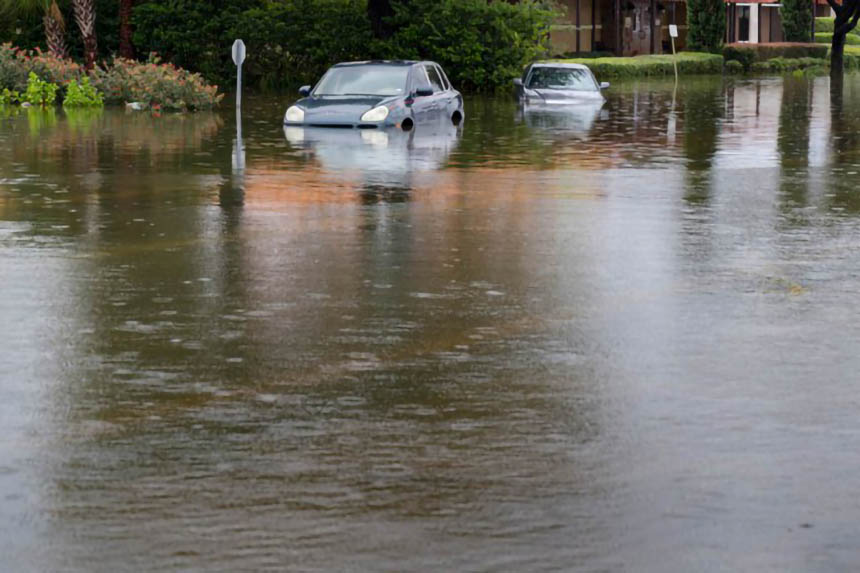
Half a degree more global warming could flood out 5 million more people
March 15, 2018 ・ Liz Fuller-WrightThe difference between an increase of 1.5 and 2 degrees Celsius in the global temperature could mean the inundation of lands currently home to about 5 million people.
So much depends on the velocity of tiny droplets cast upward
March 8, 2018 ・ Morgan KellyNew research describes the velocity of aerosols cast upward as bubbles on a liquid’s surface burst. Above the ocean, these droplets transfer moisture, salt, and even toxins such as algae from water to air.
By 2100, arid cities will suffer from more severe heat waves than temperate cities
February 15, 2018 ・ B. Rose KellyIn a reversal of current conditions, by 2100, arid cities such as Phoenix will become more susceptible to heatwaves compared to their surrounding rural areas, while cities on the eastern seaboard will actually be less severely affected by heatwaves compared to theirs.
PEI-STEP Fellow Jane Baldwin receives AGU Outstanding Student Paper Award
February 12, 2018PEI-STEP fellow Jane Baldwin received an Outstanding Student Paper Award at the American Geophysical Union’s 2017 Fall Meeting.

