




Sea-level rise is speeding up, says Princeton climatologist Michael Oppenheimer
January 13, 2020 ・ Liz Fuller-WrightOn Sunday, Jan. 12, the Princeton Environmental Institute’s Michael Oppenheimer spoke on CBS’ “60 Minutes ”with reporter John Dickerson about how climate change has exacerbated flooding in Venice, Italy. “Venice is facing an existential threat to the city as it…
Climate change could make RSV respiratory infection outbreaks less severe, more common
December 16, 2019 ・ Morgan KellyOne of the first studies to examine the effect of climate change on diseases such as influenza that are transmitted directly from person to person has found that higher temperatures and increased rainfall could make outbreaks less severe but more…
Researchers find nature’s backup plan for converting nitrogen into plant nutrients
November 11, 2019 ・ Joseph AlbaneseAlthough nitrogen is essential for all living organisms — it makes up 3% of the human body — and comprises 78% of Earth’s atmosphere, it’s almost ironically difficult for plants and natural systems to access it. Atmospheric nitrogen is not…
Why are big storms bringing so much more rain? Warming, yes, but also winds
October 29, 2019 ・ Molly SharlachFor three hurricane seasons in a row, storms with record-breaking rainfall have caused catastrophic flooding in the southern United States: Harvey in 2017, Florence in 2018 and Imelda in 2019. A new analysis by Princeton researchers explains why this trend…

Princeton’s ‘All for Earth’ podcast addresses environmental issues, solutions
September 12, 2019 ・ Morgan KellyThe new Princeton University podcast “All for Earth” delves into the urgency of today’s environmental crises — as well as the effectiveness of the tools we already have to mitigate them — through in-depth interviews with the people leading the…
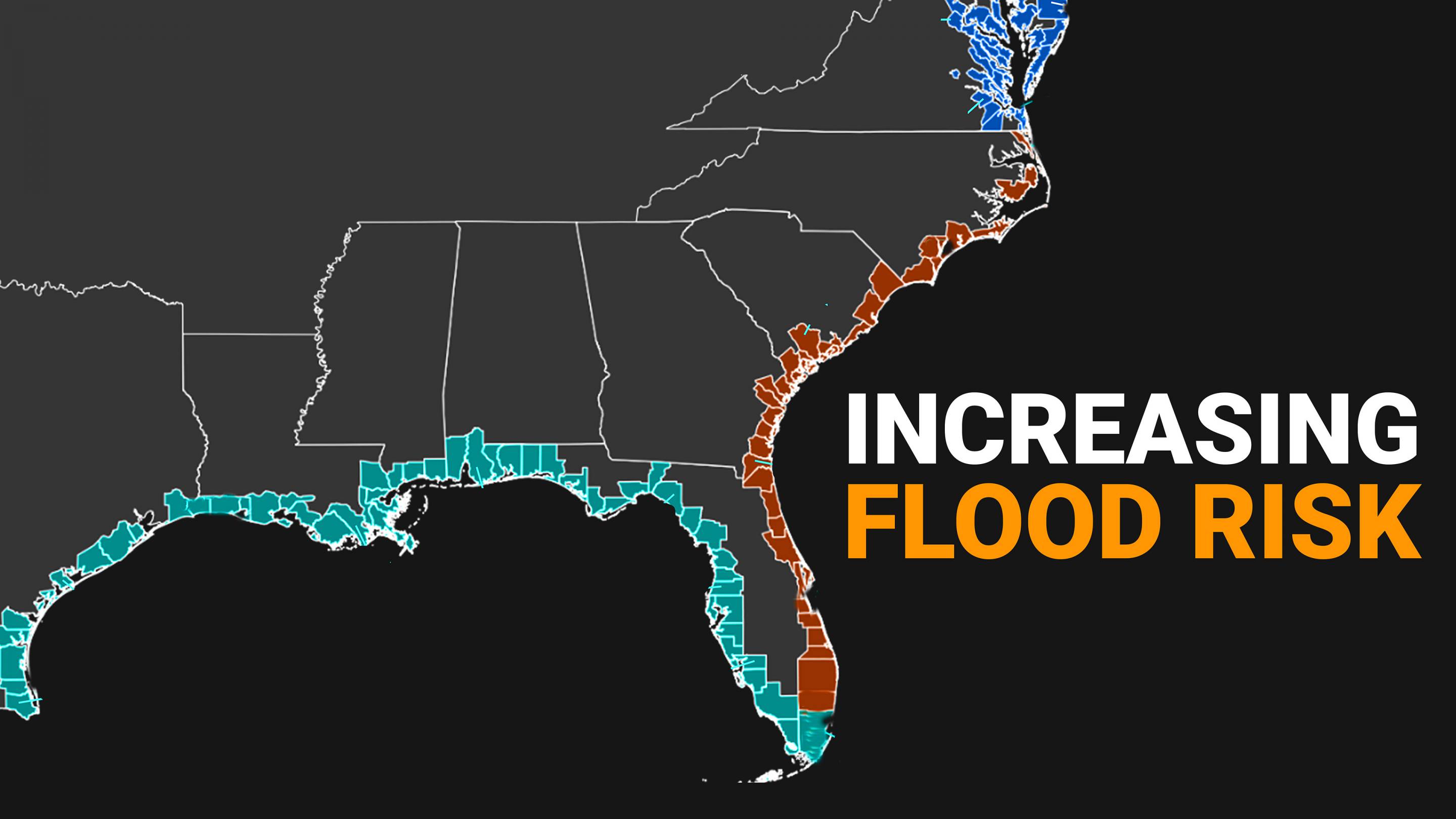
‘100-year’ floods will happen every one to 30 years, according to new coastal flood prediction maps
August 27, 2019 ・ Jen A. MillerA 100-year flood is supposed to be just that: a flood that occurs once every 100 years, or a flood that has a 1% chance of happening every year. But Princeton researchers have developed new maps that predict coastal flooding…
Fewer fish may reach breeding age as climate change skews timing of reproduction, food availability
July 24, 2019 ・ Joseph AlbaneseClimate change may be depriving juvenile fish of their most crucial early food source by throwing off the synchronization of when microscopic plants known as phytoplankton bloom and when fish hatch, according to Princeton University researchers. The long-term effect on…
Back-to-back heat waves likely to accelerate with climate change
May 8, 2019 ・ Joseph AlbaneseAs the planet continues to warm, multi-day heat waves are projected to increase in frequency, length and intensity. The additive effects of these extreme heat events overwhelm emergency service providers and hospital staff with heat-related maladies, disrupt the electrical grid…
Jacobson works to understand the climate through volcanoes and monsoons
May 6, 2019 ・ Morgan KellyEach year, the Princeton Environmental Institute (PEI) supports senior-thesis research by students from departments across the University. This story is part of a series exploring the disciplinary variety of PEI-funded undergraduate research carried out by members of the Class of…

