
Unmasking Fever in Madagascar
“You can’t treat what you don’t know, so we’re hoping to turn a map of unknowns into something tangible to act on,” said Ingrid Nilsson ’26.
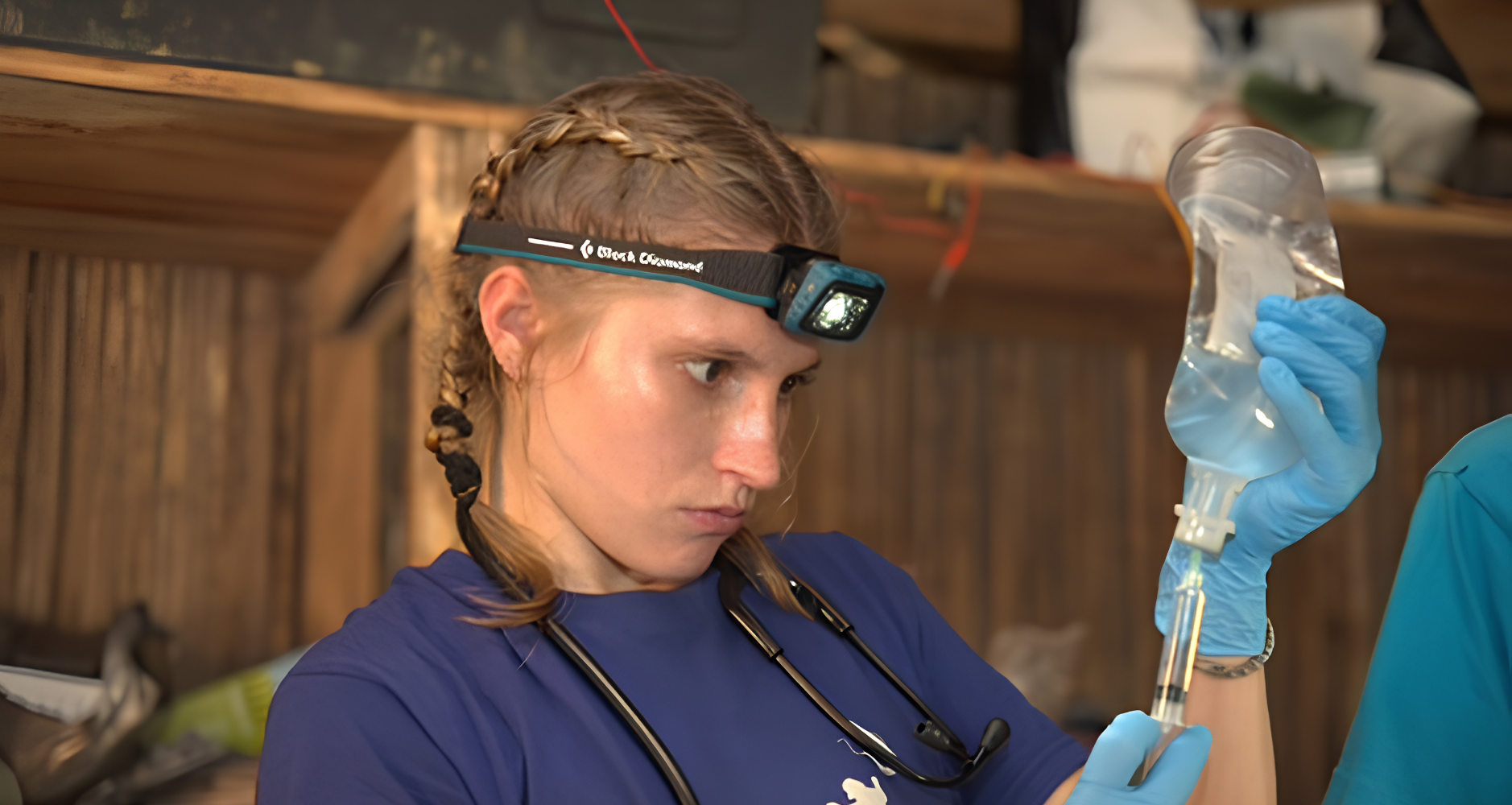
For her senior thesis, Nilsson conducted fieldwork in Madagascar, where she set up an epidemiological surveillance study to understand the causes and distribution of fever. This research was made possible by the Becky Colvin Memorial Award, which is presented each year by HMEI and the Department of Ecology and Evolutionary Biology (EEB). Since 1999, more than 50 Princeton students have received funding for senior thesis field research through the Colvin Award. Nilsson won the award to fund her fieldwork in Madagascar, where she investigated the epidemiology of fever.
Malaria testing by the World Health Organization has shone a light on malarial hotspots and made diagnosis and treatment easier, but it’s also revealed a huge knowledge gap: the unknown prevalence of non-malarial fever. In many parts of the world, if a person has fever but tests negative for malaria, there aren’t diagnostic tools available to identify the actual cause.
For her senior thesis, Nilsson set up a pilot study in Madagascar to investigate the distribution and prevalence of two fever-causing infectious pathogens: toxoplasmosis and dengue virus. Both are zoonotic diseases whose transmission and geographic range are sensitive to environmental change, but little is known about their current distribution.
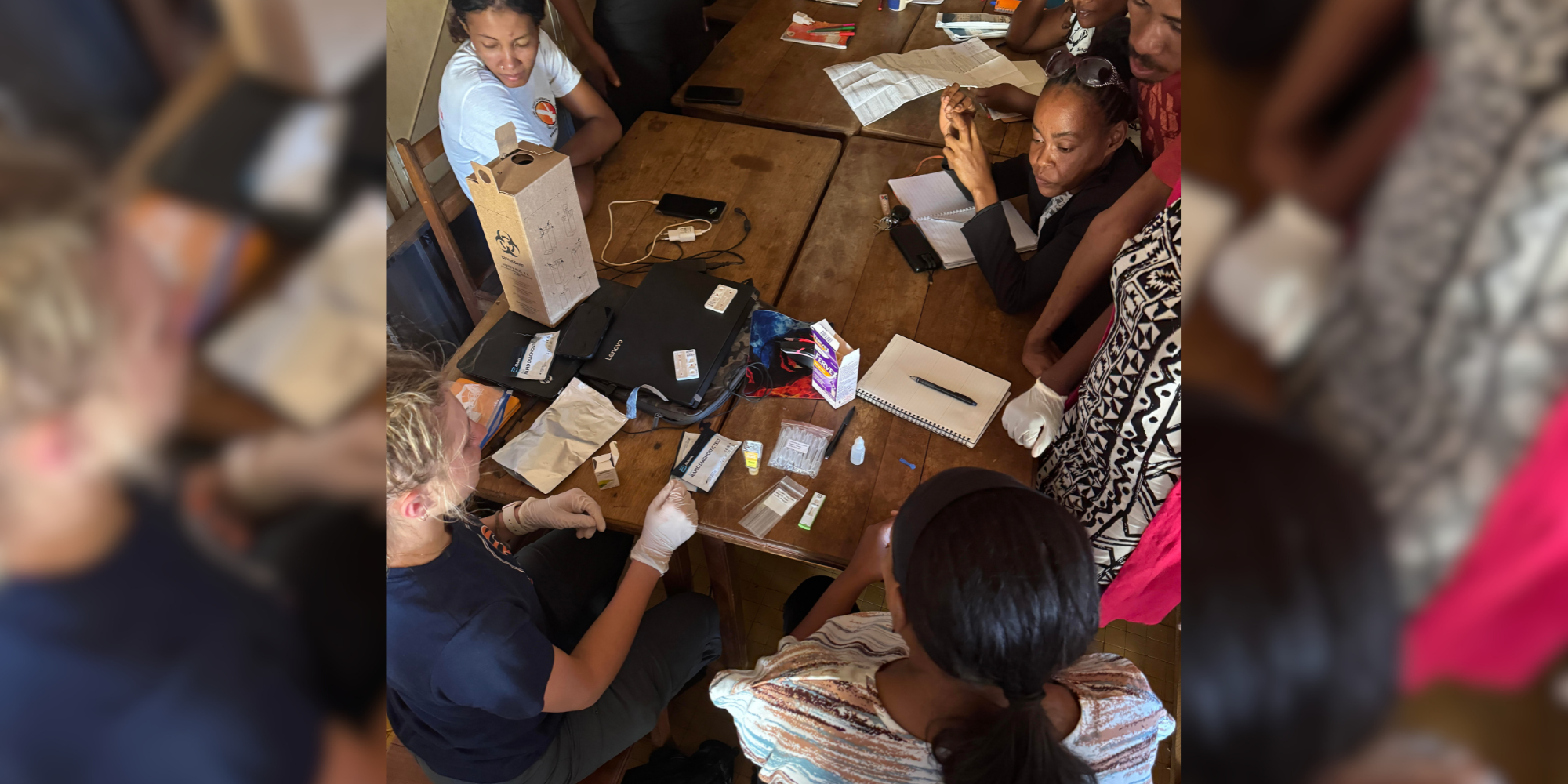
With funding from the Colvin Award, Nilsson travelled to Madagascar in the summer of 2025. There, she visited hospitals and health centers to distribute rapid diagnostic tests and enlist and train collaborators.
This was Nilsson’s second time conducting fieldwork in Madagascar. In the summer before her junior year, she studied toxoplasmosis in wildlife in Madagascar through a global health program internship.
“I was interested in continuing that thread with my senior thesis but focusing more on the people part of One Health—which is the view that human health, animal health, and the health of the environment are all interconnected,” explained Nilsson. “Disease burden might be shifting with climate change, so it’s important to understand how it’s distributed now, and how it could be shifting in vulnerable places.”
Unfortunately the study had to be paused in October 2025, when a governmental coup occurred in Madagascar, but Nilsson quickly pivoted towards a more computational project.
“Originally we were planning to conduct pilot surveillance at sites based on our suspicions of where these pathogens might be, but we didn’t have a model predicting the distribution of non-malarial fever,” said Nilsson. “The fact that data collection got postponed gave me time to create that model, which will make the surveillance project a lot more targeted.”
Using data collected between 2011 and 2021 from the Demographic and Health Surveys program, Nilsson used mathematical models to create heatmaps of fever and malaria prevalence across Madagascar. She found that almost 90% of children with fever tested negative for malaria and showed that the prevalence of non-malarial fever was associated with population density.
“Ingrid’s work was a unique blend of computational analysis building on her rich range of experience of field work in Madagascar,” said C. Jessica Metcalf, Nilsson’s senior thesis advisor and Professor of Ecology and Evolutionary Biology and Public Affairs “She identified and tackled the important question of Unexplored Fevers, identifying core new directions for surveillance.”
“Ingrid intrepidly researched an important blind spot in global public health—the vast and poorly understood burden of febrile illness due to things other than malaria in rural Africa—through both tough fieldwork missions in Madagascar and impressive computational work in between,” said Benjamin Rice, Associate Research Scholar of Ecology and Evolutionary Biology, who supervised Nilsson in the field.
The team recently obtained permission to recommence data collection, and Nilsson plans to continue working on the pilot project after she graduates. Eventually, she hopes to attend medical school, but she says research will be a big part of her career, no matter where she ends up.
“This project taught me how to thrive in the messiness of real-world research, and how passionate I am for it,” said Nilsson. “It’s definitely something I want to continue doing.”