




Nitrogen contained in coral provides evidence of human impact on the open ocean
May 19, 2017 ・ Pooja Makhijani, Office of Communications“Anthropogenic nitrogen deposition is, perhaps, substantially less severe than has been argued,” said Daniel Sigman.
How Temperature Guides Where Species Live and Where They’ll Go
February 16, 2017 ・ Morgan Kelly, Office of CommunicationsA Princeton University-based study suggests that the ranges of birds in the world’s temperate mountain areas may actually be determined more by temperature and habitat.
In African ‘Fairy Circles,’ a Template for Nature’s Many Patterns
January 19, 2017 ・ Morgan Kelly, Office of CommunicationsScientists have long debated how landscape-scale plant patterns such as the famous “fairy circles” of Namibia form and persist.
Tree-Bark Thickness Indicates Fire-Resistance in a Hotter Future
January 11, 2017 ・ Catherine Zandonella, Office of the Dean for ResearchA Princeton University-led study has found that trees in fire-prone areas around the world develop thicker bark. The findings suggest that bark thickness could help predict which forests and savannas will survive a warmer climate in which wildfires are expected to increase in frequency.
Wild Science: The Nature of the Mpala Research Centre
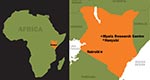
December 2, 2016 ・ Morgan Kelly, Office of CommunicationsPrinceton recently expanded its long involvement with Mpala by assuming the role of managing partner, working in close partnership with the Smithsonian Institution, the Kenya Wildlife Service and the National Museums of Kenya to support the facility.

PEI Faculty Seminar Series Video: Competition, Hydraulic Damage, and the Universal Rules Regulating Plant Water Use
October 11, 2016 ・ Igor HeifetzTiny valves on the surfaces of leaves, called stomates, regulate carbon gain and water loss by plants, and are thus linchpins of the global carbon and water cycles. Amazingly, the same simple model regulates stomates worldwide. This model is backed…
PEI Faculty Seminar Series Video: Lead Exposure and the Black-White Test Score Gap
February 9, 2016 ・ Igor HeifetzWe consider a new source of racial disparities in test scores: African American students’ disproportionate exposure to environmental toxins, and, in particular, lead. Using a unique individual-level dataset of children’s preschool lead levels linked with future educational outcomes for children…
Bringing People Together as Scientists to Save a Zebra Species
September 15, 2016 ・ Morgan Kelly, Office of CommunicationsIntrigued by zebras since he first studied wild horses in North Carolina during the 1980s, Dan Rubenstein focuses a large portion of his research on exploring how wildlife and livestock interact.
Seeing the Forest for the Trees: World’s Largest Reforestation Program Overlooks Wildlife
September 7, 2016 ・ B. Rose KellyNew research lead by Princeton University researchers finds that China’s Grain-for-Green Program falls short of restoring the biodiversity of China’s native forests.

