





PEI Class Day 2019 honors work, dedication of students in Princeton environmental studies
Forty-six Princeton University seniors emerged from Guyot Hall June 3 as the latest recipients of certificates in environmental studies from the Princeton Environmental Institute (PEI). The certificates and prizes for notable undergraduate research were presented during PEI Class Day 2019.
“Earning a certificate in environmental studies is a rigorous undertaking,” said Director of the Program in Environmental Studies Daniel Rubenstein, the Class of 1877 Professor of Zoology and professor of ecology and evolutionary biology. “Each of our students has worked hard to understand the issues, forces and the dynamics underlying the environmental challenges facing us today and that will present them with even greater challenges as they become tomorrow’s decision-makers and leaders.”
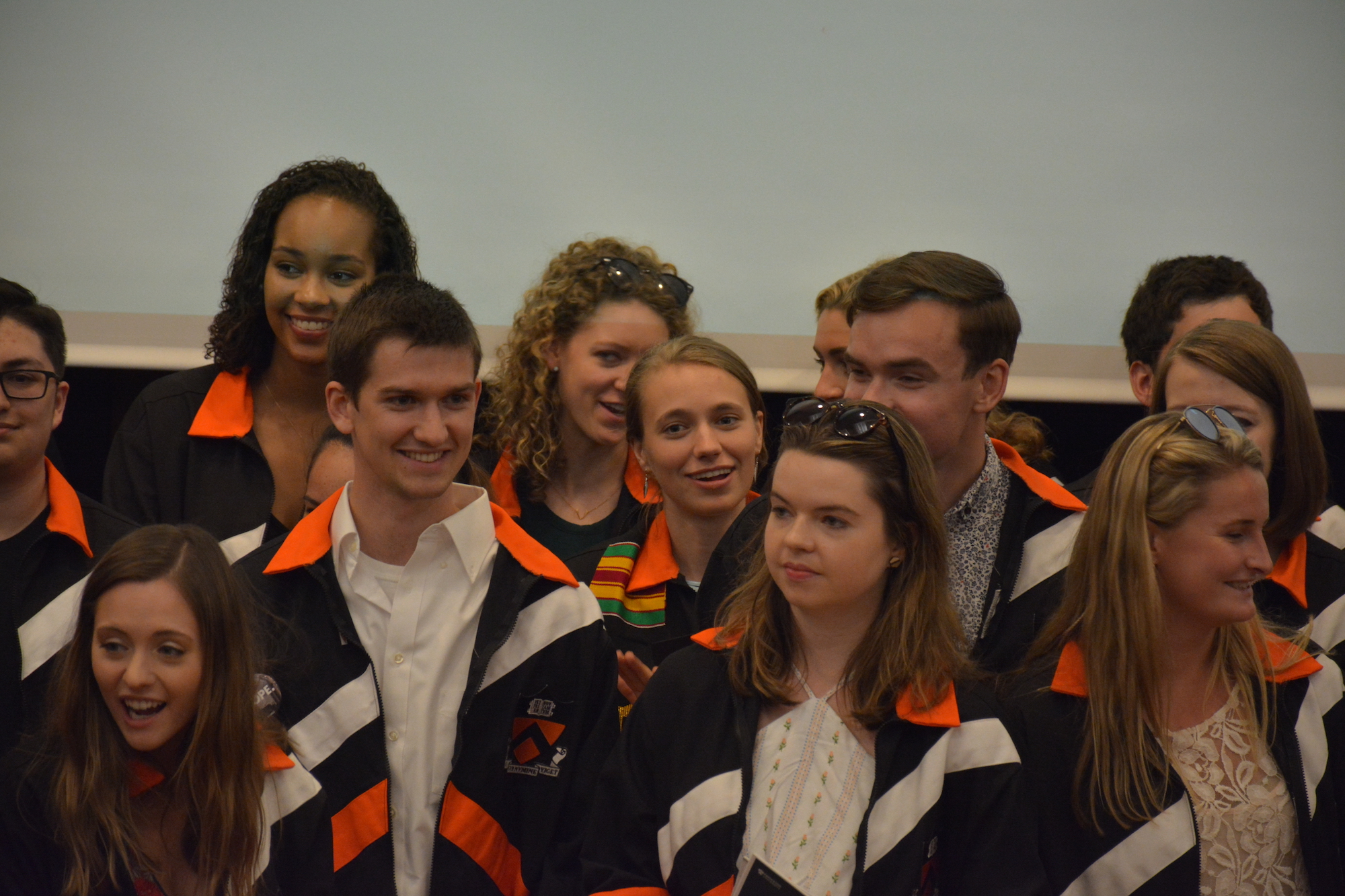
Before the certificates were awarded, select seniors received prizes for outstanding thesis research, or their exceptional engagement with environmental studies. Full descriptions of the prizes are below.
The Environmental Studies Book Prizes were presented to students who conducted exceptional research and demonstrated an ability to communicate about it. Daniel Shepard in philosophy and Elizabeth Wright in English received the prizes for Environmental Humanities; Alec Getraer in geosciences was honored with the prize in Environmental Natural Sciences; and Sophie Moscovici-Troyka and Erin Redding in the Woodrow Wilson School of Public and International Affairs received the prizes in Environmental Social Sciences.
Wright was recognized for her thesis that explored Southern food and agricultural through literature and cookbooks, including her grandmother’s cookbook documenting three generations of practices on her family’s farm in Florida. “It is a dazzling hybrid that brings together literary analysis, food and environmental studies, documentary reportage and family memoir,” said her adviser, Rebecca Rainof, research scholar and lecturer in English, when presenting the prize. “One of the great strengths of this thesis is that it makes us care about how food arrives at our tables, about the human costs and environmental hazards.”
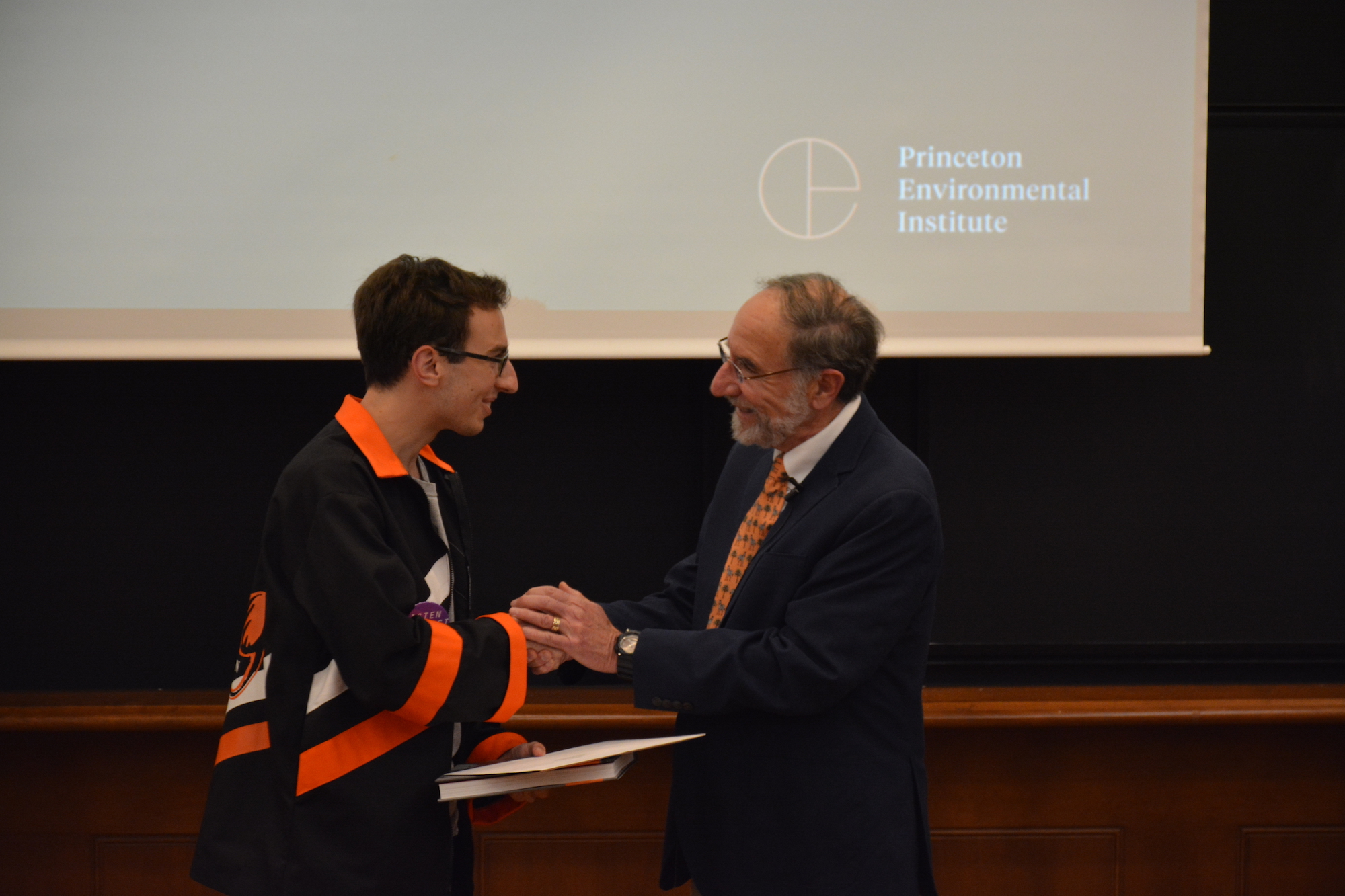
Shepard’s thesis on the individual responsibility for climate change was described by his adviser Melissa Lane, Class of 1943 Professor of Politics, as “an original and thoughtful approach to a topic that could not be more important.” She said, “It argues that individual ethical duties have to ultimately be connected to political action if they are to be truly fulfilled. Essential to the individual ethical responsibility for what Daniel identified as the structural injustice of climate change — one in which we’re all implicated — is a duty to engage in political action to keep it from continuing.”
Redding received her prize for her research on the barriers and solutions to the successful distribution of small-scale solar-power systems in the Philippines. “Her thesis addresses complex issues of rural electrification that face many developing countries, but are particularly challenging in the Philippines,” said her adviser, Darren Hammell, the Gerhard R. Andlinger Visiting Fellow in the Andlinger Center for Energy and the Environment, in remarks read aloud by Rubenstein. “Erin chose a relevant and impactful topic for her thesis and her sincerity in addressing these real issues clearly shone in the quality of her work.”
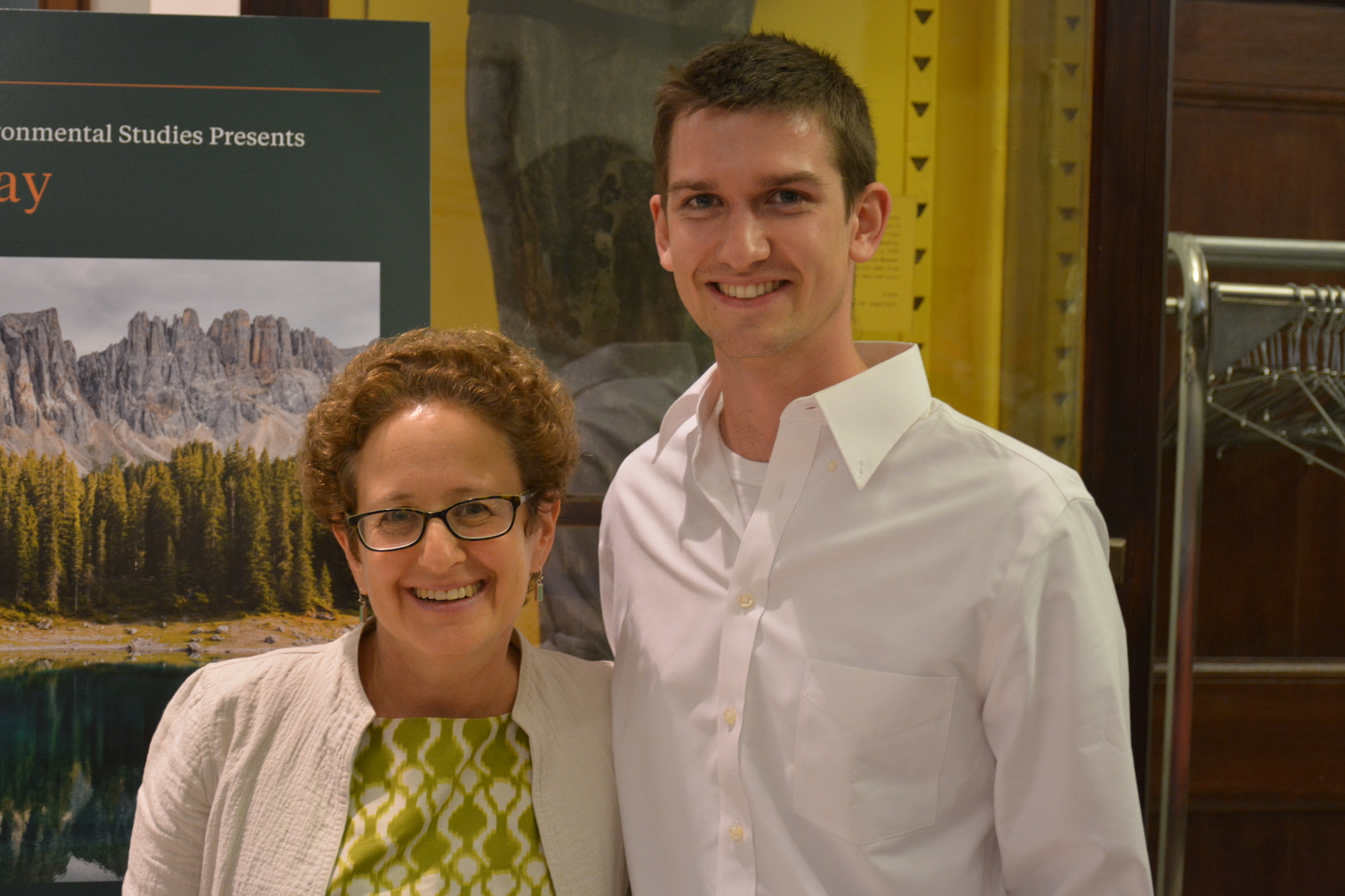
Moscovici-Troyka received her prize for her examination of the U.S. regulatory process regarding cell-cultured meat. Moscovici-Troyka “has written what may well be the first serious study of the policy issues [cell-cultured meat] raises,” said her adviser, Peter Singer, the Ira W. DeCamp Professor of Bioethics in the University Center for Human Values, in remarks read by Rubenstein. “This thesis stands out not only for its originality, but also for the resourcefulness, skill and diligence with which the task, once conceived, was carried out.”
Getraer received his prize from his adviser, Adam Maloof, associate professor of geosciences, for his examination of how climate influences the geometry of river networks. “With an unprecedented range of observational scales from centimeters to kilometers, new geometrical measurements and innovative statistical techniques, Alec emerged with a resoundingly positive test of his hypothesis and a completely new framework with which scientists can infer climate parameters from the slopes and branching angles of river networks,” Maloof said.
After the book prizes were awarded, Anne Morel-Kraepiel, research scholar and lecturer in PEI, was recognized for leading the 2018-9 ENV Senior Colloquium with a necklace crafted in the Kenyan community in which Rubenstein works, where, he said, “issues of sustainable landscapes, wildlife and people represent the nexus of challenges that students and faculty in PEI address in their teaching and in their research.”
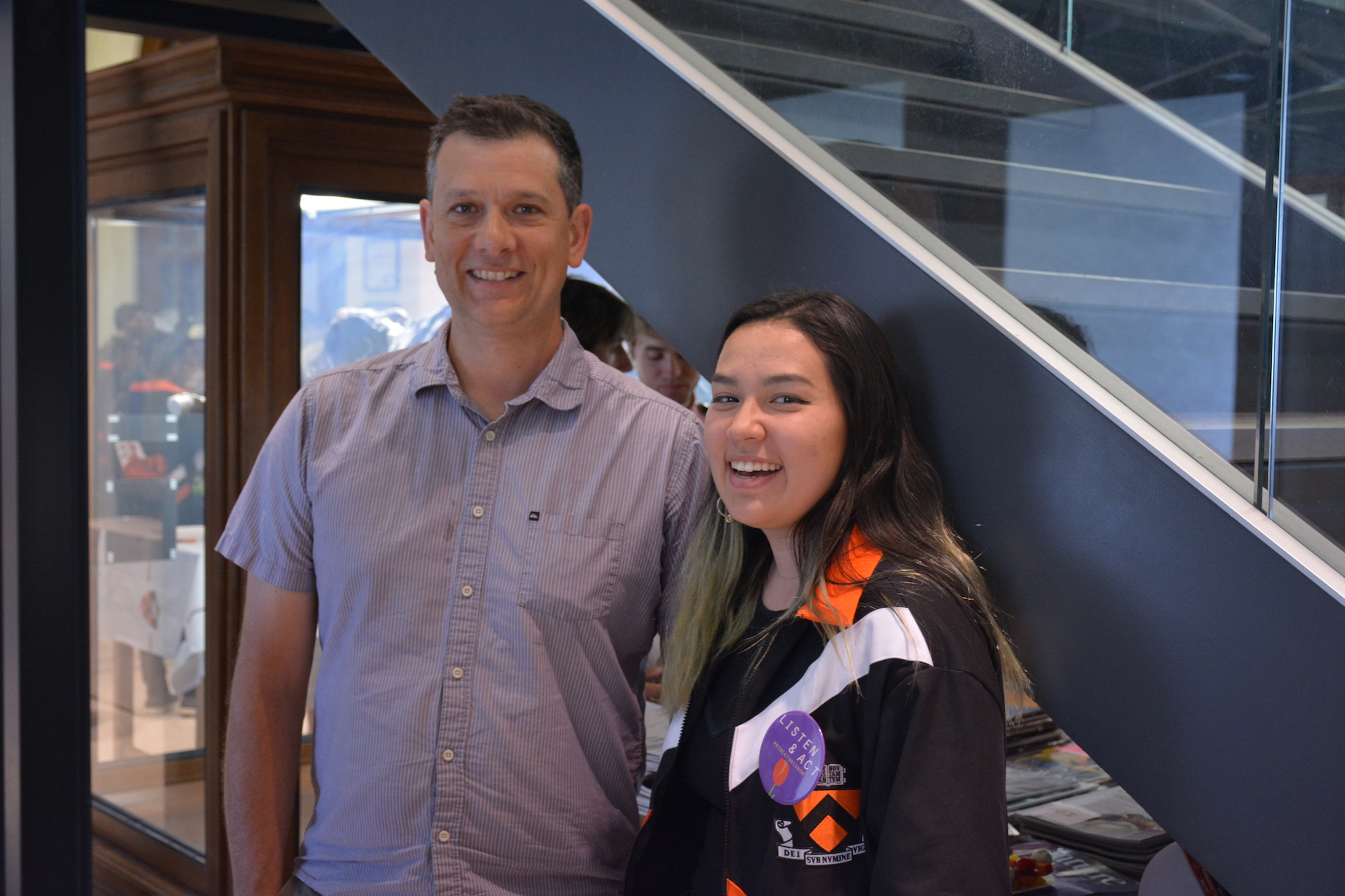
Jack Lohmann in English received the Environmental Studies Senior Thesis Prize for his work documenting life and politics on the Pacific island of Nauru, which was ravaged by phosphate mining in the 20th century and is now home to a controversial immigrant detention center. In bestowing the prize, his primary adviser, Rob Nixon, the Thomas A. and Currie C. Barron Family Professor in Humanities and the Environment and professor in English and the Princeton Environmental Institute, said that Lohmann “has written a thesis in remarkable ways blends an environmental story and a human rights story.”
“He is the only journalist alive today, as far as I know, who has amassed scores and scores of interviews with the detainees, with the guards, with the people who have gone into political exile,” Nixon said. “He asks the question of what is the relationship between the erosion of an environment — and when that environment becomes unviable — and the concomitant erosion of democracy and human rights.”
Emily Geyman in geosciences received the Peter W. Stroh ’51 Environmental Senior Thesis Prize for her work studying the environmental record in sediment in the Grand Bahama Bank to help project future climate change. Maloof, her adviser, said that Geyman also developed methods of using ocean color to determine water depth and tide dynamics, as well as for gauging sea-level change from stacking patterns of rock. “In scope, rigor and insight, Emily’s undergraduate work is equivalent to the best of Ph.D. theses,” Maloof said. “Emily is a generational talent with an insatiable curiosity who already has had a decisive and lasting impact on the field of Earth history.”
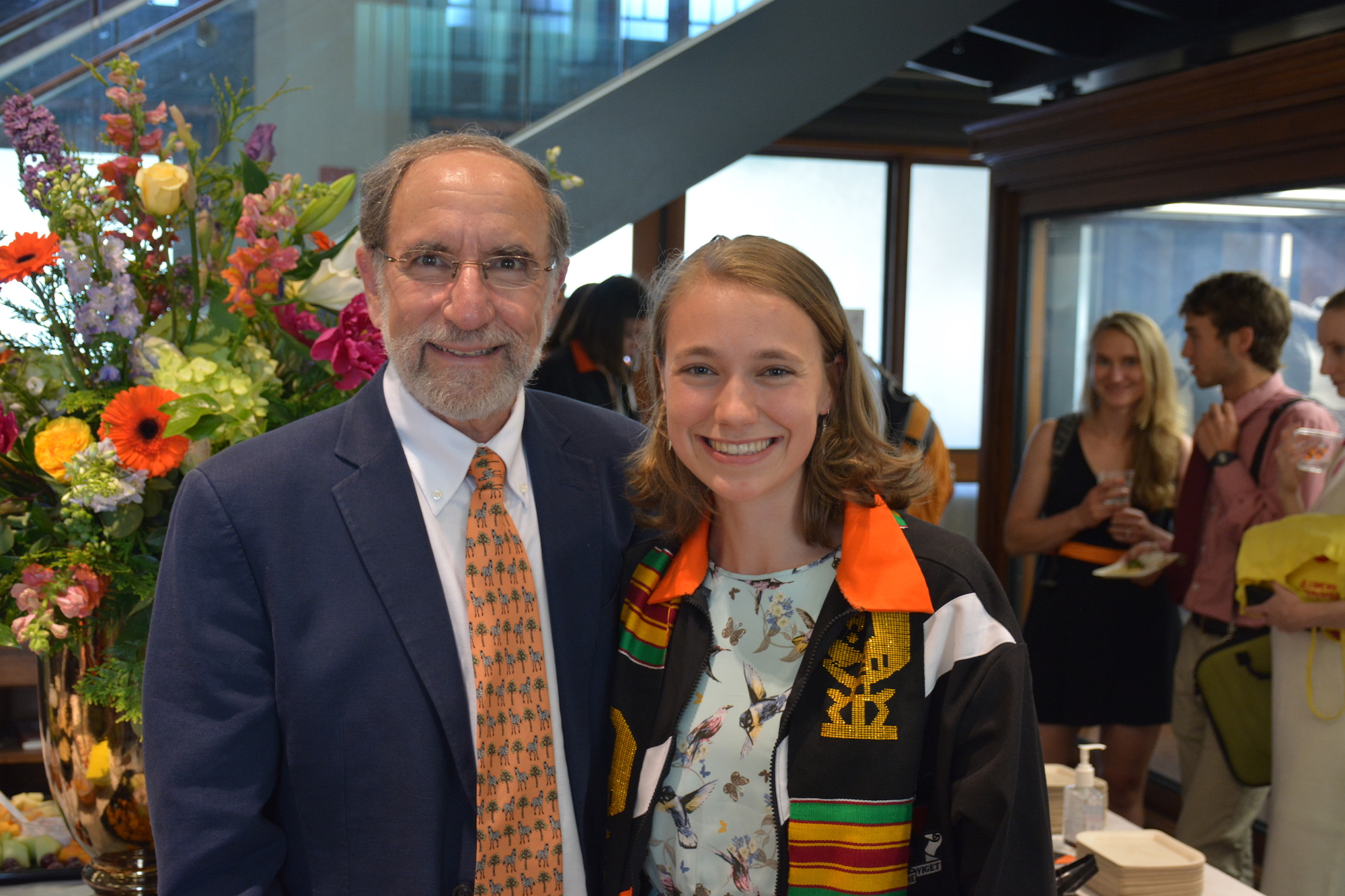
Noah Mihan in civil and environmental engineering received the T. A. Barron Environmental Leadership Prize for founding and leading the Princeton Conservation Society. The largest undergraduate group on campus, the society includes more than 600 members, has conceived of and raised funds for three documentaries, organized field trips to partake in environmental restoration, brought noted speakers to campus and arranged trips to Washington, D.C., for students to meet with members of the U.S. Congress on environmental issues. Their largest effort, the Sunda Rainforest Project, works with the World Wildlife Fund to reforest thousands of acres of land and protect endangered species in Sumatra.
“I’ve come to think of Noah as the Energizer Bunny of conservation at Princeton,” said David Wilcove, professor of ecology and evolutionary biology and public affairs and the Princeton Environmental Institute, in presenting the prize. “He works tirelessly to bring students, faculty, alumni and people outside the University to Princeton to create an extraordinary opportunities and experiences for our students to learn about conservation and to participate in real-world activities that make conservation happen.”
Lohmann, Geyman and Mihan all received a copy of “Princeton: America’s Campus” by W. Barksdale Maynard in addition to their prize certificates.
PEI Class Day Awards and Prizes
Environmental Studies Book Prizes
The Environmental Studies Book Prizes recognize students for the best poster or presentation of outstanding senior-thesis research, and their ability to communicate the results and significance of their work. Candidates are interviewed by PEI faculty and members of the institute’s executive committee, who then select the winners. The four winners in the environmental humanities and social sciences received a copy of “Dinner with Darwin: Food, Drink and Evolution” by Jonathan Silvertown, and the recipient in environmental natural sciences got a copy of “Coming into the Country” by John McPhee, which was selected by the student’s adviser.
Environmental Humanities
 Daniel Shepard, Philosophy
Thesis title: “Individual Responsibility for the Structural Injustice of Climate Change”
Thesis adviser: Melissa Lane, Class of 1943 Professor of Politics and Director of the

Elizabeth Wright, English
Thesis title: “The World We Did Not Make: Possession by the Past in Southern Kitchens and Literature”
Thesis adviser: Rebecca Rainof, Research Scholar and Lecturer in English
Environmental Natural Sciences
 Alec Getraer, Geosciences
Thesis title: “Tributary Slopes Record Regional Climate and Constrain Branching Angles in U.S. River Networks”
Thesis adviser: Adam Maloof, Associate Professor of Geosciences
Environmental Social Sciences
 Sophie Moscovici-Troyka, Woodrow Wilson School
Thesis title: “A Regulatory Cookbook for Emerging Foods: U.S. Oversight of Cell-Cultured Meat”
Thesis adviser: Peter Singer,
 Erin Redding, Woodrow Wilson School
Thesis title: “Accelerating Sustainable Access to Small-Scale Solar in Rural Areas of the Philippines”
Thesis adviser: Darren Hammell, Visiting Professional Specialist in the Andlinger Center for Energy and the Environment and Visiting Lecturer in Electrical Engineering and the Andlinger Center for Energy and the Environment
Environmental Studies Senior Thesis Prize
The Environmental Studies Senior Thesis Prize is awarded annually to one senior in the Environmental Studies Certificate Program who has produced the best thesis in the broad area of environmental studies. Student nominations are made by departmental thesis advisers.
 Jack Lohmann, English
Thesis title: “The Sentencing of Nauru”
Thesis advisers: Rob Nixon, Thomas A. and Currie C. Barron Family Professor in Humanities and the Environment and professor in English and the Princeton Environmental Institute; Tamsen Wolff, Associate Professor of English
Peter W. Stroh ’51 Environmental Thesis Prize
The Peter W. Stroh ’51 Environmental Senior Thesis Prize was established in 2003 as a memorial to Peter W. Stroh ’51, an active member of PEI’s Advisory Council and an enthusiastic supporter of the Environmental Studies Program. The $2,000 prize is awarded annually to the student who has produced the best thesis on an environmental topic.
 Emily Geyman, Geosciences
Thesis title: “How Do Shallow-Water Carbonates Record Sea Level and Seawater Chemistry? The Bahamas as a Modern Analog for Climate Records Preserved in Ancient Carbonates”
Thesis adviser: Adam Maloof, Associate Professor of Geosciences
T. A. Barron Environmental Leadership Prize
The T. A. Barron Environmental Leadership Prize recognizes a member of the graduating class who has distinguished himself or herself by showing exceptional dedication to environmental concerns, not only in formal classes and independent academic work, but also by leading and encouraging activities among fellow students and in the community at large.
 Noah Mihan, Civil and Environmental Engineering
Thesis title: “Ecosystem Engineers on Kenya’s Laikipia Plateau: Analyzing the Effects of Large Megafauna on the Ecohydrology of a Semi-Arid Kenyan Savanna Landscape”
Thesis adviser: Amilcare Porporato, Thomas J. Wu ’94 Professor of Civil and Environmental Engineering and Professor of Civil and Environmental Engineering and the Princeton Environmental Institute
 Maria Stahl ’20 in ecology and evolutionary biology received the 2019 Becky Colvin Memorial Award, which is presented by PEI and the Department of Ecology and Evolutionary Biology to provide support for travel, research supplies, and other expenses associated with field research for the senior thesis. Stahl, who is advised by Robert Pringle, associate professor of ecology and evolutionary biology, will study how herbivore populations in Mozambique’s Gorongosa National Park respond to the effect of fire — particularly controlled burns — on the park’s vegetation. Stahl’s work could be crucial to managing the continued recovery of Gorongosa’s wildlife and ecosystem.