




(stock.adobe.com)
New Paper Examines How Storytelling Shapes Learning from Disasters
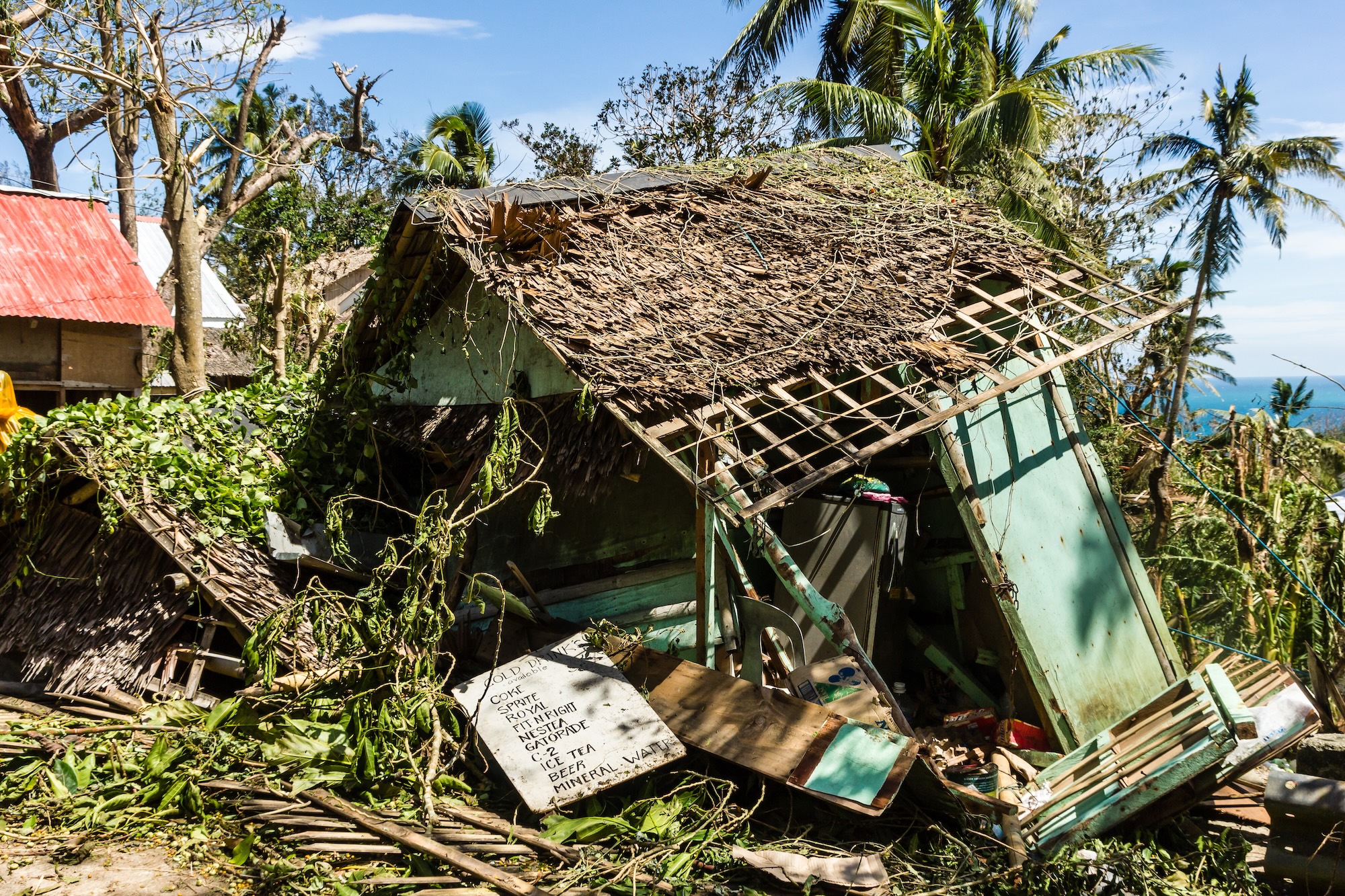
In November 2013, the world watched the slow trickle and then sudden deluge of media coverage of widespread devastation from Super Typhoon Haiyan, one of the strongest storms ever recorded, as it slammed into the central Philippines. Over a million homes were damaged or destroyed by record-breaking winds, flash floods and storm surges that reached up to 20 feet. Mario Soriano Jr., an environmental fellow at Princeton University’s High Meadows Environmental Institute who was working in Manila at the time, said those images of destruction have remained with him through the years. “This massive disaster reshaped my conception of what level of destruction typhoons are capable of,” recalled Soriano, whose recent paper, published in npj Climate Action, examines how high-level public discourse in the media and elsewhere percolated down to communities that were directly affected by Typhoon Haiyan.
Soriano went on to become a hydrologist, specializing in how human activities shape water flows, and how water, in turn, influences human adaptations. His paper, Public discourses and personal narratives of learning from disaster, examines how the storm still shapes public discourse and, more broadly, how storytelling and personal narrative can lead to post-disaster policies that are more tailored to the needs of local communities.
Soriano and several multi-disciplinary colleagues at Princeton used natural language processing to analyze over 15,000 English language newspaper articles and 300 peer-reviewed paper abstracts about the storm to identify key topics. They found a dynamic multiplicity of frames through which the disaster was discussed. For example, in academic papers, an initial focus on storm surge and emergency medicine gradually shifted to topics related to recovery and mental health. Climate change was also a popular subject in the immediate aftermath of the storm but then waned somewhat over time, only to experience a more recent resurgence. Media stories likewise shifted: in the beginning, they primarily focused on economic impacts and aid for survivors but then pivoted to topics related to climate change and disaster risk reduction.
Working with Blue Lab media studio, Soriano and team also created a podcast, Carried by Water, that interweaves personal stories, scientific insight and political commentary to paint a complex picture of Haiyan’s lasting effects on the country and the public psyche.
“This interdisciplinary project integrates environmental science with the methods and commitments of community-engaged research into an original audio story series that offers fresh insights into the local impacts of large-scale disasters like Super Typhoon Haiyan (Yolanda),” said Allison Carruth, professor in Princeton’s Program in American Studies and High Meadows Environmental Institute and director of Princeton’s Blue Lab. “A flagship project of Blue Lab, Carried by Water—and the lessons it conveys that this paper details—exemplifies our novel approach to research-driven, hyperlocal climate storytelling.”
“Mario’s work is emblematic of HMEI’s interdisciplinary collaboration to study the environment,” said Reed Maxwell, professor of civil and environmental engineering and HMEI, and senior author on the paper. “This podcast and publication represent a collaboration between the IGWMC and Blue Lab; between the fieldwork, podcast production and the NLP analysis, this broad combination of research techniques is the way that many challenging environmental problems must be studied.”
For the podcast, Soriano and team conducted interviews with over 50 people—including survivors, government officials and researchers—to reveal additional insights on how those discourses have influenced everyday decision-making by individuals and institutions. In affected areas, they found that the memory of Haiyan is still very much alive, with lasting impacts on weather forecasting and risk communication, protocols for evacuation and coordination, as well as disaster education and infrastructure. Individuals also take evacuation warnings more seriously compared to before Haiyan. The research team also echoes previous findings that some of the policies enacted in the rush to rebuild homes in areas farther inland had the unanticipated detrimental effects of breaking up long-standing neighborhoods and making it harder for some people to earn a living.
“Those kinds of social values were undermined by the push for more physical safety, although we are beginning to also see shifting perspectives and divergent outcomes in communities that experienced different policies,” Soriano said.
Through the podcast, the team hopes to remind researchers and policy makers of the importance of including affected communities when devising solutions. “By amplifying voices on the ground,” Soriano continued, “we can come to a more people-centered, justice-oriented response in terms of how we think about community recovery and how we adapt to climate change as a society.”