




Machine Learning Predicts Abrupt Online Shifts, Offering New Insights for Ecological Forecasting
Abrupt shifts can reshape the environment with little warning — from fishery collapses to disease outbreaks to the tipping of Earth’s climate subsystems. Detecting early signs of these critical transitions could help us prepare for or even avoid them, but finding robust early warning signals requires detailed data, which real-world ecological and social systems rarely provide. In a new study, HMEI researchers in Simon Levin’s Lab turned to an unlikely source of such data: Reddit’s r/place experiment, a large-scale social game where millions of users collaboratively created pixel art on a shared canvas. Using machine learning, the Princeton team developed an early-warning system capable of predicting abrupt changes in online social dynamics, which serves as a testbed for forecasting not only social transitions, but also abrupt changes across ecological and environmental systems.
The r/place experiment provided a unique dataset for studying emergent groups that must compete for limited resources. Each participant could change the color of only one pixel of a giant canvas every five minutes, and communities organized to create intricate artworks. These “compositions” often underwent sudden transitions when one image was replaced by another due to coordinated efforts or conflicts between groups. These dynamics mirror processes seen in ecological systems, where species compete for limited resources and can collapse abruptly.
“When I first saw the r/place canvas, I was amazed by the community commitment and by the complexity of the artwork that emerged,” said Annie Stephenson, an author of the paper and a postdoctoral researcher at Princeton’s High Meadows Environmental Institute. “The communities have to coordinate and compete over real territory, and we can trace every change that adds up to a community’s survival or collapse.”
The study, published in Proceedings of the National Academy of Sciences, introduces a machine-learning model that predicts when these transitions are likely to occur. The model was trained on data from the 2022 r/place event, which involved more than 10 million participants making over 160 million pixel changes over a few days. The results were impressive. Their algorithm successfully predicted half of the transitions within 20 minutes of their occurrence, with only a 3.6% false positive rate. It also demonstrated predictive power up to six hours before a transition, outperforming traditional early warning indicators like autocorrelation and variance. When tested on the 2023 r/place data, the model kept predictive power, showcasing its ability to generalize across contexts.
“We train with a very complex, large-scale system based on human decisions that seem random most of the time, but we do find ways nonetheless to obtain predictive power,” said Guillaume Falmagne, an author of the paper who conducted the work as a postdoctoral researcher at HMEI. “Being able to foresee shifts in such a human-led system almost baffled us.” Since many environmental transitions are driven by human actions, predicting shifts in a complex human system could be a step toward forecasting socio-ecological ones.
What sets this research apart is its focus on interpretability. Machine learning models are often criticized for being “black boxes,” providing predictions without explaining the underlying mechanisms. By using tools that reveal how specific features of the data contribute to the model’s predictions, the team identified 12 distinct signals that precede transitions in r/place compositions.
“One prominent warning signal we detect has the telltale signs of critical slowing down, a well-studied indicator of an approaching tipping point,” said Stephenson.
Critical slowing down occurs when a stable system starts bouncing back much more slowly from small jolts right before hitting a tipping point—imagine a ball rolling more and more slowly in a valley that is progressively flattening.
Paradoxically, another behavior, called “critical speeding up,” can also precede a transition. Here, the composition recovers increasingly quickly from disturbances, which suggests that a successful attack may be imminent.
The ability to predict and understand critical transitions in complex systems has applications in environmental science and ecology.
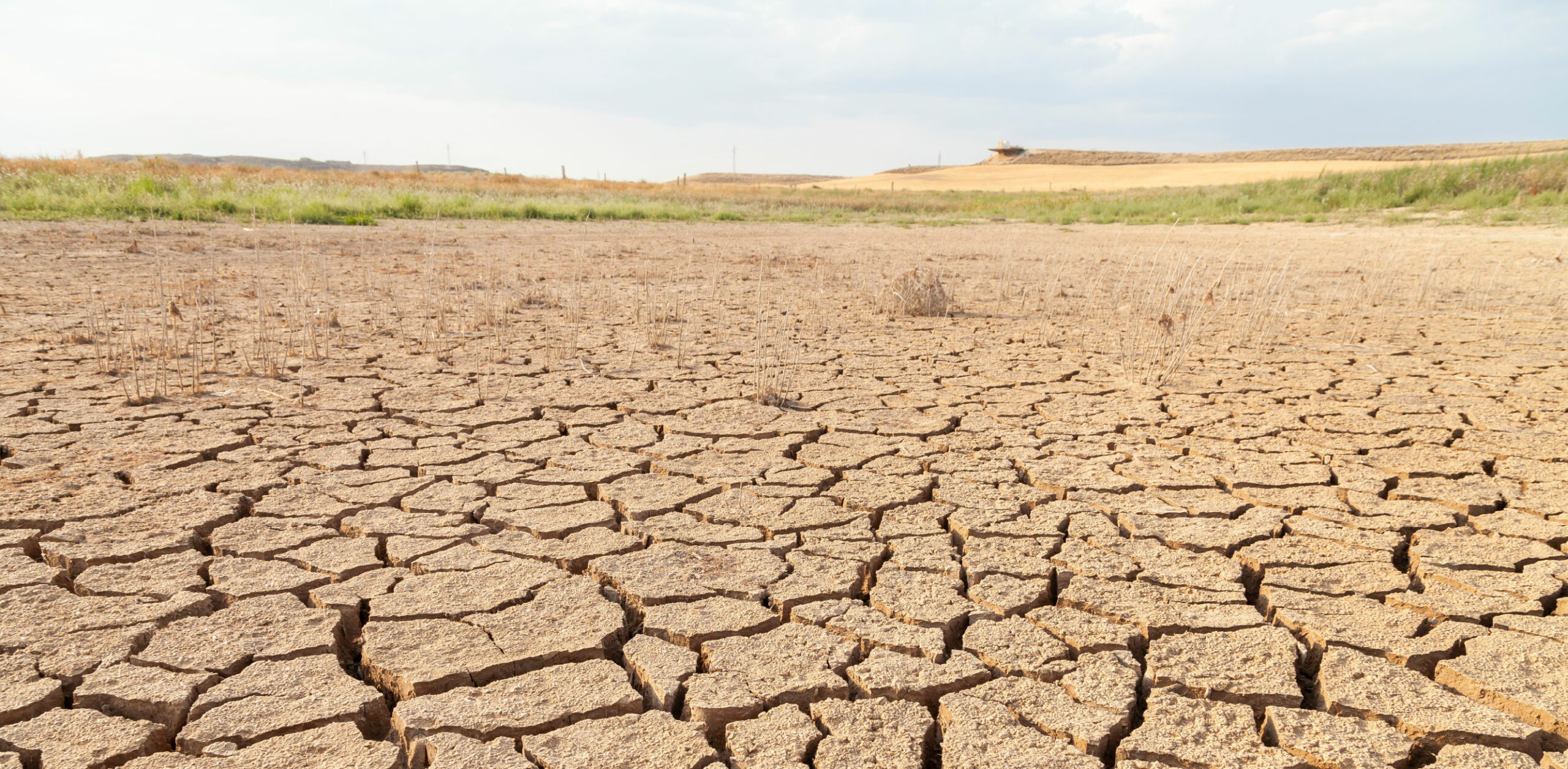
“The method we developed could transfer to other domains,” said Stephenson. “Ecological systems were our inspiration, where transitions like fishery collapse, lake eutrophication, and desertification could be predicted, given enough data.”
This study represents a significant step forward in the use of machine learning to understand and predict transitions in complex systems. By combining high predictive performance with human-readable insights, the researchers have created a tool that not only forecasts when a transition is likely to occur but also sheds light on the dynamics driving these changes. As environmental and social systems face growing pressures, such tools could play a crucial role in helping societies anticipate and respond to critical shifts before they become irreversible.