




How Drought Fueled a Yellow Fever Outbreak
Yellow fever used to regularly sweep through Brazilian cities. But as vaccines and mosquito eradication campaigns took effect in the 1930s, the devastating disease largely disappeared from urban centers and receded from memory.
That abruptly changed in 2017 and 2018, when Brazil experienced its first major urban yellow fever outbreak in nearly a century, concentrated in the state of Minas Gerais. By the time it was over, more than 2,000 people had contracted the disease and at least 745 had died.
The outbreak occurred during a severe drought—which might sound counterintuitive, since mosquitoes require water to breed. Yet according to a new study just published in Science Advances, it was precisely the extremely dry conditions that helped to drive the outbreak, by pushing mosquitoes and yellow fever-carrying primates out of forests and into urban areas in search of water.
“We always hear about the link between mosquito-borne disease and rainfall, but people working in the field have long suspected that drought can also play an important role. It was exciting to provide the first quantitative evidence that drought can drive yellow fever outbreaks through the combined effects of changes in mosquito and primate movement, and increased mosquito biting,” said lead author Jamie Caldwell, who conducted the research as an associate research scholar at HMEI.
To tease apart the drivers of the outbreak, Caldwell and her colleagues – including Professor Bryan Grenfell, who studies infectious disease, and HMEI Director Professor Gabriel Vecchi, who studies extreme weather – built a mathematical model that simulated how the infection spread as mosquito and primate movement and mosquito biting varied with seasonal rainfall. They then tested how well the results matched the real timeline of human and primate cases. According to the model, how and when the outbreak developed, and the high number of cases that occurred, could all be explained by the drought conditions.
Also speaking to the unusual nature of the outbreak was the fact that it was driven not by Aedes aegypti, the typical yellow fever vector, but by a species of distantly related forest mosquito in the genus Haemagogus. The logical explanation, Caldwell said, is that the mosquitoes were moving into cities in search of water, which they found around people. They also bit people more frequently to stay hydrated and avoid desiccation.
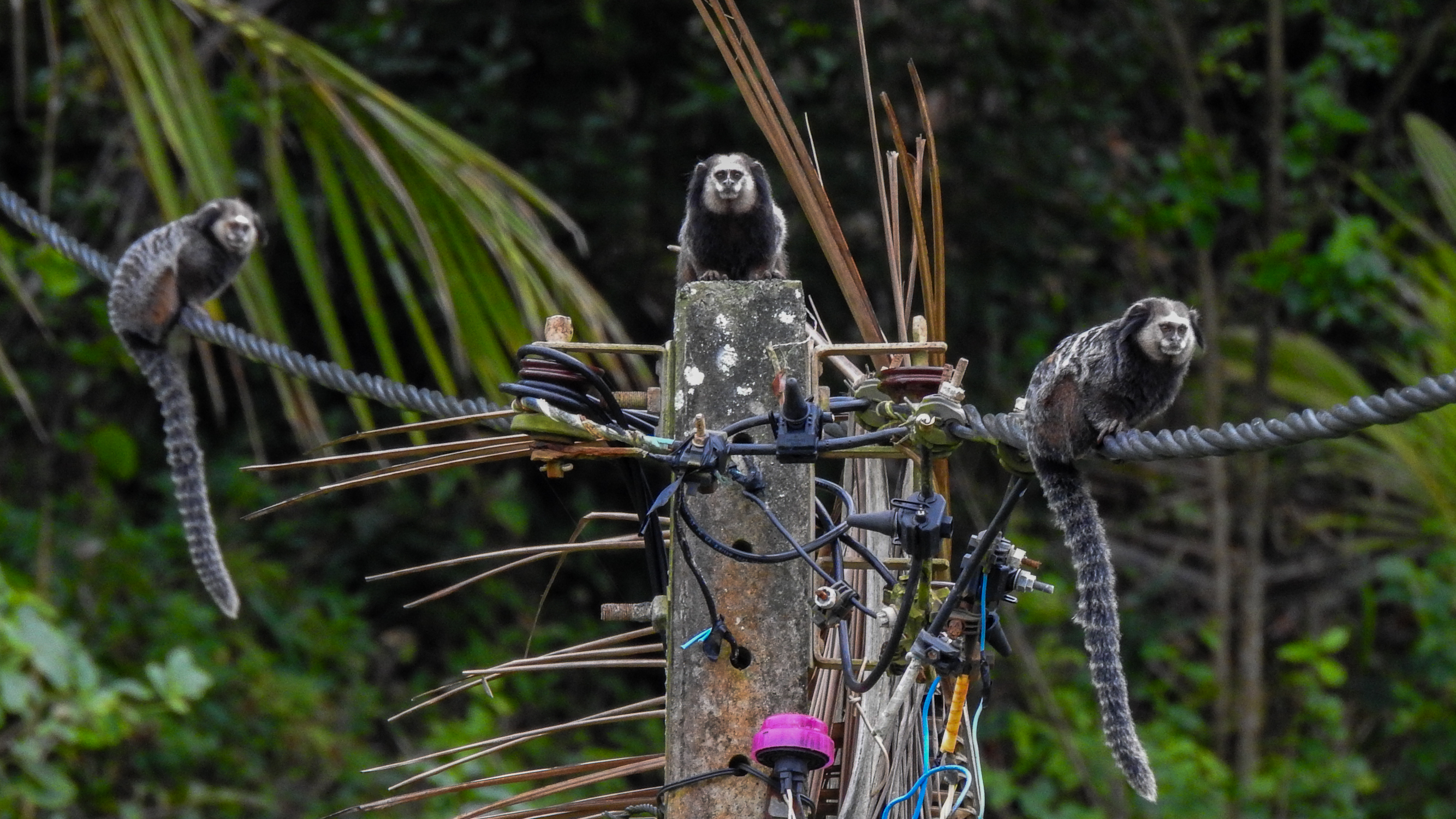
Cities saw greater numbers of howler monkeys and marmosets arriving in search of water as well, and some of those forest-dwelling animals brought along the yellow fever virus that the mosquitoes wound up transmitting to humans. The presence of those primates also increased the pool of susceptible hosts, helping the virus sustain transmission.
Caldwell and her colleagues also found that the outbreak likely ended when it did because Brazil ramped up mosquito control efforts and began vaccinating the population for yellow fever. It took an entire season, though, for enough people to be vaccinated to begin making a dent. This speaks to the importance of early preparedness rather than waiting for disaster to strike, Grenfell said.
The study serves as a warning. As Caldwell said, “We have such an effective vaccine, nobody today should be dying from yellow fever.” But communities worldwide need to prepare for such unexpected outbreaks, as climate models suggest that extreme droughts and other disease-driving disruption will become even worse in the future.