
Discovery Day 2026 Celebrates Multidisciplinary Student Research on Environmental Topics
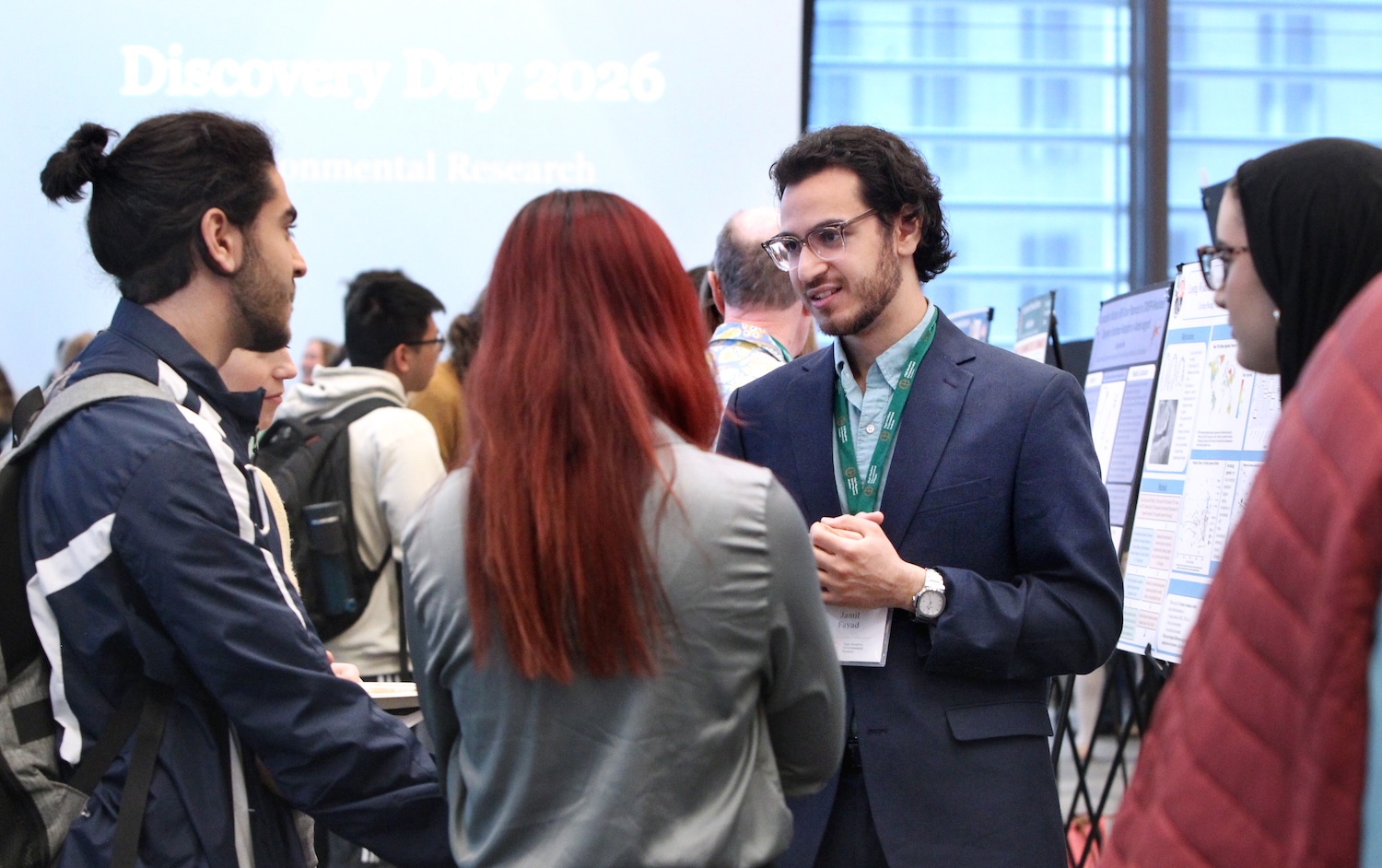
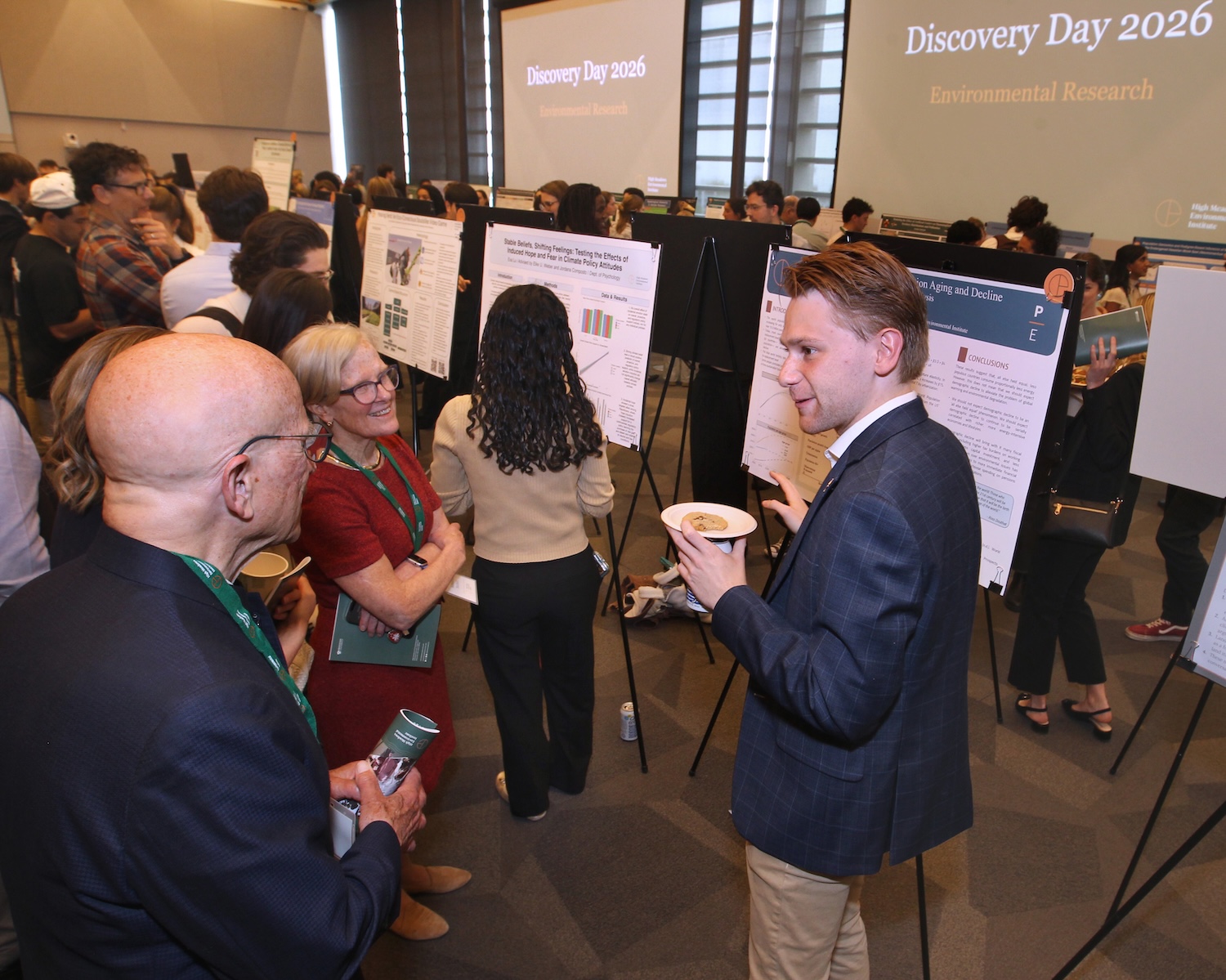
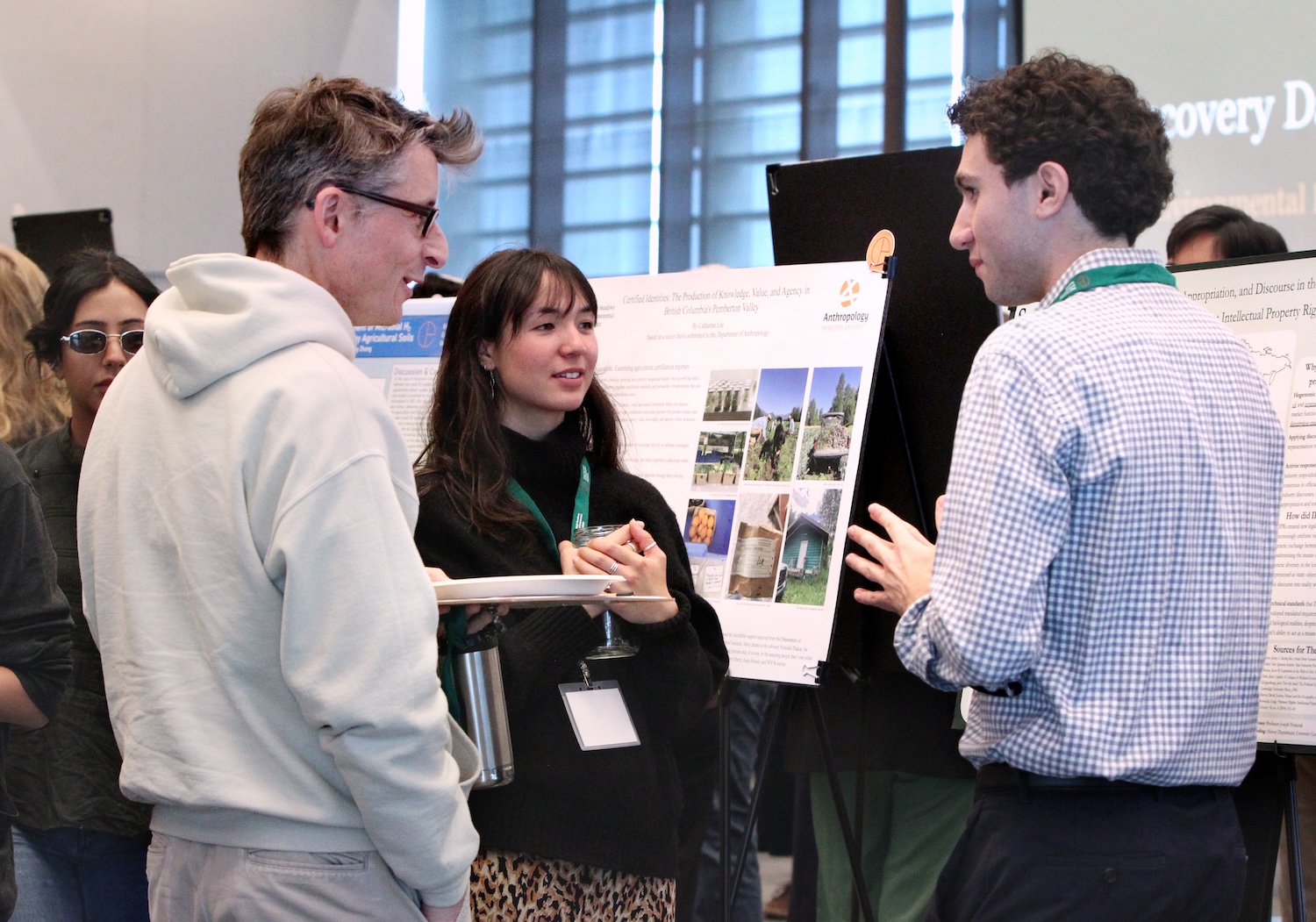
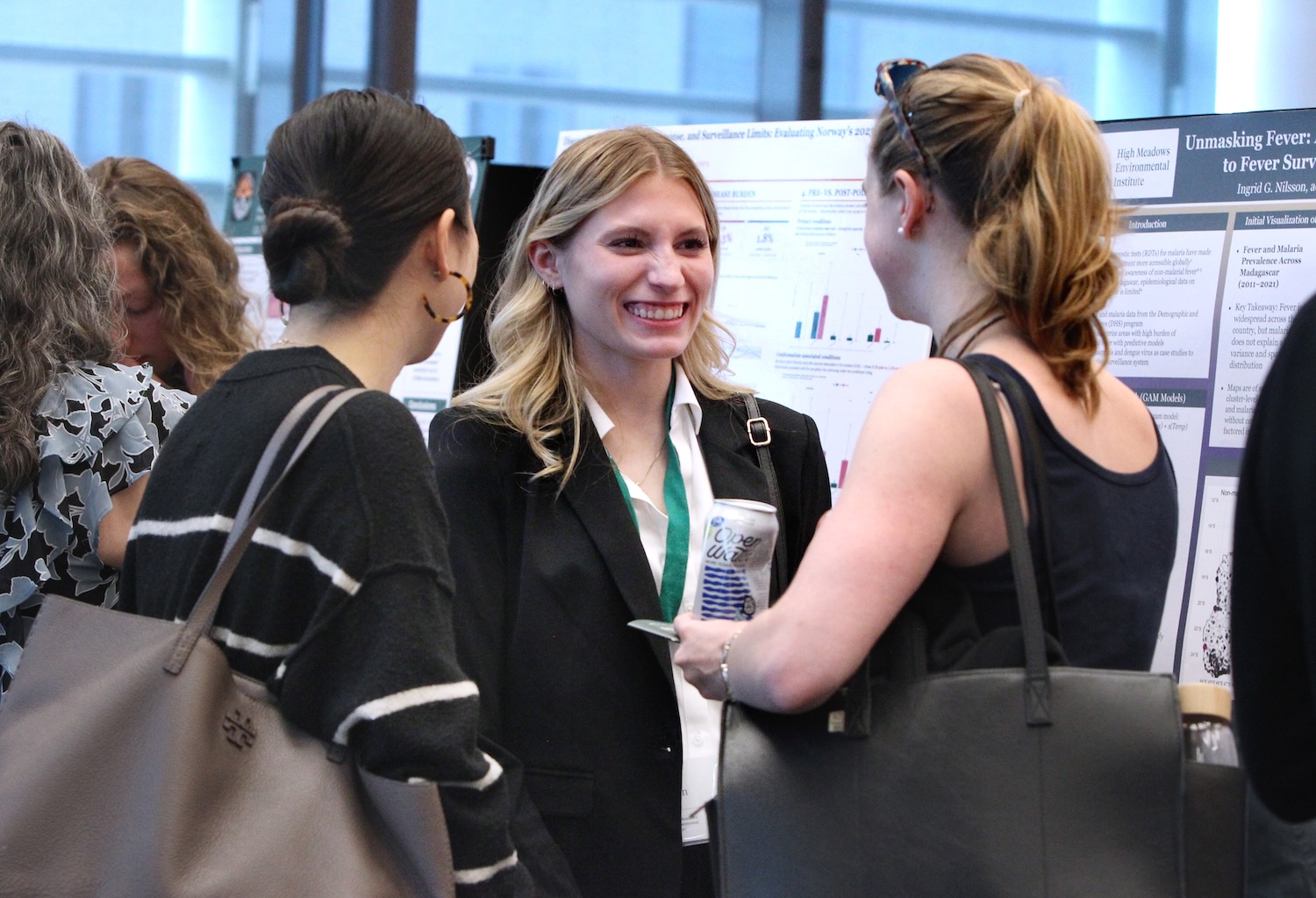
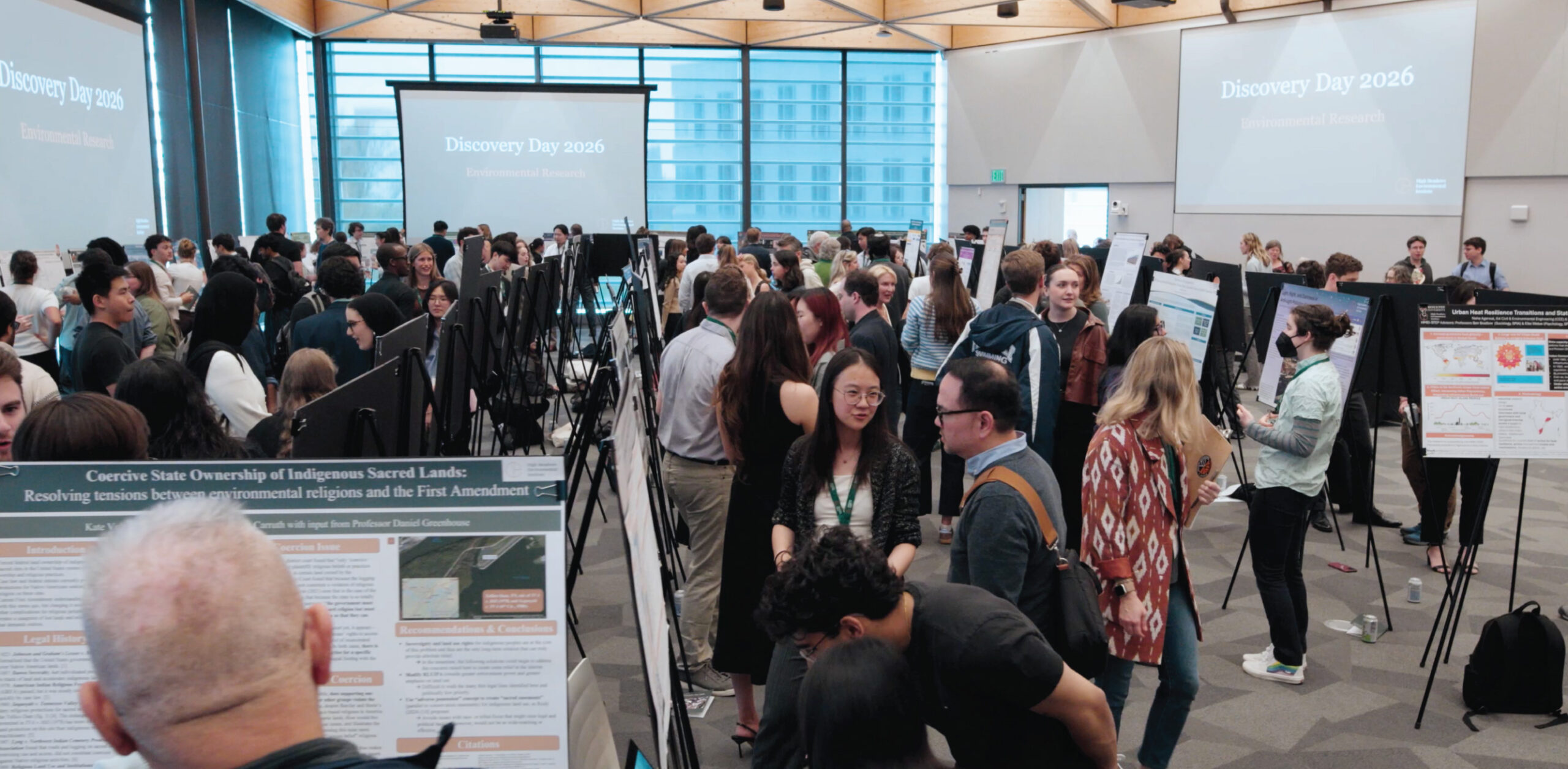
The High Meadows Environmental Institute (HMEI) hosted its 14th Discovery Day event, a multidisciplinary poster show celebrating student research on environmental topics.
Held annually since 2012, Discovery Day provides an opportunity for students to share their research methodologies and results, exchange perspectives, and propose potential solutions to pressing environmental challenges.
This year’s poster session, held on April 29, featured 102 students from 20 academic departments, mentored by 76 faculty advisers. Participating students included ENV Minors, students majoring in Ecology and Evolutionary Biology, and undergraduate and graduate students whose research was funded by HMEI.
Research investigated multiple themes: Climate and Environmental Science, Biodiversity and Conservation, Environmental Policy and Society, Health and Disease, Water and the Environment, Sustainable Agriculture, and New Energy Future.
Research projects examined a diverse range of topics, including energy resilience in the wake of natural disasters, modeling human behavior in epidemics, harnessing bacteria to degrade PFAS or ‘forever chemicals’, and using citizen science to monitor coral reefs.
The profiles below provide a sampling of the student research projects featured at Discovery Day 2026. Find a complete listing of participants and projects in the event program.
Shannon Yeow ’26, Computer Science
Advisers: Allison Carruth, ENV Program Director and professor of American Studies and HMEI, and David Walker, Professor of Computer Science.
“Evaluating Multimedia Storytelling: Offshore Wind Impacts on Taiwan’s Fishing Villages”
Senior Shannon Yeow compared storytelling methods to convey the complex and highly local nature of wind turbine development in Taiwan.
In the past 10 years, Taiwan has overtaken Denmark to become the country with the biggest offshore wind capacity. Most of Taiwan’s wind development is concentrated on its western coast, an important fishing region, which has led to local conflict between fishermen, developers, and environmental advocates.
“Climate and energy transitions are portrayed mostly portrayed in the media in the form of abstract planetary metrics, but the way transitions are actually being experienced is highly local and uneven,” said Yeow. “I wanted to see whether multimedia narratives could make place-based, local stories of environmental impacts more legible to the public.”
Yeow spent three weeks in Taiwan in early 2026, where she conducted interviews and collected photographs, videos, and audio recordings. She focused on two counties on the Taiwan’s western coast: Changhua county, which hosts 70% of Taiwan’s offshore wind development, and Yunlin county, which hosts only one turbine but has been the site of some of the country’s fiercest fisheries-related opposition.
Based on her fieldwork, Yeow created At Wind’s Wake: The Offshore Wind Buildout on Taiwan’s Fishing Coast, a long-form narrative that traces the history and conflicts of wind turbine development in Taiwan. Yeow created two forms of the narrative: a photo essay, consisting of photographs and text, and a multimedia site that also incorporates videos, audio recordings, interactive diagrams, and animations.
When Yeow asked 43 Princeton undergraduates to rate the two narratives, the multimedia site outperformed the photo essay on ten out of twelve measures. In particular, participants found the multimedia site more immersive, more effective at making them want to learn more about the issue, and more “shareable”. However, participants found that the photo essay and multimedia site were equally credible and resulted in similar levels of factual recall.
“On the journalistic side, this comparison shows that multimedia is a very good and valid avenue for disseminating climate narratives,” said Yeow. “I also hope that this research helps people understand the need for place-based environmental stories.”
Tacy Guest ’26, Ecology and Evolutionary Biology
Adviser: Corina Tarnita, Professor of Ecology and Evolutionary Biology
“Seal Molting Phenology in the Gulf of Maine”
For her senior thesis, Tacy Guest investigated how environmental factors determine when seals molt in the Gulf of Maine.
Every year, seals shed their fur in the spring. This process is metabolically taxing, because the seals fast while they’re molting, and because it usually occurs shortly after female seals have given birth. Evidence suggests that seals have begun to molt earlier in the year, possibly due to climate change. Guest wanted to investigate whether the seals are actually molting earlier, and if so, why.
To do this, she built a mathematical model based on twelve years of molting data (2012-2024) collected by the Shoals Marine Laboratory. The model revealed that seals are indeed molting earlier. Surprisingly, the timing was not associated with temperature. Instead, Guest showed that molting occurred earlier in years when the Gulf was lower in salinity, and when there had been an abundance of a particular fish species, the silver hake, in the preceding autumn.
“If there’s an abundance of food in the fall it likely means that the seals went into the winter with a good body condition and were physically fit to molt earlier,” said Guest. “The association with salinity is a little more complicated, but we have a few theories. My favorite theory is that salinity is ultimately serving as a proxy for a strong influence on the Labrador current, because the Gulf is controlled by the Labrador current and the Gulf Stream, and the Labrador current is far fresher.”
As part of the project, Guest spent the summer of 2025 observing seals on and around Duck Island, a tiny island seven miles off the coast of Maine, to contribute to Shoals Marine Laboratory’s yearly data collection efforts.
“Spending ten weeks on an island smaller than Princeton’s campus, you would think you’d go crazy, but it was actually one of the best experiences in my life,” said Guest. “This project really combined two of my passions: studying climate change and studying the ocean.”
After she graduates, Guest is jumping straight into a Master’s program at the University of Maine, where she will continue studying seals. After that, she plans to pursue a Ph.D.
Whitney Wise ’26, School of Public and International Affairs
Adviser: Eric Tate, Professor of Public and International Affairs
“Are Data Centers Draining America? The Unexplored Disconnect Between Water Withdrawal and Drought”
Whitney Wise ‘26 investigated the disconnect between data center water use and drought in the United States.
Data centers are rapidly expanding across the country, which poses serious environmental issues in terms of both energy and water usage. However, despite the fact that data centers consume billions of gallons of water per day to cool their computing systems, most research has focused only on the industry’s energy issues.
“Climate change is intensifying drought conditions across the United States, but little research has examined whether drought meaningfully constrains data center water use,” said Wise.
To assess whether environmental limits on water availability are influencing industry behavior, Wise analyzed a decade’s worth of county-level water usage data from Meta and Google data centers in the context of regional drought severity.
She found that between 2015 and 2024, data centers have been acting drought blind, meaning that they have been increasing their water use despite rising drought levels. In fact, Wise’s results revealed that as drought severity has increased, so has water usage. The highest water stress was concentrated in the Southern and Western United States.
“The rate at which the U.S. is building data centers in very water scarce regions, like Arizona and New Mexico, could raise very big problems in the future,” said Wise.
One of the biggest issues in regulating data center water use is the industry’s lack of transparency.
“What surprised me was just how little people know about the amount of water that’s used in data centers, even the companies,” said Wise. “Companies don’t have to report water usage, because it’s a trade secret, and Meta and Google are the only two data center companies that actually report on this. My findings highlight the need for policy interventions to monitor and manage water demand in this rapidly expanding sector.”
Cameron Farid ’26, Mechanical and Aerospace Engineering
Advisers: Eric Larson, Senior Research Engineer, Andlinger Center for Energy and the Environment, and Hongxi Luo, Associate Research Scholar, Andlinger Center for Energy and the Environment,
“Nuclear Steel: Process Design and Techno-Economic Analysis of High-Temperature Gas-Cooled Reactors with Steam Electrolysis for DRI–EAF Steelmaking”
For his senior thesis, Cameron Farid ’26 designed and simulated a process for nuclear-powered steelmaking.
“Conventional steelmaking is very emissions intensive, accounting for roughly 8% of global greenhouse gas emissions, and it’s also very coal dependent for both heat and chemical reduction of iron ore,” said Farid. “Because of that chemical process, it’s very challenging to decarbonize. My process design envisions a low-carbon steelmaking route using nuclear power.”
Farid’s design incorporated several cutting-edge technologies, including high temperature gas-cooled nuclear reactors, solid oxide electrolysis, and an alternative method of converting iron ore to steel that relies on hydrogen gas instead of carbon.
To inform his design, Farid travelled to Tsinghua University in Beijing, China, and the Nuclear-hydrogen facilities at Idaho National Laboratory, where he met with experts and toured their nuclear facilities.
“There are only three of these nuclear reactors in the world, and two of them are in China, so it was awesome to be able to visit one,” said Farid. “Seeing something in person is one of the best ways to learn about it, and meeting with experts and getting their input was critical for giving my modeling assumptions a level of technical realism.”
When he simulated the process, his performance results aligned with industry values, suggesting that the integrated process design is technically feasible. Farid’s cost estimates were also competitive with other methods of producing green steel.
“I estimate the steel cost to be roughly $300 to $500 more expensive than conventional routes, which seems bad at first, but it’s actually on par with solar and wind-based steel estimates,” said Farid. “If we’re serious about decarbonizing the steel sector, this is where we need to look at something like government incentives to stimulate low carbon technological development in the steel making sector. My project lays a nice foundation for future technical and policy work.”
Collin Guedel ’26, Geosciences
Adviser: Xinning Zhang, Associate Professor of Geosciences and the High Meadows Environmental Institute
“Loam Sweet Loam: A General Assessment of Microbial H2 Metabolism Kinetics in Central New Jersey Agricultural Soils”
Collin Guedel ’26 investigated how farming practices impact the ability of soil to act as a hydrogen sink.
The amount of hydrogen in Earth’s atmosphere has been rising since the Industrial Revolution, and it’s likely to increase even further if hydrogen is leveraged as a fossil fuel alternative. This has implications for climate change, because though hydrogen is not itself a greenhouse gas, it contributes to the formation of greenhouse gases including ozone and water vapor. Since soil serves as a significant hydrogen sink, Guedel wanted to investigate whether soil disturbance during agriculture might impact soil’s ability to store hydrogen.
“Soils account for about 80% of the global hydrogen sink, because soil bacteria use hydrogen as an energy source,” said Guedel. “I was curious whether human agricultural practices should be influenced by this notion of soils mattering as a hydrogen sink.”
Guedel collected undisturbed and tilled soil from two local farms, an organic farm that grows vegetables and herbs, and an industrial soybean farm. In the lab, he tested the samples’ abilities to extract hydrogen from the air and measured the amount of carbon in each sample.
At the organic farm, the results matched Guedel’s hypothesis: undisturbed soil at the farm’s edges was better at capturing hydrogen than tilled soil. When he accounted for the amount of carbon in the samples, he found that this effect was likely due to a loss of carbon in the disturbed soil, which is a known effect of tilling.
Surprisingly, on the industrial soybean farm, the tilled soil was actually better at capturing hydrogen than the undisturbed soil. Guedel says that this might be because soybeans are nitrogen fixers, meaning they increase the amount of nitrogen in the soil thanks to special bacteria that live in their roots.
“I thought industrial agriculture was going to lower hydrogen uptake rates by reducing carbon, but it might actually increase it if you’re using soybeans or other legumes, because they’re making the soil healthier by adding nitrogen, despite the industrial component,” said Guedel. “This means it’s a more complex picture than simply saying that agriculture is inherently harmful.”
Laoise O’Donohue ’26, School of Public and International Affairs
Adviser: Navroz Dubash, Professor of Public and International Affairs and the High Meadows Environmental Institute
“Homegrown Ambition: Domestic Drivers of Policy Ambition Under the Paris Climate Agreement”
Senior Laoise O’Donohue investigated how domestic drivers and institutional structures have shaped individual countries’ responses and contributions to the Paris Climate Agreement.
A core part of the Paris Climate Agreement is the Nationally Determined Contributions (NDCs), non-binding agreements submitted by participating countries that outline their national climate actions and targets.
“The success of the Paris Climate Agreement depends on the submission of ambitious NDCs,” said O’Donohue. “I wanted to look at how global climate actions have progressed in the ten years since the Agreement was signed, especially in the wake of the pandemic and the breakouts of conflict in Eastern Europe and Middle East.”
O’Donohue used a statistical model to examine how four factors influence the ambitiousness of a country’s NDC: a country’s resilience to climate change, the carbon intensity of its economy, the level of domestic pressure in favor of reducing emissions, and the country’s electoral system. She found that only the first two factors had a significant impact on the ambitiousness of a country’s climate targets.
“If countries feel the effects of climate change less severely, or if their economies rely on industries that are highly carbon intensive, there’s less of a push to reduce their emissions and really advance climate policy,” said O’Donohue. “I was shocked that domestic pressure in wasn’t a significant factor. I think a lot of people are concerned about climate change, but issues like poverty levels, the cost of living, and employment are pushing climate policy down the agenda.”
As a case study, O’Donohue also compared climate policies and institutions in the United Kingdom, Mexico, and India to identify factors associated with climate policies and structures. She determined that establishing new, climate-specific institutions was more effective than layering climate-related responsibilities onto pre-existing structures. She also highlighted the importance of having coordination between institutions and governmental departments, and between national and local levels of government.
“I think that it all comes down to combining climate strategy with development and economic goals,” said O’Donohue. “So, pushing green growth and sustainable development, rather than trying to tackle the goals like in separate spheres.”