
Colvin Award Winners Explore Changing Ecosystems in the Arctic and Savanna
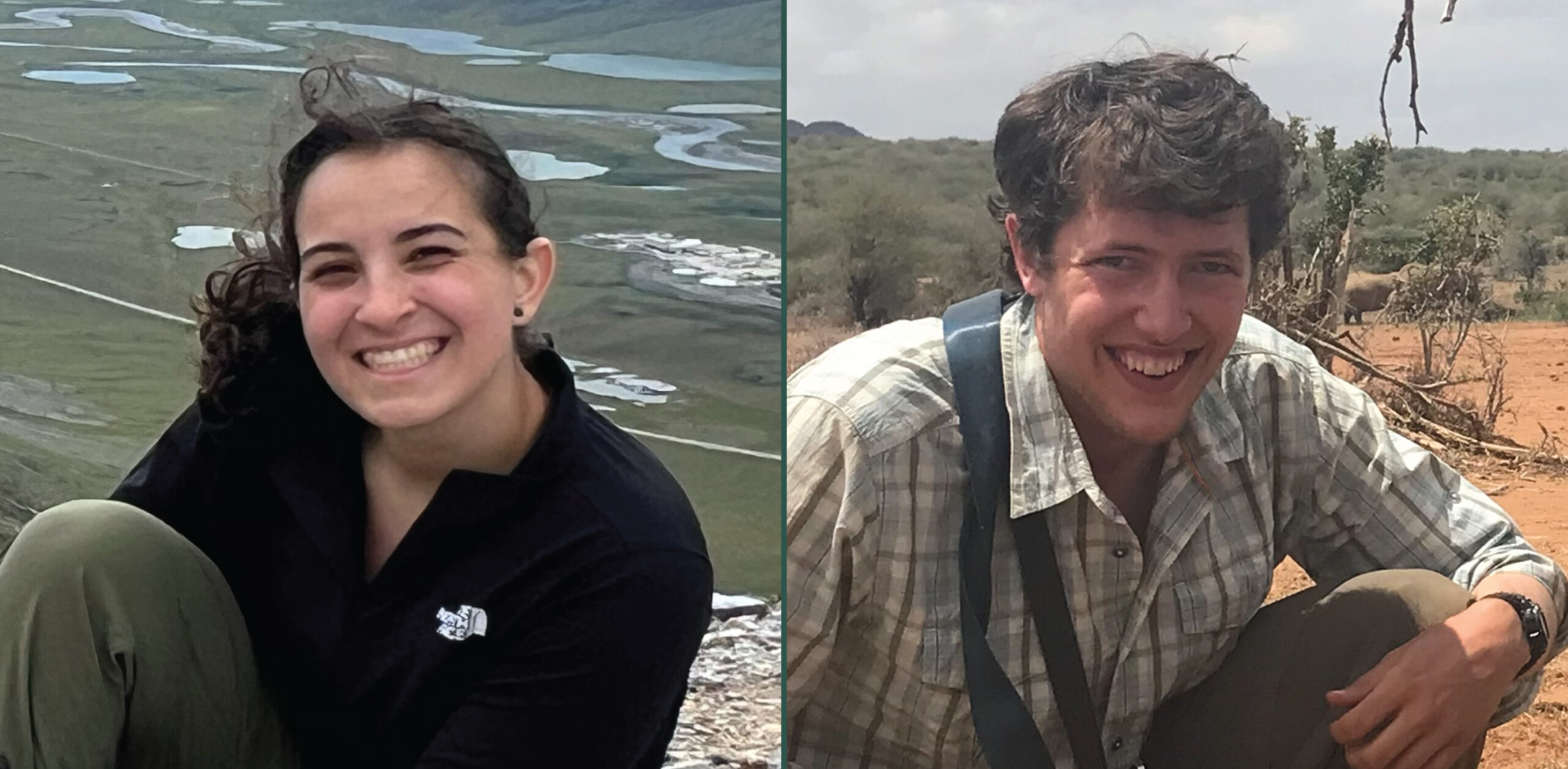
Through the Becky Colvin Memorial Award, Princeton seniors Ariana Di Landro and Patrick Newcombe collected data for their senior theses from two unique ecosystems: the Arctic tundra and the African savanna.
While Di Landro investigated how climate change and nitrogen availability are impacting the expansion of shrubs in the northern tundra, Newcombe examined how termite mounds impact the distribution of bird diversity in Gorongosa National Park and surrounding agricultural land.
Though unrelated, both projects examine how ecosystems persist and shift in the face of anthropogenic pressures.
Di Landro and Newcombe each pursued their projects with support from the Becky Colvin Memorial Award, which is presented each year by the High Meadows Environmental Institute (HMEI) and the Department of Ecology and Evolutionary Biology (EEB). The award provides juniors enrolled in the Minor in Environmental Studies or majoring in ecology and evolutionary biology (EEB) with support for travel, research supplies and other expenses associated with field research for their senior thesis projects.
Di Landro’s Thesis: Is nitrogen fueling “shrubification” in the Arctic?
Di Landro’s path to ecological research was not a linear one: when she first arrived at Princeton, she enrolled in chemical and biological engineering. But knowing that she wanted to conduct research outdoors, and to study subjects at a large scale, Di Landro sought an environmental internship for the summer after her sophomore year, and soon another course of study captured her attention.
“I’m the type of person who likes to dive into the deep end, so I applied to HMEI internships, and I was lucky enough to go to Alaska,” said Di Landro. “It was life-changing — like nothing I’d ever done before — and it made me really interested in environmental questions that are especially pressing in today’s circumstances.”
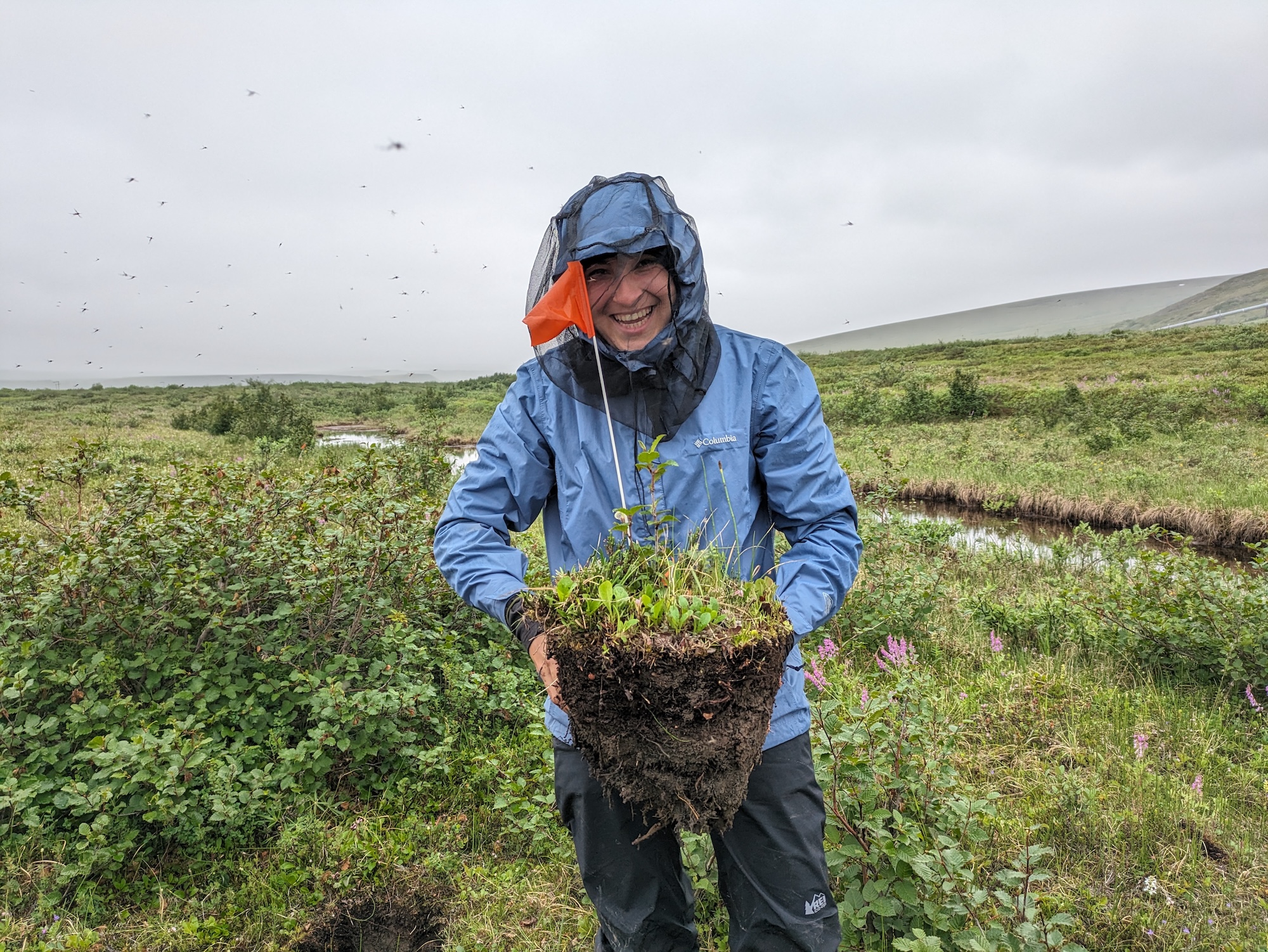
Spending ten weeks in the Arctic, Di Landro worked alongside Ruby An, a PhD candidate in the Levine lab to study “shrubification” – the expansion of low shrub plants into the previously shrub-sparse Arctic tundra. Di Landro’s senior thesis project emerged out of a conversation at the field station that summer.
“I went on a hike with a graduate student who wouldn’t stop talking about nitrogen and why it was really important in the Arctic,” said Di Landro. “It just got me really curious about plant-soil interactions and what is going on beneath the surface.”
As global warming pushes temperatures up, shrubs are becoming increasingly common in the Arctic. How this might influence future climate change is unclear — shrubs could accelerate CO2 release from the permafrost, but they could also help sequester CO2 from the atmosphere. Di Landro returned to the Arctic in the summer of 2024 to conduct field work for her senior thesis, which examines these intertwined questions: whether the amount of nitrogen in the soil impacts the rate of shrubification, and whether shrubification is in turn altering soil nitrogen content.
“Ariana’s thesis work, uncovering how climate-induced shifts in nitrogen impact Arctic tundra plant communities, will greatly improve our understanding of how climate change affects ecosystems,” said Jonathan Levine, Di Landro’s senior thesis advisor and the J.N. Allison Professor in Environmental Studies and Professor of Ecology and Evolutionary Biology. “This work is important because Arctic tundra holds vast amounts of carbon, and any change to these ecosystems has the potential for significant feedbacks with the climate system.”
For her fieldwork, Di Landro used probes that simulate plant roots to measure the amount and type of soil nitrogen being absorbed by shrub roots throughout the summer growing season. She paired this data with measurements of the shrubs’ growth aboveground, and analyzed her data in the context of other factors that could interact with nitrogen availability to impact the shrubs, such as warmer surface temperatures, the absence of snow, and competition with neighboring plants.
Her results suggest that nitrogen availability does encourage shrub growth, but its effects are weak unless combined with other factors.
“Nitrogen is important, but on its own it doesn’t really have a direct relationship with shrub growth — it’s when nitrogen is coupled with warming or snow removal that we see a big effect,” explained Di Landro of her findings. “Likewise, competition alone and nutrient addition alone didn’t really do much, but when they happened together, it did help the shrubs grow.”
Di Landro is excited to continue studying plant-soil interactions and will begin a PhD in Ecology and Evolutionary Biology at the University of Michigan this fall.
“Ariana is among the most motivated, curious, and committed undergraduate scientists to have joined our research group at Princeton,” said Levine, “and she has taken impressive initiative to become the full package as a scientist.”
Newcombe’s Thesis: How do termite mounds influence patterns of savanna bird diversity?
Newcombe has been birding for as long as he can remember. During his time at Princeton, he’s come to see birds as a lens that helps better understand ecology and conservation.
“When I’m out birding, there’s always something new to learn, a new question to ask,” he said. “I think there’s something incredibly beautiful – and sometimes useful, for conservation – about stepping back to simply gain an understanding of how ecosystems work.”
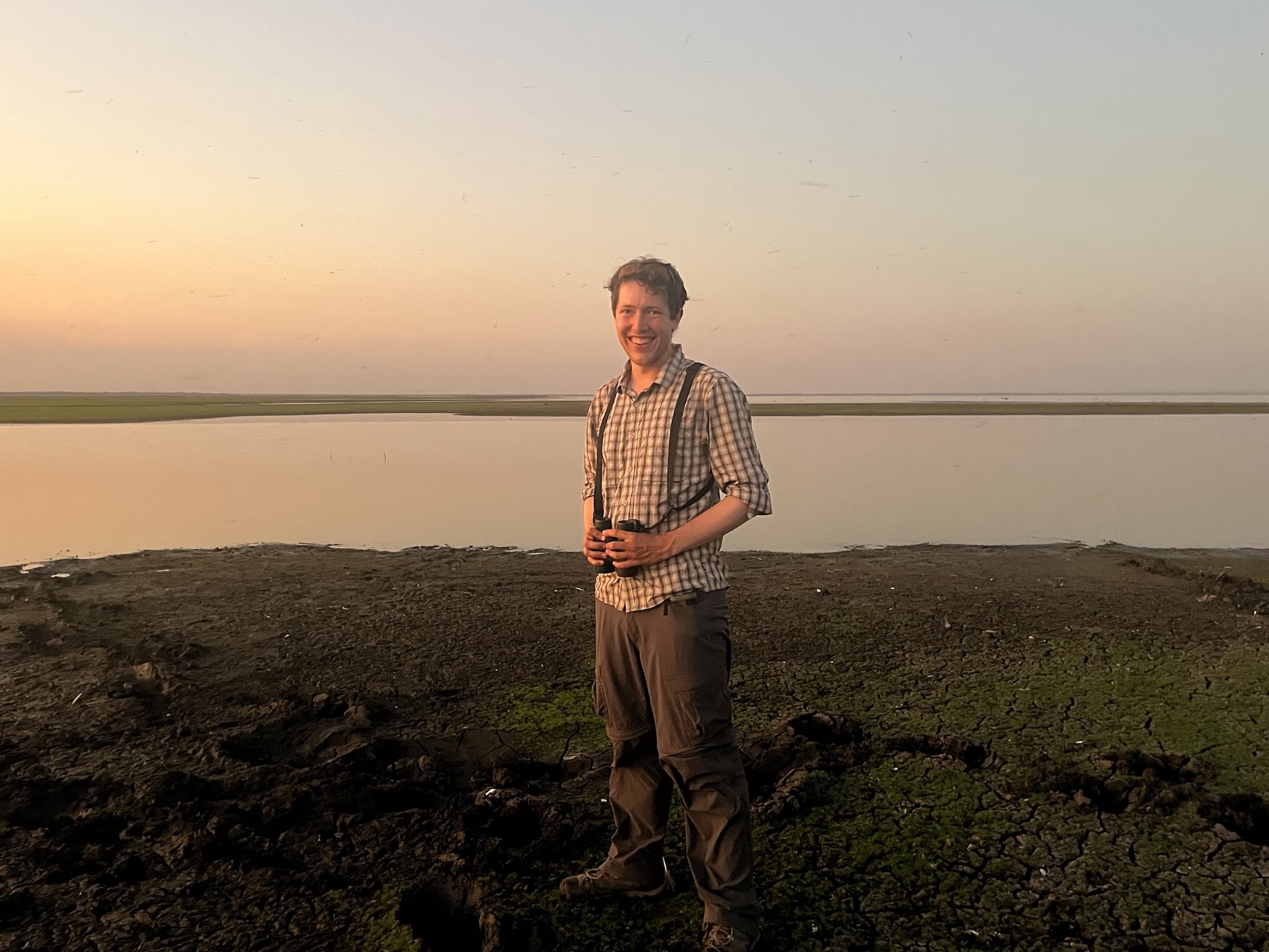
Motivated by his dual passions for ecology and conservation, Newcombe—who is also completing a minor in African Studies—conducted his thesis research at Gorongosa National Park in Mozambique. He had first visited Gorongosa in the summer after his sophomore year, as an HMEI intern with the Pringle Lab. When the internship ended, he knew he would eventually come back, somehow.
“It was inspiring to see all the incredible science and conservation going on at Gorongosa,” said Newcombe. “That experience enabled me to build relationships in the park and to think of questions the site is suited to answer. It was also so much fun.”
Newcombe was struck by insect structures hidden in plain sight: termite mounds. These mounds, sometimes meters across, are nutrient oases. They support different plant communities and higher plant densities than the surrounding areas. He couldn’t help but wonder what they meant for birds.
“One of the things that fascinated me most about Gorongosa was that there are so many ecosystems that are so close together, each with different birds in them, and yet these termite mounds occur across all of them,” said Newcombe. “There’s a long tradition in Princeton’s EEB department of studying termite mounds – incredible work on why they’re distributed the way they are and what that means for productivity and biodiversity within ecosystems.”
“I stepped back, went for a walk outside, and thought about why they might matter for the distribution of biodiversity and for conservation,” Newcombe recalls. “That turned into my thesis.”
Disentangling the questions that Newcombe identified would involve working in three different ecosystems inside and outside the park. “I’m extremely grateful to the park and the nearby communities for entrusting me with the chance to do this research,” Newcombe said. “Birds are something everyone can appreciate, and I think this shared connection brought me closer to some of the people I met in all these different areas.”
Again funded by HMEI, this time through the Colvin Award, Newcombe returned to Gorongosa in the summer of 2024 to collect data for his senior thesis. In the field, he usually began before sunrise. With an accompanying park ranger and a packed lunch, he would often spend entire days observing birds. He systematically counted birds on termite mounds and in the areas between termite mounds.
“Every day would bring a new surprise, whether a pack of wild dogs or a herd of elephants,” recalled Newcombe. “And sometimes even a life bird,” meaning a species that a birder spots in the wild for their first time. “It’s a real privilege and a real joy to get so far off the beaten path, on foot. I think that’s something I’ll remember forever.”
“Patrick came up with a really interesting research question for his thesis and then tackled it with exceptional skill and dedication,” said David Wilcove, Newcombe’s thesis advisor and Professor of Ecology and Evolutionary Biology, Public Affairs and the High Meadows Environmental Institute. “The result is a thesis that significantly expands our understanding of how the ubiquitous termite mounds in East African savannas influence the growth of trees and shrubs, and, in turn, how that vegetation growth affects the birdlife of the savannas.”
Newcombe will give an oral presentation at the International Congress for Conservation Biology in Brisbane, Australia in June on his full results.
Newcombe is enthusiastic to continue conservation-minded ecological research. He’ll spend a year doing independent research and writing in the Andes with support from Princeton’s Martin A. Dale ’53 Fellowship and plans to return to Gorongosa. He hopes to pursue graduate school afterwards.
“I feel very fortunate to have had the opportunity to be Patrick’s senior-thesis adviser,” said Wilcove. “It is one of the best senior theses I have read in over two decades at Princeton.”