



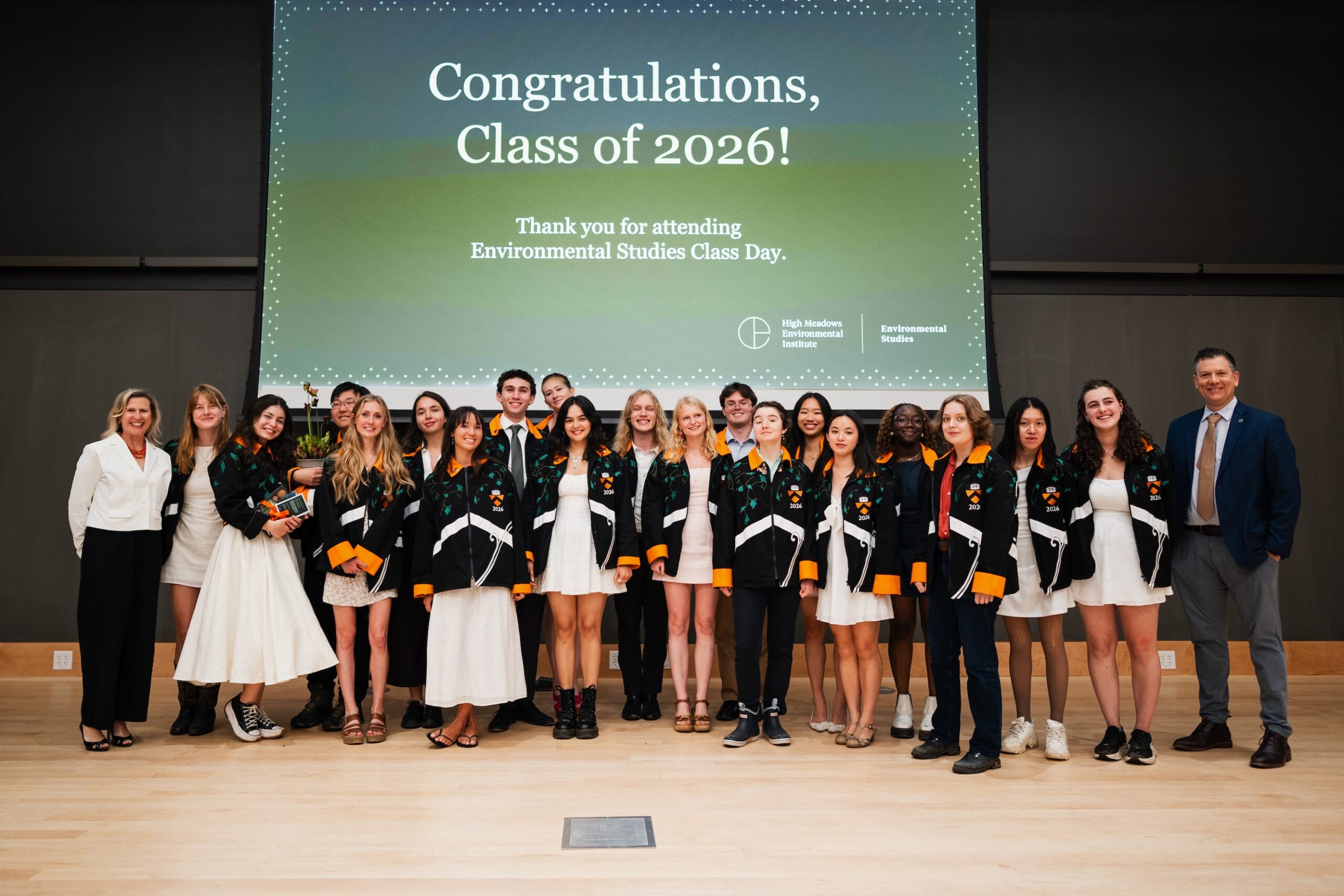

ENV Class Day 2026 honors newest graduates of Princeton’s environmental studies program and celebrates their commitment to environmental research
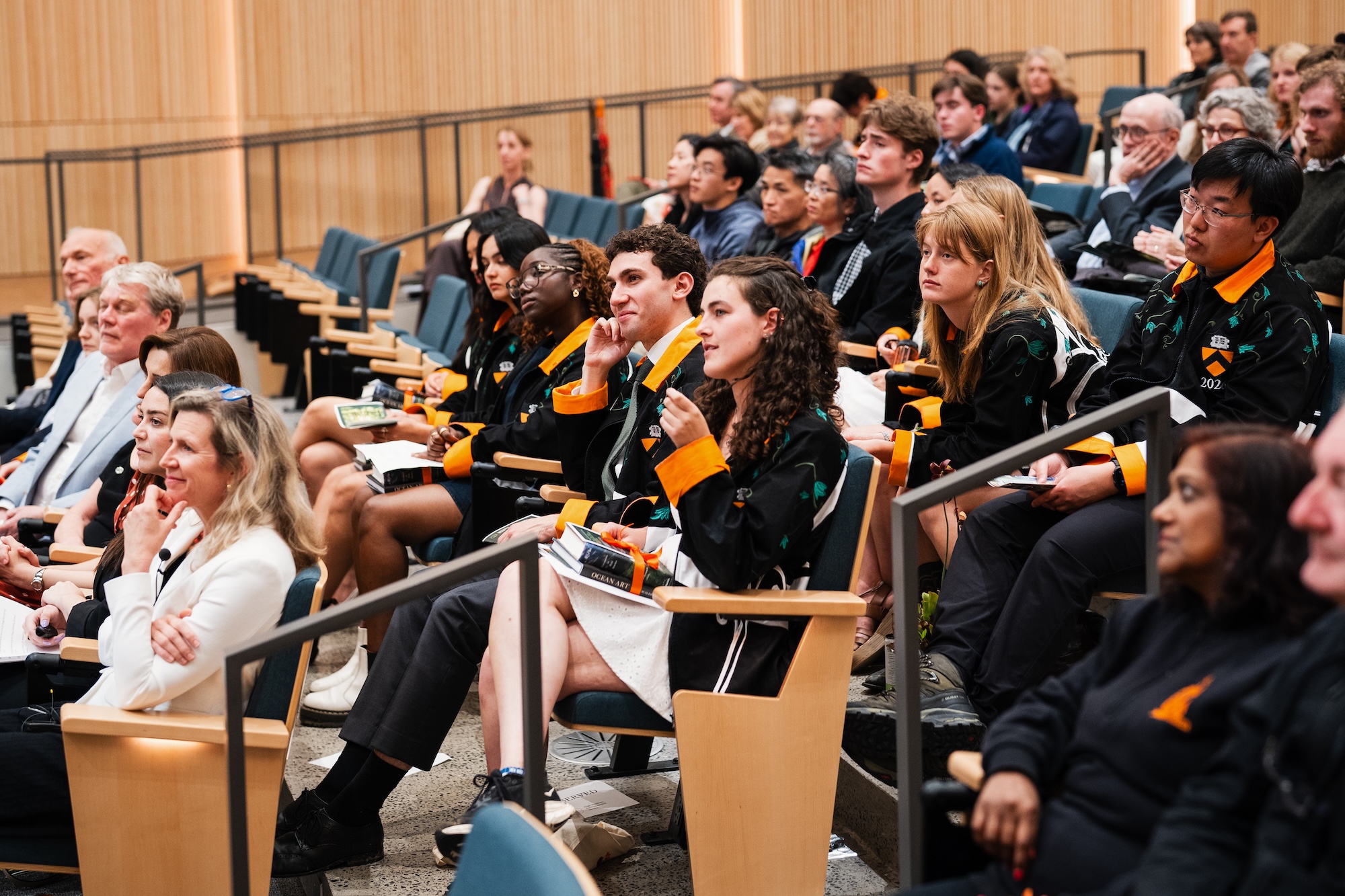
Students and families joined faculty, researchers and staff from HMEI and the Program in Environmental Studies (ENV) yesterday to celebrate the 38 Princeton University seniors from 14 departments who have earned minors in environmental studies.
ENV Class Day 2026 recognized these students for their exceptional work throughout their four years at Princeton and especially for the quality and interdisciplinary breadth of their senior thesis and independent research.
Allison Carruth, ENV Program Director and professor of American Studies and HMEI, welcomed the graduates and hailed their academic achievements.
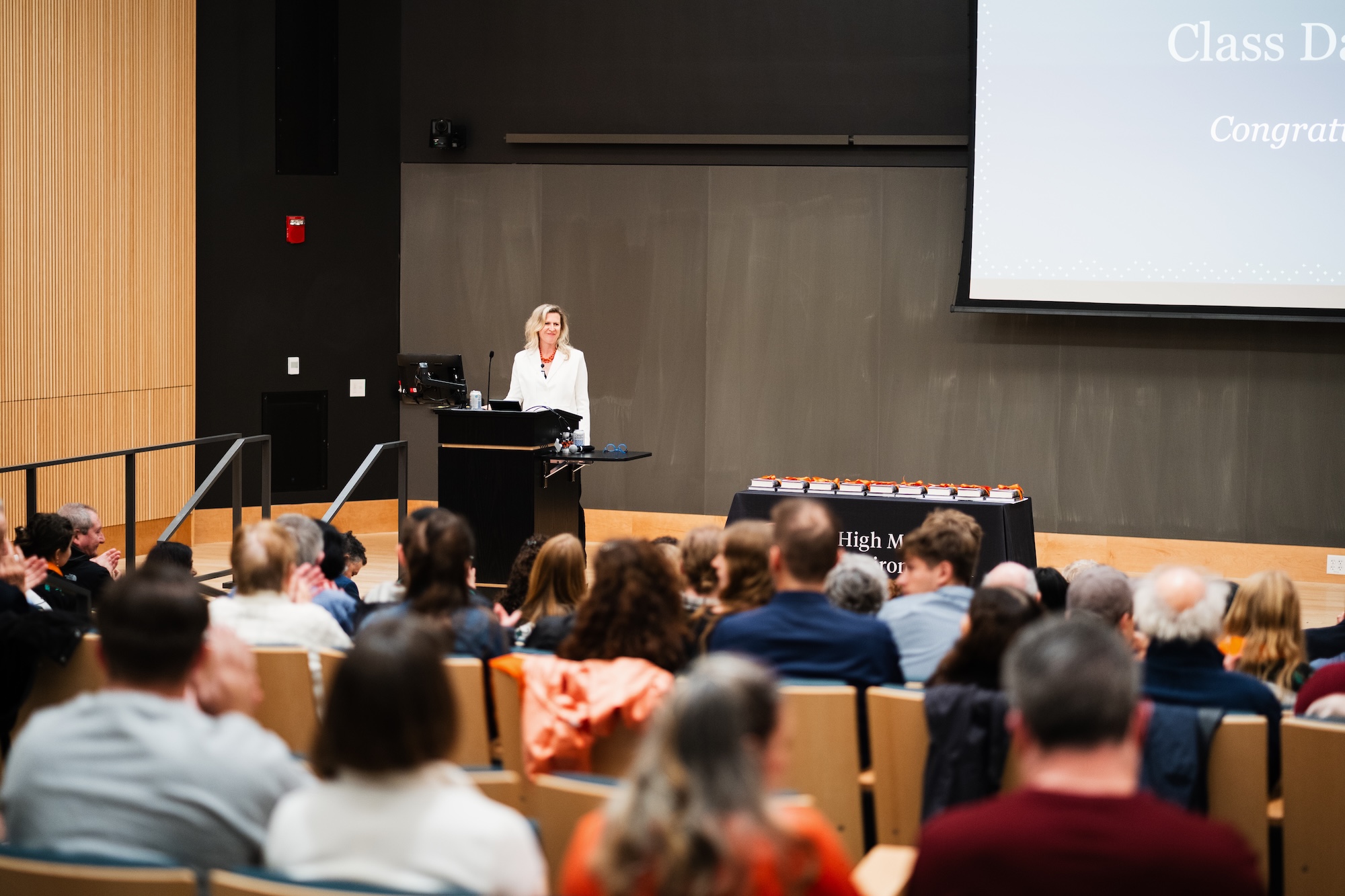
“The students who are drawn to the environmental studies minor—who come from across the university and so many different walks of life—are among the most curious, creative, intellectually risk taking and generous students I have ever worked with,” said Carruth. “It is such an honor to get time with your students while they’re here in our interdisciplinary courses and projects.”
“These students represent the very best of interdisciplinary scholarship, and their commitment to environmental inquiry and impact has enriched our entire community,” continued Carruth. “We are especially excited to honor the class of 2026, because they mark a new chapter for environmental studies at Princeton as they’re the first to graduate here from Briger Hall, this beautiful new space that will be a center for teaching and research for years to come.”
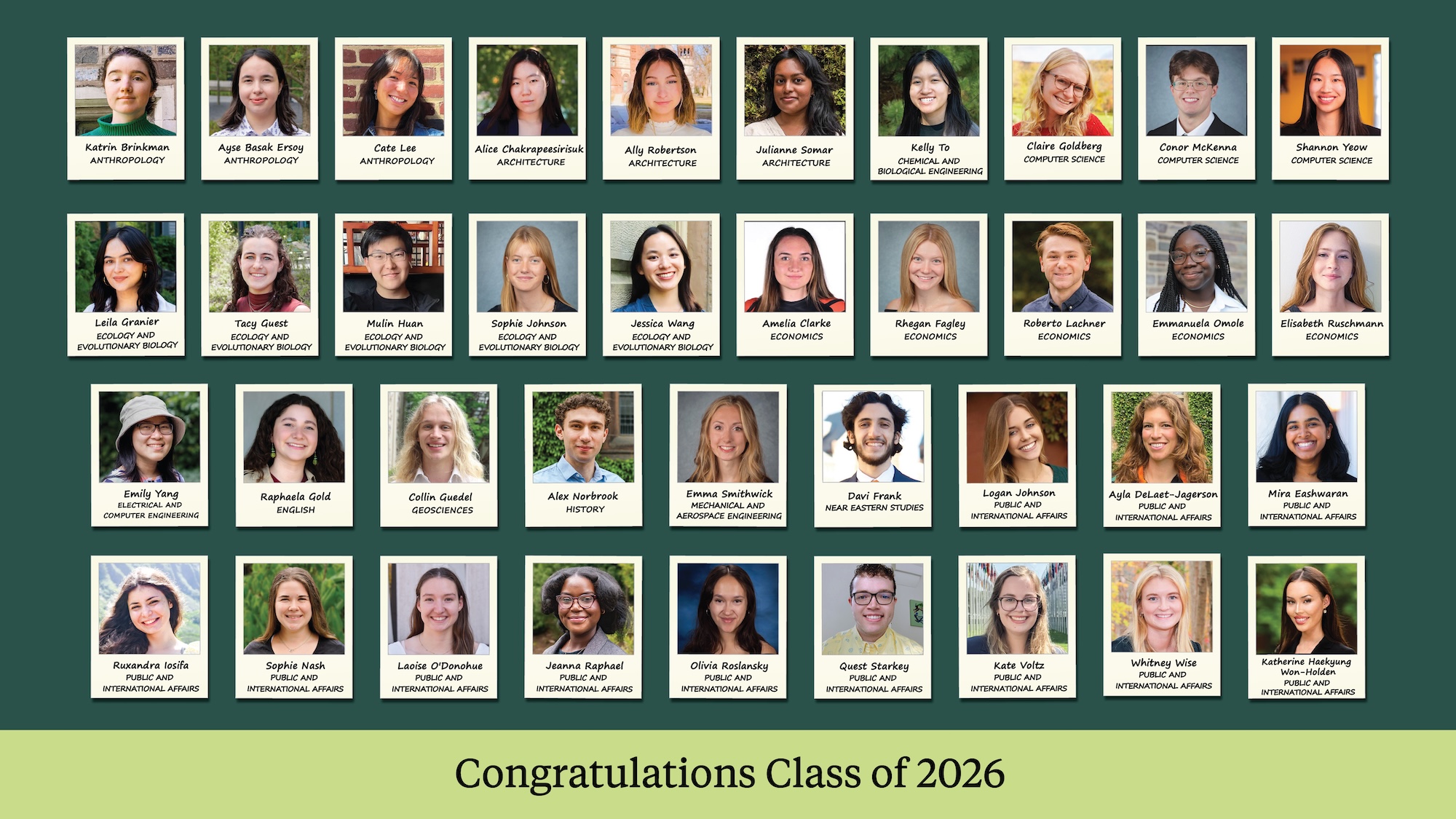
Carruth individually recognized each graduating senior who has earned the ENV minor, and then presented prizes for exceptional environmental scholarship and leadership.
The sixth annual Henry Horn Prize was presented by Elizabeth Horn, widow of the late Henry Horn, professor of ecology and evolutionary biology, emeritus, and founding director of what was then called the Program in Environmental Studies. This prize recognizes a senior who has produced the best visual presentation of their independent research for a broad audience. This year the prize was presented to two students:
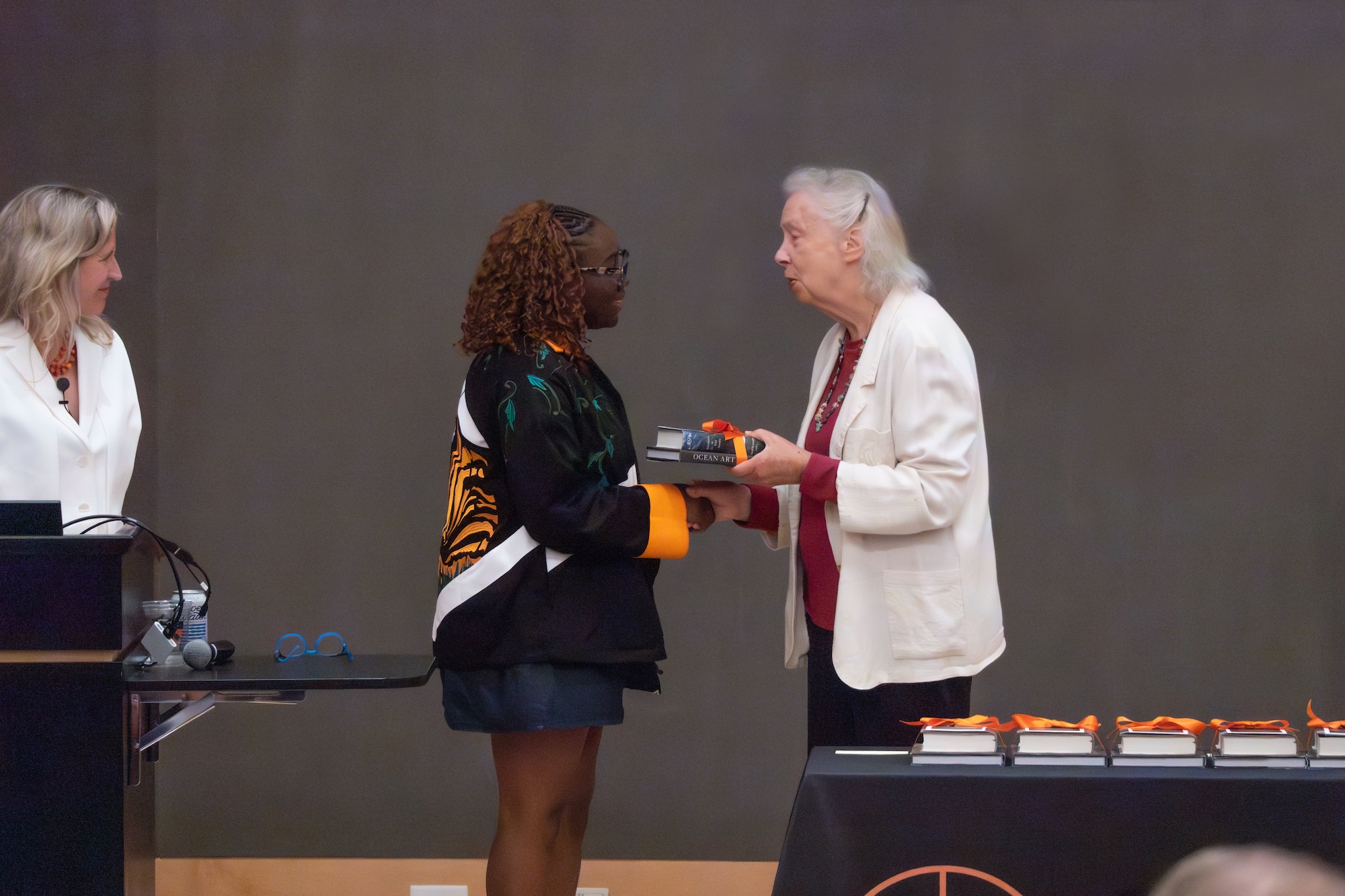
Emmanuela Omole in Economics received the prize for her poster presenting findings of her junior paper, “Energy Volatility and Financial Vulnerability: Investigating the Influence of Fuel Source Composition on Residential Electric Budgets.” The Henry Horn Prize was also awarded to Ruxandra Iosif in Public and International Affairs for her poster presenting findings of her junior paper, “Contesting Religious Land Rights: A Legal-Historical Comparison of Native Hawaiian and Non-Native Claims in U.S. Courts.”
Next, Carruth presented Environmental Studies Book Prizes to four students for exceptional research and demonstrated ability to communicate their work and its significance.
Shannon Yeow in Computer Science received a Book Prize in Engineering for her thesis, “Evaluating Multimedia Storytelling: Offshore Wind Impacts in Taiwan’s Fishing Villages.”
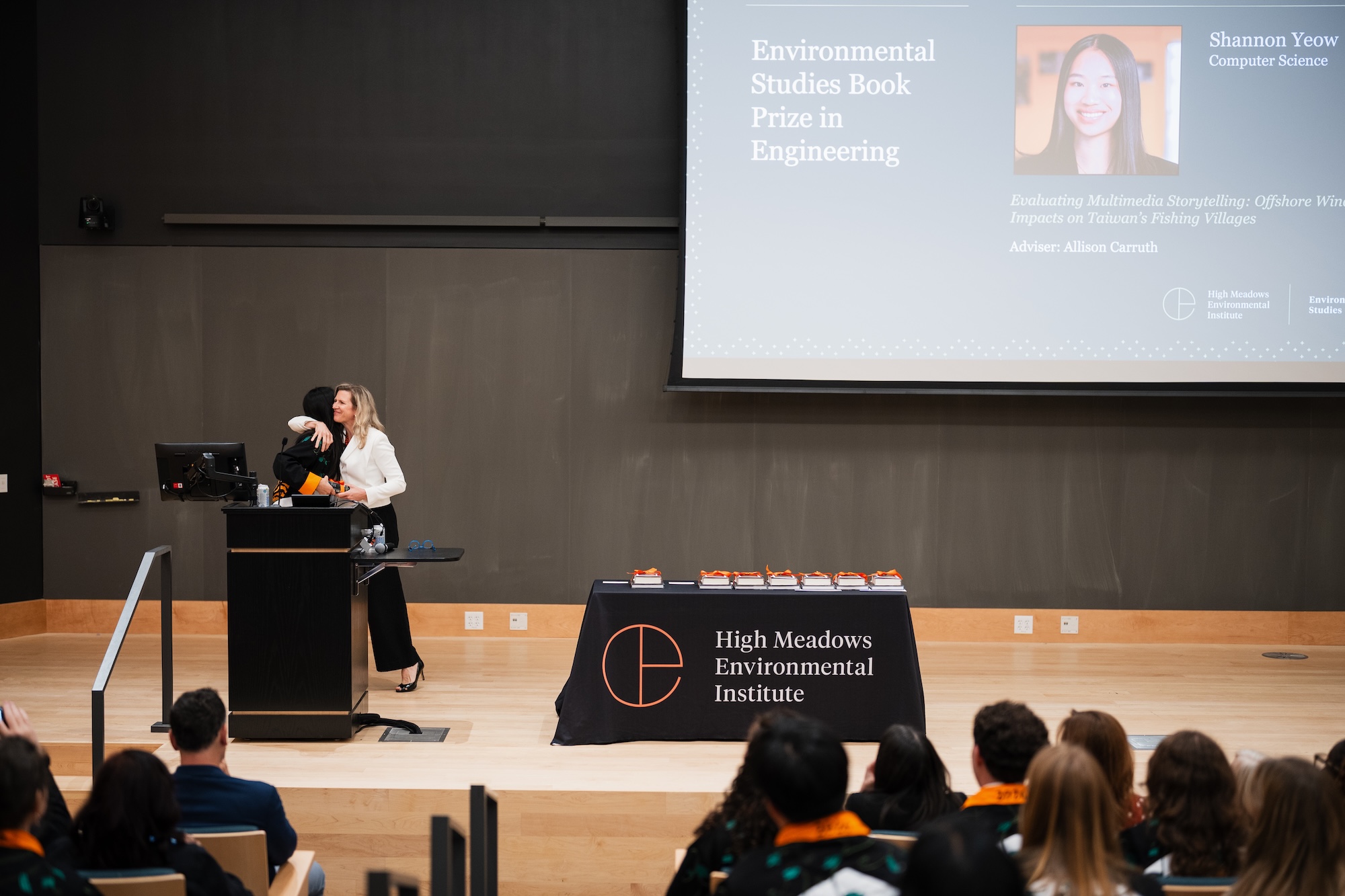
Carruth, who was Shannon’s thesis adviser, called the work “among the most ambitious undergraduate projects I’ve advised to date. As Shannon writes, the Taiwan Strait is one of the world’s most favorable offshore wind corridors, and in the span of just a decade, the country has gone from almost no offshore wind production to being one of the leading countries in the world for that energy form. Her nuanced and creative engagement with this rapid energy transition and its implications for fishing communities is, in my mind, a model for interdisciplinary research and its potential for public impact.”
Leila Granier in Ecology and Evolutionary Biology received a Book Prize in Natural Sciences for her thesis, “Island Orchids Recover After Invasive Plant Removal.”
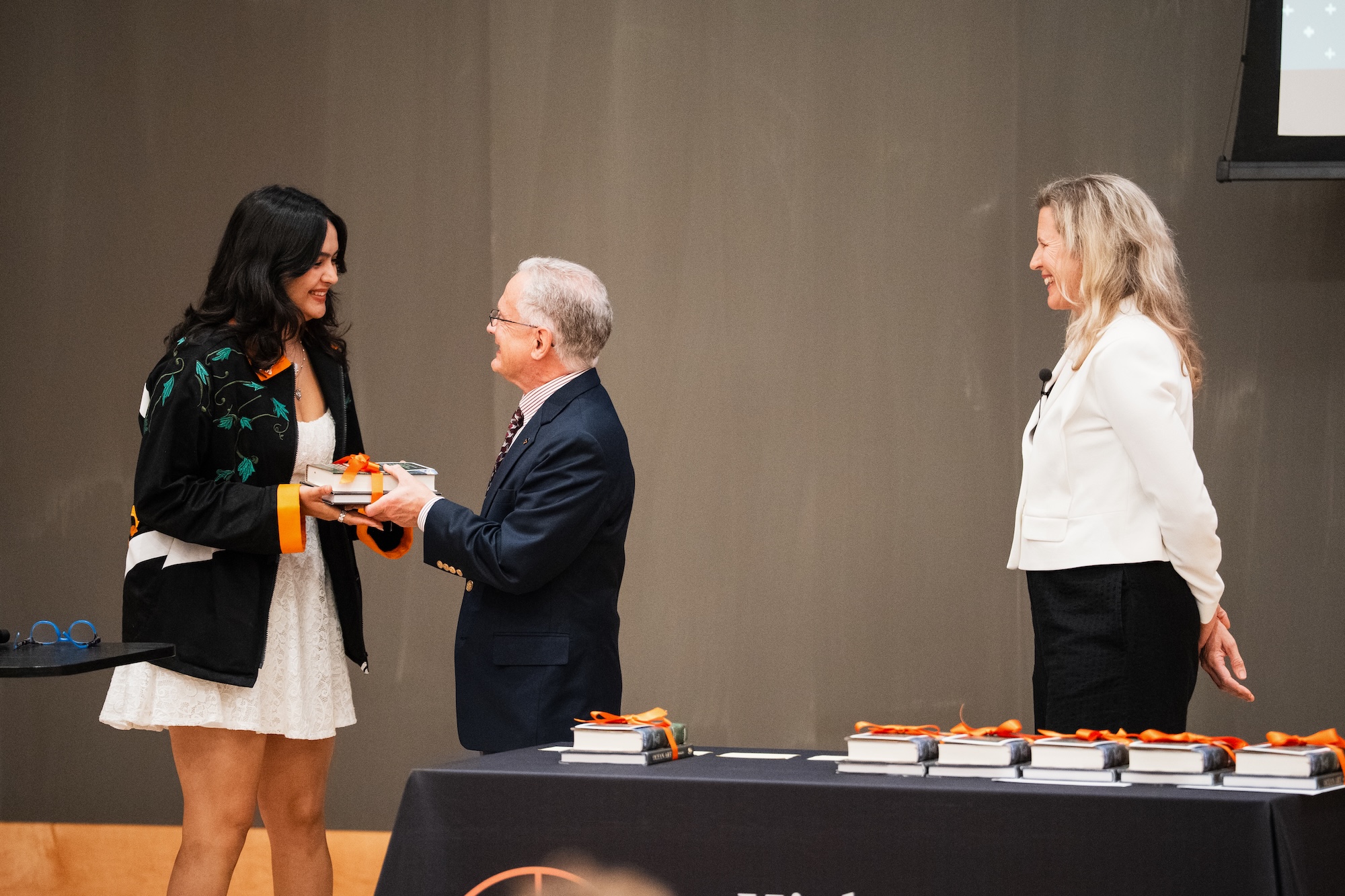
Leila’s adviser, David Wilcove, explained that Leila’s thesis “explores how removal of a species of non-native, highly invasive plant from the forest of Mauritius affects populations of native orchids. She also examines how removal of this invasive plant affects growth of the native trees, upon which the orchids and many other species of plants and animals depend. Her work is interesting and important from both an ecological and a conservation perspective, because invasive species are a major driver of species extinction globally and island ecosystems like Mauritius are especially vulnerable to harm. Her work was rigorous, innovative and revealed very striking patterns that will be useful in managing the forests of Mauritius.”
Ayse Basak Ersoy in Anthropology received a Book Prize in Social Sciences for her thesis, “Militant Futurity: Time, Sovereignty, and Water in the Northern Basque Country.”
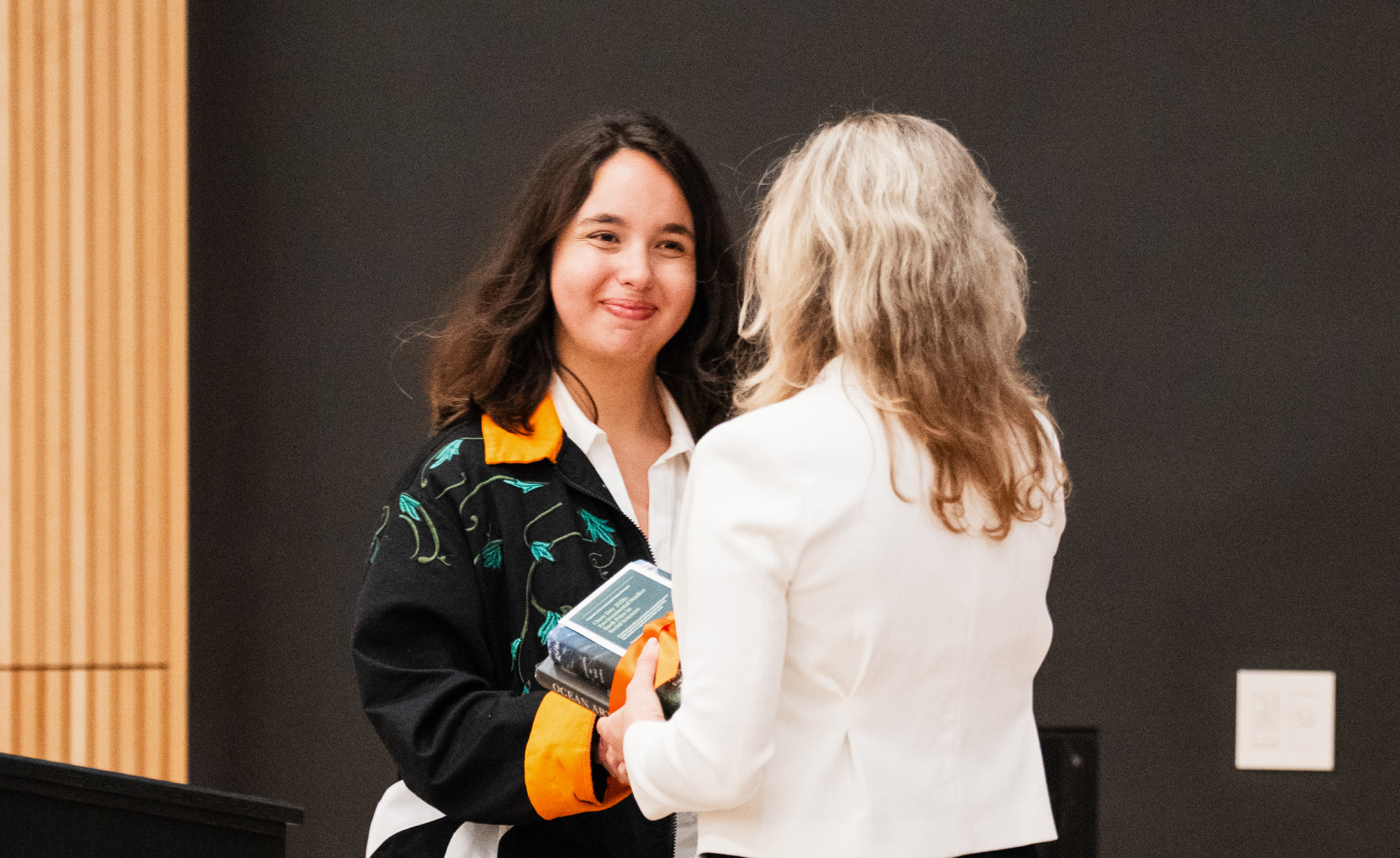
Ayse’s adviser, Amelia Frank-Vitale, called the work “an ambitious project … an exceptional work of anthropology and exemplary application of grounded theory, and a proposition that warrants continued consideration and eventual publication. Having Basak as a student in class and working with her on this thesis, I have been continually impressed with Basak’s ability to think across and through theory, history, politics, and the messiness of human experience. She is a curious, sharp, and expansive thinker with a capacity to combine fieldwork with theory to understand something about the world that would be remarkable for a graduate student, even more so for an undergraduate. This thesis is a shining example of the thoughtful rigor that she brings to all her work, combined with a deep commitment to social change and environmental justice. Furthermore, it is really a joy to work with open, eager, generous, and generative, making her greatly deserving of this recognition.”
Alex Norbrook in History received a Book Prize in Social Sciences for his thesis, “Sowing Conflict: Seeds, Appropriation, and Discourse in the International Struggle for Plant Intellectual Property Rights, 1946-1991.”
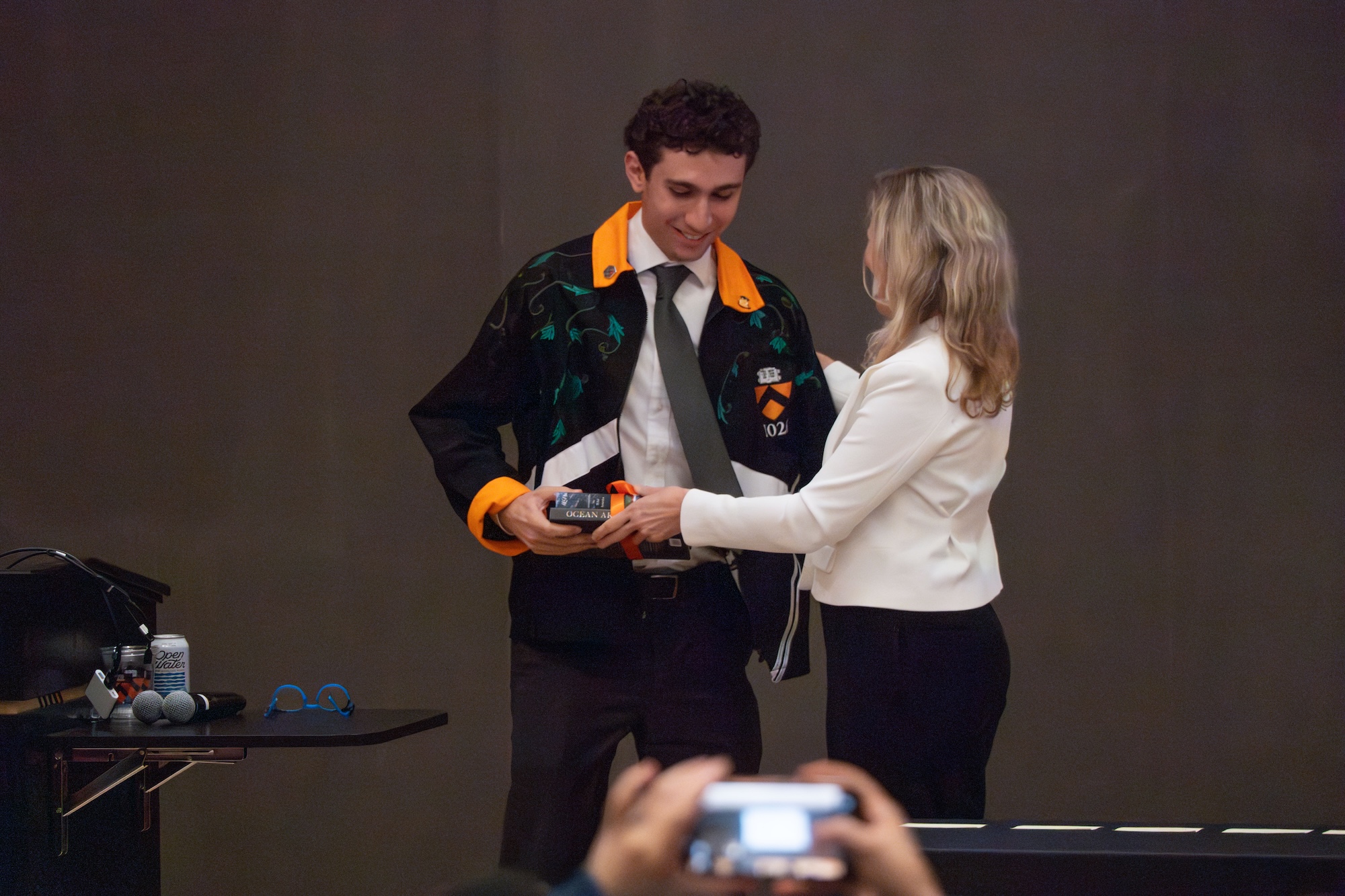
Alex’s adviser, Joseph Fronczak, praised the work as “an exciting and uncommonly ambitious study of the international history of industrial agriculture, seed breeding, patent rights, intellectual property law, agrarian activism and biotechnology. Based on an elaborate research itinerary ranging from Montreal and Madison to Paris and Geneva, the thesis gives readers a granular and thoroughly documented rendering of the 20th century-long campaign of the plant breeding industry to shape plant intellectual property rights, and even to shape the biological constitution of certain plant life. This is a formidable work of scholarship, built on an impressive learnedness in intricate matters of plant biology and crop genetic resources. Alex deserves praise and congratulations for piecing together such complexity in a compelling and meaningful way.”
Next, Carruth presented the Environmental Studies Senior Thesis Prize, awarded annually to a senior in the ENV Program who has written the best thesis in the broad area of Environmental Studies. This year’s Environmental Studies Senior Thesis Prize was awarded to Tacy Guest in Ecology and Evolutionary Biology for her thesis, “Seals as Sentinels: Harbor Seals (Phoca vitulina) as Climate Indicators for the Gulf of Maine.”
Tacy’s adviser, Corina Tarnita, said, “What Tacy did was an impressive tour de force working with the harbor seals. She took the approach of an advanced graduate student to this problem. She did fieldwork in the Gulf of Maine. She did wet lab work in Boston. And she did data analysis and deep dive into theoretical concepts here at Princeton. She wrote an extremely elegant thesis which, when she publishes it, probably in the next year, will be the first work to demonstrate that molting in seals is can act as an indicator for climate change, for climatic changes in the ecosystem and for the health of the ecosystem, and thereby suggesting that seals are a really good species in which more research needs to be invested because they could be sentinel species. This is an absolutely brilliant work. And Tacy, it has been a proper joy to meet with you every week. I’ve learned so much from you.”

Cynthia Jacobson in Civil and Environmental Engineering received an honorable mention for the Stroh Prize for her thesis titled Modeling Synergistic Cooling Benefits of Photovoltaic Green Roofs Across US Climates. Her adviser Elie Bou-Zeid, Professor of Civil and Environmental Engineering, said, “Cynthia’s thesis was a brilliant combination of complex model development and meticulous simulations and analysis that filled a critical gap in our understanding of the benefits and performance of photovoltaic green roofs. It caps an exceptional academic journey at Princeton and ushers in what I am sure will be a successful career in the service of humanity that will make her alma mater very proud.”
Makenzie Hymes in African American Studies received the Peter W. Stroh ’51 Environmental Senior Thesis Prize for her thesis, “People Power’ versus a Colossal Calamity: The Birth of xAI’s Data Center Conglomerate in Memphis and Southaven.”
Makenzie’s adviser, Naomi Murakawa, described her thesis as “a stunning account of the corporate and political collusion behind Elon Musk’s construction of AI data centers in the US South. Through her reading of government documents and her field research in Memphis. Hymes witnesses the devastation of environmental racism. But she also finds something more—the activism of Black Southerners who are, in the words of Fannie Lou Hamer, sick and tired of being sick and tired. Makenzie Hymes’ outstanding thesis demonstrates the rigor and innovation nurtured by interdisciplinary training in the program in environmental studies and African American studies together.”
Next Professor Gabe Vecchi, HMEI faculty director and professor of Geosciences and HMEI, took the stage to present the T. A. Barron Environmental Leadership Prize, which honors a member of the senior class who has shown exceptional dedication to environmental concerns in their classes and independent academic work, as well as by leading and encouraging activities among fellow students and community members —a combination Professor Vecchi describes as “action as well as academic excellence.” He presented the prize to Noémie Veillette in Civil and Environmental Engineering, whose senior thesis was titled “Surface Clues for Subsurface Hydrogen: Tracking the Deformation of Sub-Circular Depressions with InSAR.”
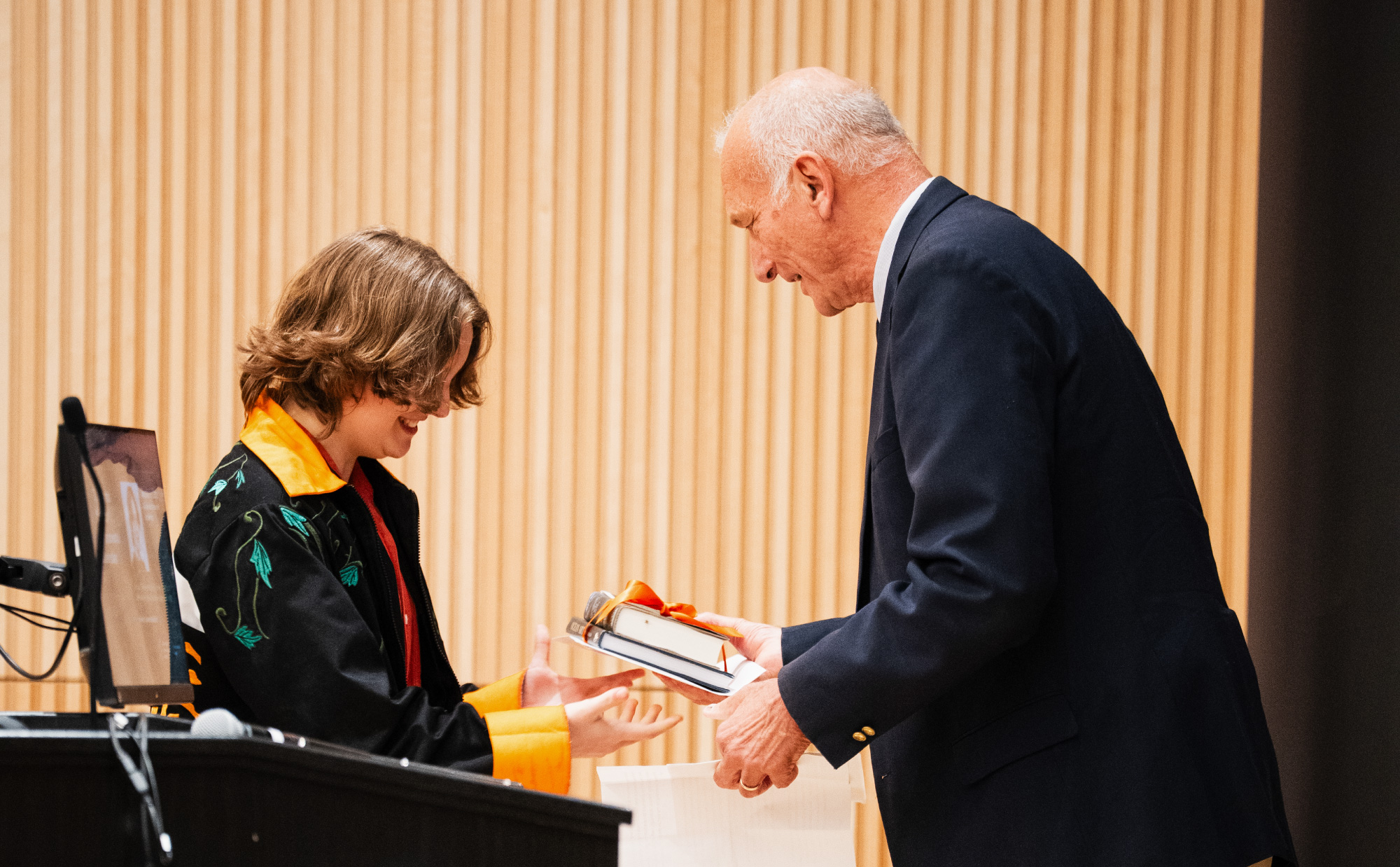
Noémie’s adviser, Raymond Sandiford, a Visiting Lecturer in the Department of Civil and Environmental Engineering, explained, “I’ve had the great pleasure and honor of being Noemie’s professor as well as her advisor for her, for her thesis. Noémie took on the really difficult task of trying to figure out a signature for places [producing white hydrogen]. And there’s one in particular in Mali, Africa. She studied how this plume of hydrogen behaves, trying to develop a signature which could be used worldwide to find other sources. She looked at places in Africa, Brazil, Nebraska. She’s done early work with satellite based deflection measurements. [Work that] in the long run may have tremendous impacts on the energy field. It was wonderful work. I advised you for about five minutes and then I learned the rest of the year working with you.”
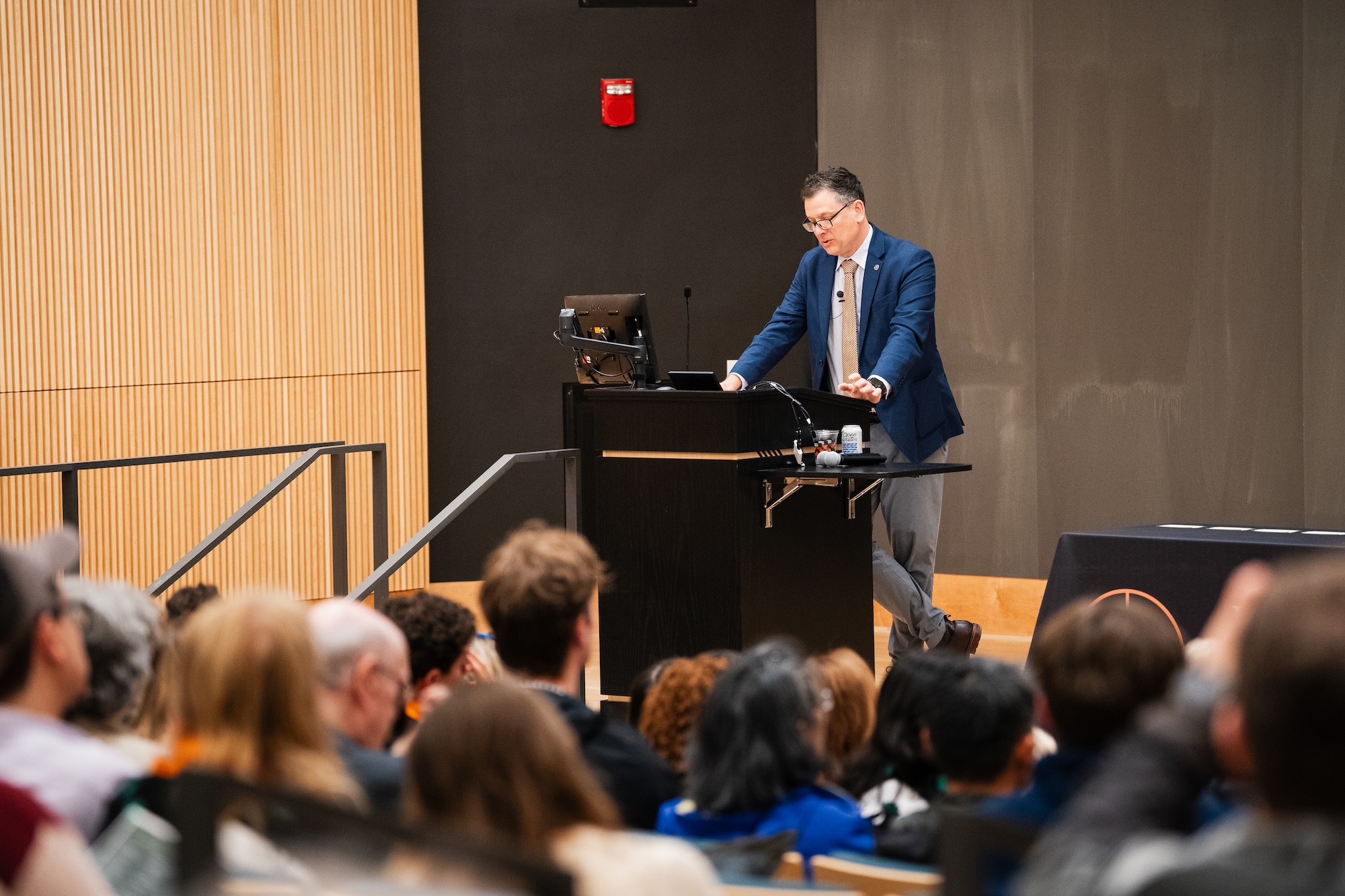
Professor Vecchi concluded the ceremony by congratulating the day’s graduates on their achievements. “We have a combination of excellent scholars as well as daring scholars,” he said. “It takes bravery to cross disciplines, to handle some of the most challenging topics that humanity is facing, things that cannot be adequately explored within the realms of a single discipline. We need to understand the physical system, the biological systems, the technology, the laws, all of the things that interact to create these issues. So these daring scholars took it upon themselves to become not just excellent in one discipline, but connecting across disciplines, engage, and really have an impact. I am so proud of the students that have come here, chosen to enrich our lives intellectually. I know that they’re moving into a world that is unpredictable, a world that is complex. But this is what they’ve been studying this whole time—limited predictability, complex systems. So they’re ready for this and on they go.”
HMEI Class Day Awards and Prizes
T. A. Barron Environmental Leadership Prize
The T. A. Barron Prize for Environmental Leadership is awarded annually to the senior who has demonstrated exceptional dedication to environmental concerns in their classes and independent academic work, as well as by leading and encouraging activities among fellow students and in the community at large.
 Noémie Veillette, Civil and Environmental Engineering
Thesis title: Surface Clues for Subsurface Hydrogen: Tracking the Deformation of Sub-Circular Depressions with InSAR
Thesis adviser: Raymond Sandiford, Visiting Lecturer in Civil and Environmental Engineering
Peter W. Stroh ’51 Environmental Thesis Prize
The Peter W. Stroh ’51 Environmental Senior Thesis Prize is awarded annually the senior who has written the best thesis on an environmental topic.
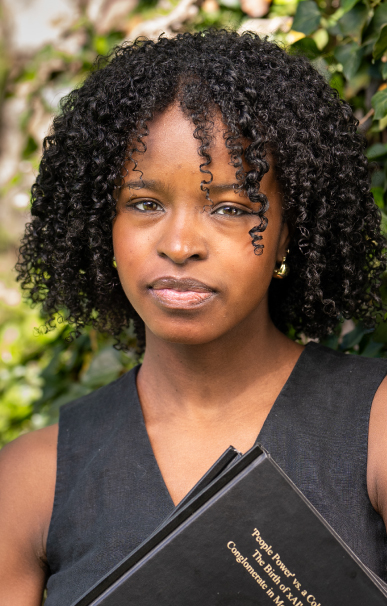 Makenzie Hymes, African American Studies
Thesis title: People Power’ vs. a Colossal Calamity: The Birth of xAI’s Data Center Conglomerate in Memphis and Southaven
Thesis adviser: Naomi Murakawa, Associate Professor of Department of African American Studies
Honorable mention:
 Cynthia Jacobson, Civil and Environmental Engineering
Thesis title: Modeling Synergistic Cooling Benefits of Photovoltaic Green Roofs Across U.S. Climates
Thesis adviser: Elie Bou-Zeid, Professor of Civil and Environmental Engineering
Environmental Studies Senior Thesis Prize
The Environmental Studies Senior Thesis Prize is awarded annually to the senior in the Environmental Studies Minor Program who has written the best thesis in the broad area of Environmental Studies.
 Tacy Guest, Ecology and Evolutionary Biology
Independent work: Seals as Sentinels: Harbor Seals (Phoca vitulina) as Climate Indicators for the Gulf of Maine
Thesis adviser: Corina Tarnita, Professor of Ecology and Evolutionary Biology
Environmental Studies Book Prizes
The Environmental Studies Book Prize recognizes seniors for outstanding senior thesis research and the ability to communicate the results and significance of their work.
ENGINEERING
 Shannon Yeow, Computer Science
Thesis title: Evaluating Multimedia Storytelling: Offshore Wind Impacts on Taiwan’s Fishing Villages
Thesis adviser: Allison Carruth, Professor of American Studies and HMEI
NATURAL SCIENCES
 Leila Granier, Ecology and Evolutionary Biology
Thesis title: Island Orchids Recover After Invasive Plant Removal
Thesis adviser: David Wilcove, Henry W. Putnam Professor of Ecology and Evolutionary Biology and HMEI
SOCIAL SCIENCES
 Ayse Basak Ersoy, Anthropology
Thesis title: Militant Futurity: Time, Sovereignty, and Water in the Northern Basque Country
Thesis adviser: Amelia Frank-Vitale, Assistant Professor of Anthropology and the Princeton School of Public and International Affairs
 Alex Norbrook, History
Thesis title: Sowing Conflict: Seeds, Appropriation, and Discourse in the International Struggle for Plant Intellectual Property Rights, 1946-1991
Thesis adviser: Joseph Fronczak, Research Scholar of History
Henry Horn Prize
Awarded to the senior who has produced the best visual presentation of their independent research for a broad audience. Established in memory of Henry Horn, professor of ecology and evolutionary biology, emeritus, and former director of the Program in Environmental Studies.
 Emmanuela Omole, Economics
Thesis title: Energy Volatility and Financial Vulnerability: Investigating the Influence of Fuel Source Composition on Residential Electric Budgets
Thesis adviser: Natalie Cox, Assistant Professor of Economics
 Ruxandra Iosif, Public and International Affairs
Thesis title: Contesting Religious Land Rights: Native Hawaiian and Non-Native Claims in U.S. Courts
Thesis adviser: Babak Manouchehrifar, Associate Research Scholar of Religion