




Bradford Seminar: “When Bioeconomy Meets Carbon Removal: Insights from Integrated Systems Modeling”
Yuan Yao, associate professor of Industrial Ecology and Sustainable Systems for Yale University, will present “When Bioeconomy Meets Carbon Removal: Insights from Integrated Systems Modeling.” This seminar will be held in-person (PUID holders only) and available via livestream (open to all).
The bioeconomy aims to replace fossil-based, non-renewable products with those derived from biological resources and processes. The bioeconomy intersects with carbon dioxide removal (CDR) through nature-based and engineered pathways such as afforestation/reforestation, biochar, and bioenergy with carbon capture and storage. Leveraging the bioeconomy for effective CDR requires a comprehensive understanding of the environmental, economic, and societal impacts of diverse biomass pathways, as well as their CDR effectiveness across different technologies, regions, and timeframes. However, acquiring these insights is challenging due to limited knowledge of system-wide effects and the lack of robust assessment methodologies across spatial and temporal dimensions. This talk will present transdisciplinary, multi-scale systems modeling frameworks developed by Dr. Yao’s research group to address these critical knowledge and methodological gaps. These frameworks systematically integrate industrial ecology approaches, such as life cycle assessment and material flow analysis, with methods from other disciplines, including machine learning, engineering process modeling, and economic-ecological modeling. Through several case studies, the presentation will demonstrate how these integrated frameworks enhance our fundamental understanding of the interconnected ecological, industrial, and economic systems across various scales. Furthermore, the talk will discuss policy implications and illustrate how these frameworks can inform system-level design for a resource-efficient, climate-beneficial bioeconomy that aligns with global sustainability goals.
Yao is an Associate Professor of Industrial Ecology and Sustainable Systems at Yale University. Her research focuses on understanding the potential environmental impacts of emerging technologies and biomass utilization. Dr. Yao received many awards, including the U.S. National Science Foundation CAREER Award, 35 Under 35 Award from the American Institute of Chemical Engineers, and the Laudise Medal from the International Society of Industrial Ecology. Dr. Yao is the associate editor for the journal Resources, Conservation & Recycling. She served on the provisional committee of the U.S. National Academies to assess current life-cycle analysis methods for low-carbon transportation fuels in the United States. Her research has been published in high-impact journals, such as Science, Nature Sustainability, Nature Chemical Engineering, and Proceedings of the National Academy of Sciences. She received her Ph.D. degree in Chemical Engineering from Northwestern University.
This event is part of the David Bradford Energy and Environmental Policy Seminar Series organized by the Center for Policy Research on Energy and the Environment (C-PREE) in the Princeton School of Public and International Affairs and co-sponsored by the High Meadows Environmental Institute (HMEI).
- This event has passed.
Bradford Seminar: “When Bioeconomy Meets Carbon Removal: Insights from Integrated Systems Modeling”
Mon, Mar 30, 2026 ・ 12:15 PM - 1:15 PM
300 Wallace Hall; Online via Media Central Live
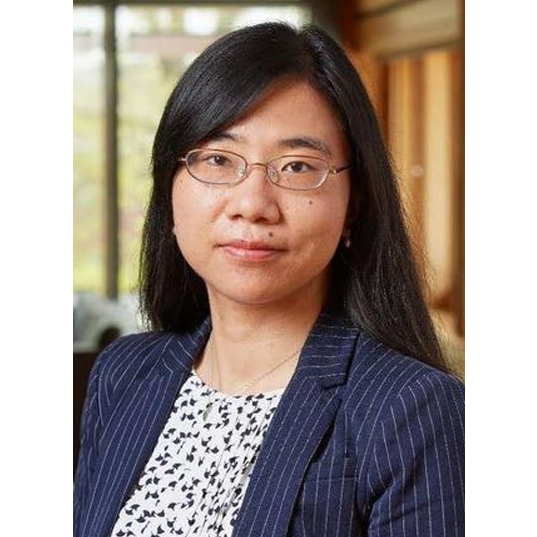
Yuan Yao, associate professor of Industrial Ecology and Sustainable Systems for Yale University, will present “When Bioeconomy Meets Carbon Removal: Insights from Integrated Systems Modeling.” This seminar will be held in-person (PUID holders only) and available via livestream (open to all).
The bioeconomy aims to replace fossil-based, non-renewable products with those derived from biological resources and processes. The bioeconomy intersects with carbon dioxide removal (CDR) through nature-based and engineered pathways such as afforestation/reforestation, biochar, and bioenergy with carbon capture and storage. Leveraging the bioeconomy for effective CDR requires a comprehensive understanding of the environmental, economic, and societal impacts of diverse biomass pathways, as well as their CDR effectiveness across different technologies, regions, and timeframes. However, acquiring these insights is challenging due to limited knowledge of system-wide effects and the lack of robust assessment methodologies across spatial and temporal dimensions. This talk will present transdisciplinary, multi-scale systems modeling frameworks developed by Dr. Yao’s research group to address these critical knowledge and methodological gaps. These frameworks systematically integrate industrial ecology approaches, such as life cycle assessment and material flow analysis, with methods from other disciplines, including machine learning, engineering process modeling, and economic-ecological modeling. Through several case studies, the presentation will demonstrate how these integrated frameworks enhance our fundamental understanding of the interconnected ecological, industrial, and economic systems across various scales. Furthermore, the talk will discuss policy implications and illustrate how these frameworks can inform system-level design for a resource-efficient, climate-beneficial bioeconomy that aligns with global sustainability goals.
Yao is an Associate Professor of Industrial Ecology and Sustainable Systems at Yale University. Her research focuses on understanding the potential environmental impacts of emerging technologies and biomass utilization. Dr. Yao received many awards, including the U.S. National Science Foundation CAREER Award, 35 Under 35 Award from the American Institute of Chemical Engineers, and the Laudise Medal from the International Society of Industrial Ecology. Dr. Yao is the associate editor for the journal Resources, Conservation & Recycling. She served on the provisional committee of the U.S. National Academies to assess current life-cycle analysis methods for low-carbon transportation fuels in the United States. Her research has been published in high-impact journals, such as Science, Nature Sustainability, Nature Chemical Engineering, and Proceedings of the National Academy of Sciences. She received her Ph.D. degree in Chemical Engineering from Northwestern University.
This event is part of the David Bradford Energy and Environmental Policy Seminar Series organized by the Center for Policy Research on Energy and the Environment (C-PREE) in the Princeton School of Public and International Affairs and co-sponsored by the High Meadows Environmental Institute (HMEI).


