




Bradford Seminar: “The Taken-for-Granted Transition: How Talk of Decarbonization Shifts Attention Away From It”
Ankit Bhardwaj, college fellow of Sociology for Northwestern University, will present “The Taken-for-Granted Transition: How Talk of Decarbonization Shifts Attention Away From It.” This seminar will be held in-person (PUID holders only) and available via livestream (open to all).
Democratic responses to climate change will be determined by how institutions such as deliberative bodies make sense of decarbonization. In a novel ethnography of the deliberations to achieve New York’s climate target, one of the world’s most ambitious, Bhardwaj show how norms of talk shape how people temporally coordinate action to reduce emissions.
In a micro-interactional analysis of more than 300 hours of deliberation from 2020 to 2024, I point to a yet-considered challenge of decarbonization: agreement on near-term action such as the urgent buildout of renewables can be taken-for-granted, shifting attention to disagreements over later steps of action. For example, energy firms pointed to the lack of reliability of a renewable-heavy grid with less dispatchable energy. State officials expressed confidence in the achievement of short-term goal and the need to prudently plan for the long-term one. Climate advocates were split in their focus but were drawn to disagree over the “false solutions” for zero-emissions proposed by energy firms. Even when groups agreed to build renewable energy, they focused over disagreements of the challenges once they were built. By understanding decarbonization as a challenge of temporal coordination, I argue that democratic politics of climate change are not just characterized by obstruction and delay but cultural norms of talk. I make the case that democratic institutions should be bound to short-term goals.
Bhardwaj is an environmental sociologist who uses qualitative methods to research how democracies respond to climate change. Ankit’s book project details the case of New York, as it pursued one of the world’s most ambitious emission-reduction mandates, building on his research on India’s climate governance at the Centre for Policy Research in New Delhi. His award-winning work has been published in Sociological Theory, Environmental Politics, and Environmental Research Letters, amongst other venues. He received his PhD from New York University’s Department of Sociology.
This event is part of the David Bradford Energy and Environmental Policy Seminar Series organized by the Center for Policy Research on Energy and the Environment (C-PREE) in the Princeton School of Public and International Affairs and co-sponsored by the High Meadows Environmental Institute (HMEI).
- This event has passed.
Bradford Seminar: “The Taken-for-Granted Transition: How Talk of Decarbonization Shifts Attention Away From It”
Mon, Mar 23, 2026 ・ 12:15 PM - 1:15 PM
300 Wallace Hall; Online via Media Central Live
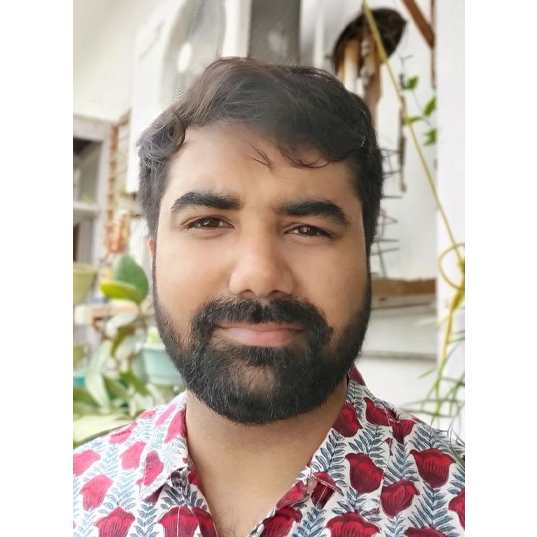
Ankit Bhardwaj, college fellow of Sociology for Northwestern University, will present “The Taken-for-Granted Transition: How Talk of Decarbonization Shifts Attention Away From It.” This seminar will be held in-person (PUID holders only) and available via livestream (open to all).
Democratic responses to climate change will be determined by how institutions such as deliberative bodies make sense of decarbonization. In a novel ethnography of the deliberations to achieve New York’s climate target, one of the world’s most ambitious, Bhardwaj show how norms of talk shape how people temporally coordinate action to reduce emissions.
In a micro-interactional analysis of more than 300 hours of deliberation from 2020 to 2024, I point to a yet-considered challenge of decarbonization: agreement on near-term action such as the urgent buildout of renewables can be taken-for-granted, shifting attention to disagreements over later steps of action. For example, energy firms pointed to the lack of reliability of a renewable-heavy grid with less dispatchable energy. State officials expressed confidence in the achievement of short-term goal and the need to prudently plan for the long-term one. Climate advocates were split in their focus but were drawn to disagree over the “false solutions” for zero-emissions proposed by energy firms. Even when groups agreed to build renewable energy, they focused over disagreements of the challenges once they were built. By understanding decarbonization as a challenge of temporal coordination, I argue that democratic politics of climate change are not just characterized by obstruction and delay but cultural norms of talk. I make the case that democratic institutions should be bound to short-term goals.
Bhardwaj is an environmental sociologist who uses qualitative methods to research how democracies respond to climate change. Ankit’s book project details the case of New York, as it pursued one of the world’s most ambitious emission-reduction mandates, building on his research on India’s climate governance at the Centre for Policy Research in New Delhi. His award-winning work has been published in Sociological Theory, Environmental Politics, and Environmental Research Letters, amongst other venues. He received his PhD from New York University’s Department of Sociology.
This event is part of the David Bradford Energy and Environmental Policy Seminar Series organized by the Center for Policy Research on Energy and the Environment (C-PREE) in the Princeton School of Public and International Affairs and co-sponsored by the High Meadows Environmental Institute (HMEI).


