




Bradford Seminar: “The Importance of Nutrients for Soil C Sequestration and Implications for GHG Emissions from Cropland”
John Kierkegaard, chief research scientist for Australia’s National Science Agency (CSIRO), will present “The Importance of Nutrients for Soil C Sequestration and Implications for GHG Emissions from Cropland.” This seminar will be held in-person (PUID holders only) and available via livestream (open to all).
The adoption of conservation agriculture (CA) involving no-till, crop residue retention and diverse crop rotations has had significant benefits globally including reduced soil erosion, improved water conservation, reduced labour and machinery costs and improved yields through more timely operations. Surprisingly, the anticipated increases in soil organic matter and C sequestration have been much less evident and in some cases absent despite long term adoption of CA practices. On face value, it seems inconceivable that retaining crop residues rather than burning or removing them would not slowly but surely increase soil organic matter. The answer to this puzzle lies in understanding that much of the stable soil organic matter is microbial detritus (dead microbes) and not plant material and has a relatively stable nutrient ratios (C:N:P:S). This means that for each tonne of soil C sequestered there is a predictable amount of N, P and S required. Dr Kirkegaard will explore the implications of this stoichiometric reality for efforts to sequester C in soil, on GHG emissions and on the role of strategic tillage in conservation agriculture.
Dr. Kirkegaard (FAA) is a Chief Research Scientist at Australia’s National Science Agency (CSIRO) in Canberra, whose research teams develop innovative agronomic approaches to improve the productivity and sustainability of farming systems. A key focus area has been improved water use efficiency in dryland farming systems through the adoption of conservation agriculture (CA) systems involving reduced tillage, crop residue retention and improved crop rotations. His long term on-farm research experiments spanning 30 years revealed a puzzling lack of improvements in soil carbon sequestration under CA which led to revelations about the importance of balanced nutrient stoichiometry with significant implications for policy and practice in agriculture. Awarded the Eureka Prize in sustainable agriculture in 2014, he was elected a Fellow of the Australian Academy of Science in 2016 and is currently the Fulbright Distinguished Chair in Agriculture and Life Sciences at Kansas State University (April to September 2026) where he is sharing research approaches to improve productivity of wheat farming systems, a crop central to global food security and rural prosperity.
This event is part of the David Bradford Energy and Environmental Policy Seminar Series organized by the Center for Policy Research on Energy and the Environment (C-PREE) in the Princeton School of Public and International Affairs and co-sponsored by the High Meadows Environmental Institute (HMEI).
- This event has passed.
Bradford Seminar: “The Importance of Nutrients for Soil C Sequestration and Implications for GHG Emissions from Cropland”
Mon, Sep 21, 2026 ・ 12:15 PM - 1:15 PM
300 Wallace Hall; Online via Media Central Live
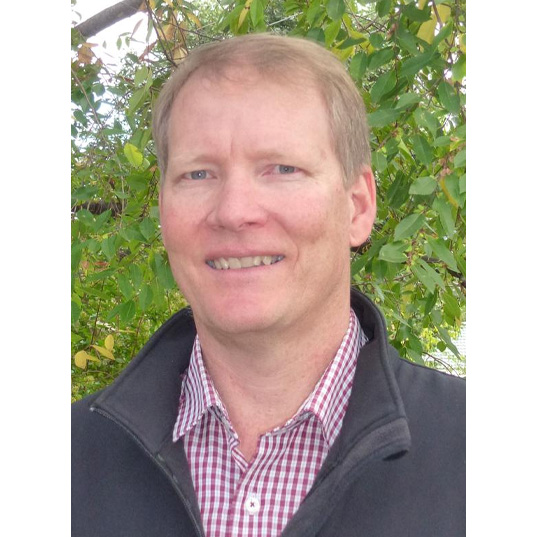
John Kierkegaard, chief research scientist for Australia’s National Science Agency (CSIRO), will present “The Importance of Nutrients for Soil C Sequestration and Implications for GHG Emissions from Cropland.” This seminar will be held in-person (PUID holders only) and available via livestream (open to all).
The adoption of conservation agriculture (CA) involving no-till, crop residue retention and diverse crop rotations has had significant benefits globally including reduced soil erosion, improved water conservation, reduced labour and machinery costs and improved yields through more timely operations. Surprisingly, the anticipated increases in soil organic matter and C sequestration have been much less evident and in some cases absent despite long term adoption of CA practices. On face value, it seems inconceivable that retaining crop residues rather than burning or removing them would not slowly but surely increase soil organic matter. The answer to this puzzle lies in understanding that much of the stable soil organic matter is microbial detritus (dead microbes) and not plant material and has a relatively stable nutrient ratios (C:N:P:S). This means that for each tonne of soil C sequestered there is a predictable amount of N, P and S required. Dr Kirkegaard will explore the implications of this stoichiometric reality for efforts to sequester C in soil, on GHG emissions and on the role of strategic tillage in conservation agriculture.
Dr. Kirkegaard (FAA) is a Chief Research Scientist at Australia’s National Science Agency (CSIRO) in Canberra, whose research teams develop innovative agronomic approaches to improve the productivity and sustainability of farming systems. A key focus area has been improved water use efficiency in dryland farming systems through the adoption of conservation agriculture (CA) systems involving reduced tillage, crop residue retention and improved crop rotations. His long term on-farm research experiments spanning 30 years revealed a puzzling lack of improvements in soil carbon sequestration under CA which led to revelations about the importance of balanced nutrient stoichiometry with significant implications for policy and practice in agriculture. Awarded the Eureka Prize in sustainable agriculture in 2014, he was elected a Fellow of the Australian Academy of Science in 2016 and is currently the Fulbright Distinguished Chair in Agriculture and Life Sciences at Kansas State University (April to September 2026) where he is sharing research approaches to improve productivity of wheat farming systems, a crop central to global food security and rural prosperity.
This event is part of the David Bradford Energy and Environmental Policy Seminar Series organized by the Center for Policy Research on Energy and the Environment (C-PREE) in the Princeton School of Public and International Affairs and co-sponsored by the High Meadows Environmental Institute (HMEI).


