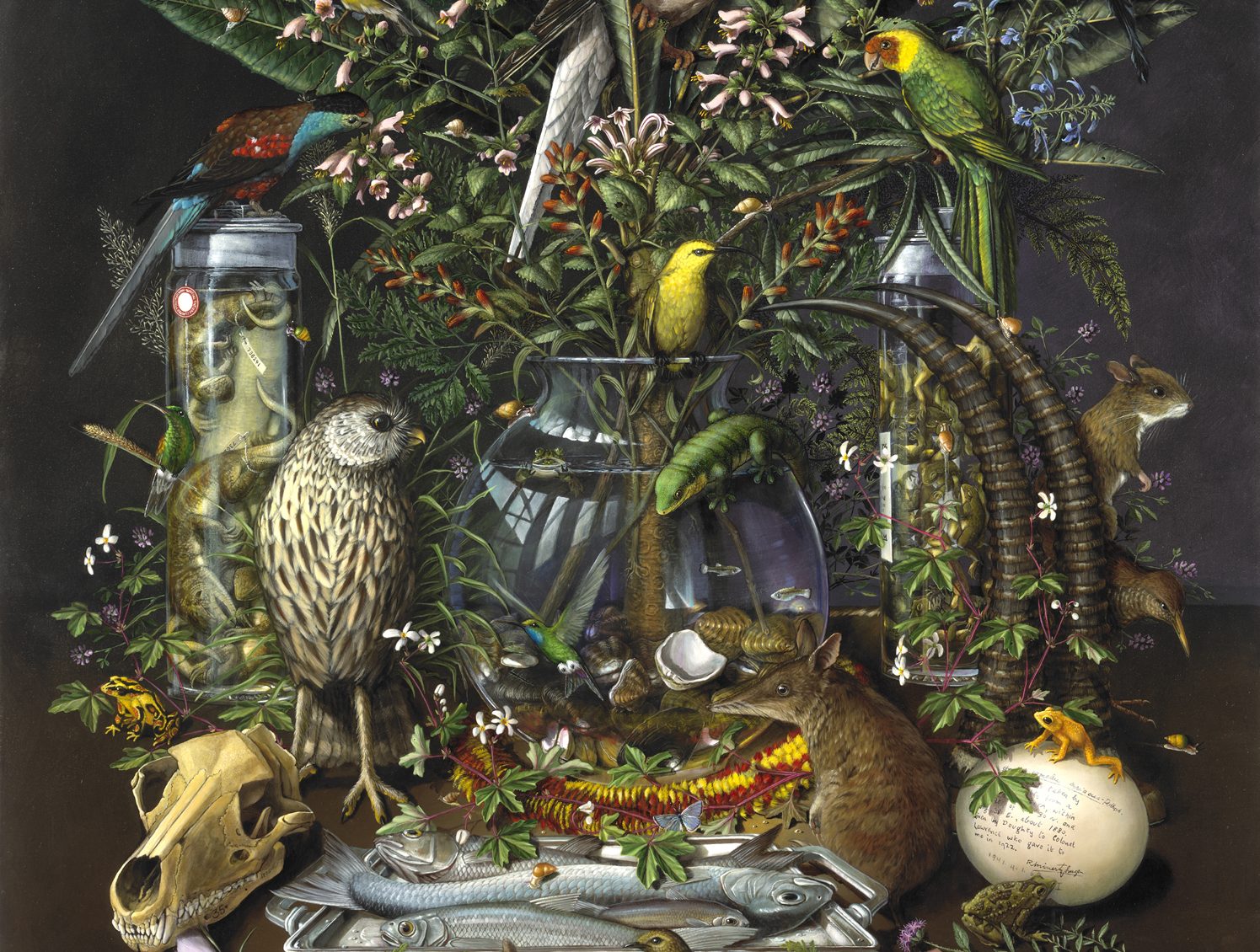
“Nature by Design: Rewilding, De-Extinction and the Ongoing Troubles with American Wilderness”
Allison Carruth, associate professor of English at the University of California-Los Angeles and the Anschutz Distinguished Fellow in the Princeton American Studies Program, will present “Nature by Design: Rewilding, De-Extinction and the Ongoing Troubles with American Wilderness” at 4:30 p.m. Monday, Nov. 18, in the Aaron Burr Hall, Room 219.
Carruth will compare the scientific literature and popular science around de-extinction — which proposes to revive and reintroduce extinct species — as it has been envisioned in the U.S. and considers its complicated relationship to the discourse of rewilding cities, farmlands, forests and parks. She will argue that the field’s network of researchers and investors knits primitivist nostalgia for a prehistoric North America to techno-utopian ideas of resilience, adaptation and rapid prototyping. Through this lens, de-extinction is the latest chapter in the longer history of wilderness in the United States and the binary logic of pristine nature and natural resource.
This event is free and open to the public, and presented by the Princeton Program in American Studies.
“Nature by Design: Rewilding, De-Extinction and the Ongoing Troubles with American Wilderness”
Event Date
Mon, Nov 18, 2019 ・ 4:30 PM - 6:00 PM
Location
Aaron Burr Hall, Room 219

Allison Carruth, associate professor of English at the University of California-Los Angeles and the Anschutz Distinguished Fellow in the Princeton American Studies Program, will present “Nature by Design: Rewilding, De-Extinction and the Ongoing Troubles with American Wilderness” at 4:30 p.m. Monday, Nov. 18, in the Aaron Burr Hall, Room 219.
Carruth will compare the scientific literature and popular science around de-extinction — which proposes to revive and reintroduce extinct species — as it has been envisioned in the U.S. and considers its complicated relationship to the discourse of rewilding cities, farmlands, forests and parks. She will argue that the field’s network of researchers and investors knits primitivist nostalgia for a prehistoric North America to techno-utopian ideas of resilience, adaptation and rapid prototyping. Through this lens, de-extinction is the latest chapter in the longer history of wilderness in the United States and the binary logic of pristine nature and natural resource.
This event is free and open to the public, and presented by the Princeton Program in American Studies.
Share on Social Media:
Add to my calendar: