HMEI Faculty Seminar “Partitioning of PFAS and Other Organic Contaminants Between Water, Air, and Minerals” by Ian Bourg
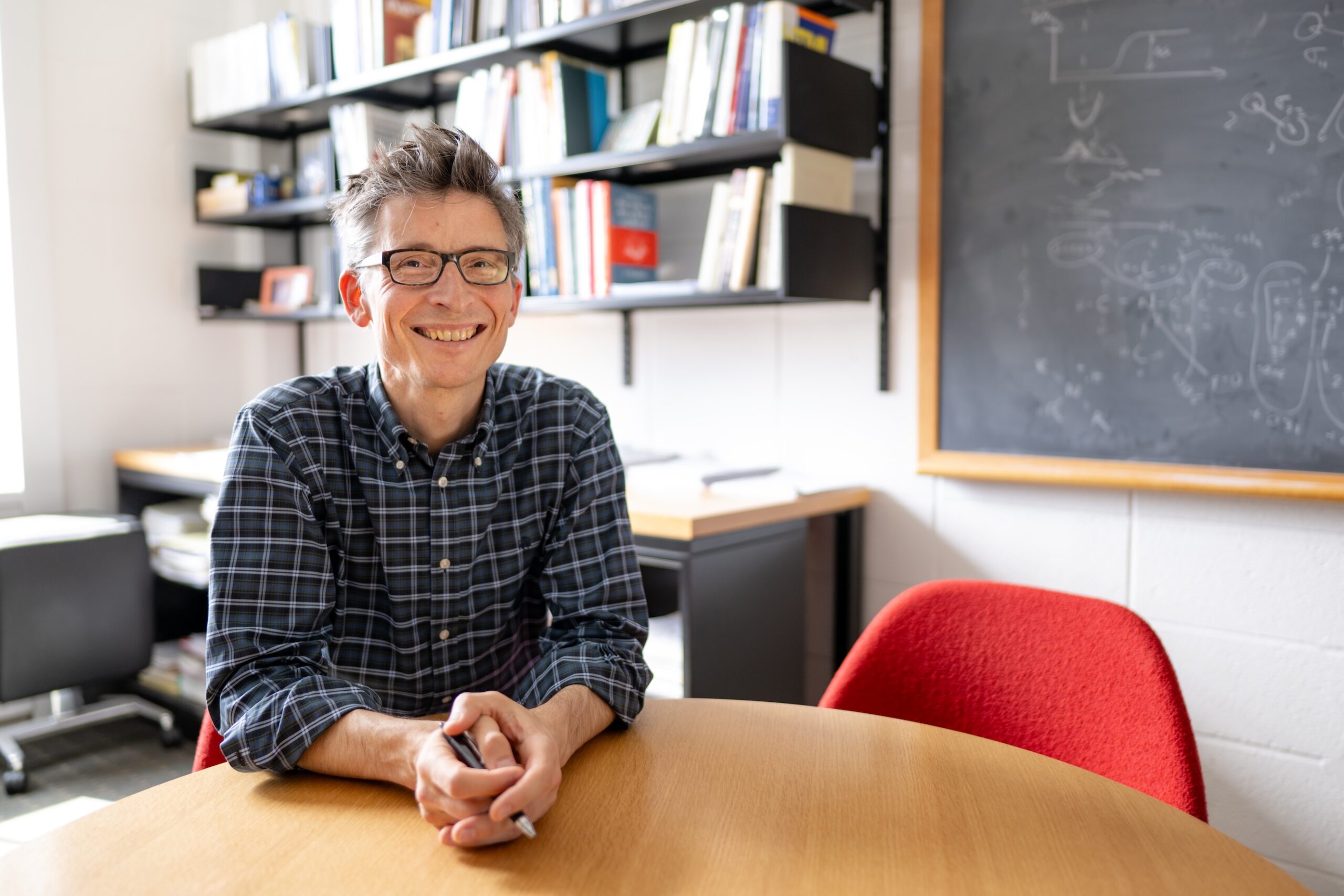
Ian Bourg, associate professor of civil and environmental engineering and the High Meadows Environmental Institute, will present “Partitioning of PFAS and Other Organic Contaminants Between Water, Air, and Minerals.” Join us in the Briger Hall Auditorium, 11 Ivy Lane, or stream it live. Bourg is the third speaker in the Spring 2026 HMEI Faculty Seminar Series.
Natural systems hold an increasing variety of anthropogenic microcontaminants and their transformation products. An important set of variables in predicting the behavior of these compounds in the environment is their affinities for different phases including water, air, minerals, and biological systems. Computational chemistry can help predict these affinities and generate information that is often challenging to obtain in the lab.
This seminar is free and open to the public. Lunch will be available in the Briger Atrium at 11:45 a.m., and the lecture will begin in the Auditorium at 12:15 p.m. Click here to stream it live, no registration needed. If you’d like to submit a question for the Q&A, you can do so here.
Directions to Briger Hall.
A recording of the seminar is available on the video archive page.
HMEI Faculty Seminar “Partitioning of PFAS and Other Organic Contaminants Between Water, Air, and Minerals” by Ian Bourg
Event Date
Tue, Apr 7, 2026 ・ 12:15 PM - 1:15 PM
Location
Briger Hall Auditorium, 11 Ivy Lane

Ian Bourg, associate professor of civil and environmental engineering and the High Meadows Environmental Institute, will present “Partitioning of PFAS and Other Organic Contaminants Between Water, Air, and Minerals.” Join us in the Briger Hall Auditorium, 11 Ivy Lane, or stream it live. Bourg is the third speaker in the Spring 2026 HMEI Faculty Seminar Series.
Natural systems hold an increasing variety of anthropogenic microcontaminants and their transformation products. An important set of variables in predicting the behavior of these compounds in the environment is their affinities for different phases including water, air, minerals, and biological systems. Computational chemistry can help predict these affinities and generate information that is often challenging to obtain in the lab.
This seminar is free and open to the public. Lunch will be available in the Briger Atrium at 11:45 a.m., and the lecture will begin in the Auditorium at 12:15 p.m. Click here to stream it live, no registration needed. If you’d like to submit a question for the Q&A, you can do so here.
Directions to Briger Hall.
A recording of the seminar is available on the video archive page.
Share on Social Media:
Add to my calendar: