Mechanical and Aerospace Engineering
-
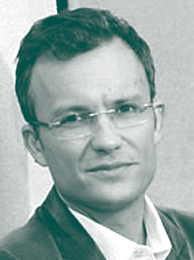
Burke, Michael (‘08 - ‘10)
Mechanical and Aerospace Engineering

Michael’s main research project was the experimental characterization and development of chemical models for the combustion of synthetic gas (hydrogen and carbon monoxide) at typical gas turbine engine conditions. Burning synthetic gas is the final stage of coal-based Integrated Gasification Combined-Cycle (IGCC) systems, offering an opportunity for utilizing an abundant and relatively cheap power generation resource while still controlling air pollutant emissions, achieving high energy conversion efficiencies, and possibly sequestering carbon. He collected data at these conditions and extending the current chemical models to provide the knowledge base necessary for the successful design of reliable and efficient gas turbine engines.
He had been involved in a project focused on the spontaneous ignition of hydrogen and natural gas during high pressure tank ruptures. His group had shown experimentally that hydrogen or natural gas tank leaks can ignite without an external ignition source. They worked to identify causes of spontaneous ignition to prevent this hazard.
-
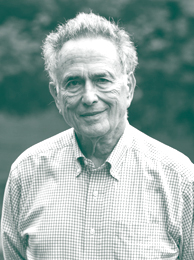
Socolow, Robert (‘08 - ‘19)
Mechanical and Aerospace Engineering
Professor Socolow’s current research focuses on global carbon management and international equity, fossil-carbon sequestration, and geoengineering. He is the co-principal investigator (with ecologist, Stephen Pacala) of Princeton University’s Carbon Mitigation Initiative (CMI), a $30-million dollar, fifteen-year (2001-2015) project, supported by BP and Ford.
Under CMI, Princeton has launched new, coordinated research in environmental science, energy technology, geological engineering, and public policy. Other research interests include efficient use of energy, renewable energy, nuclear energy, and the nitrogen cycle.
-
Mueller, Michael
Mechanical and Aerospace Engineering
Prof. Mueller’s research focuses on high-fidelity computational modeling of turbulent reacting flows. Capabilites range from full-fidelity Direct Numerical Simulation (DNS) of canonical problems to understand the fundamental interactions between turbulence and chemistry to high-fidelity Large Eddy Simulation (LES) applied to practical engineering systems such as gas turbine combustors and reciprocating engines. One of the principal objectives of his research is the development of models for engineering calculations from the fundamental understanding gleaned from the first-principles calculations. Current topics of interest include pollutant emissions (soot, NOx), liquid sprays, thermal radiation, and thermo-acoustic instabilites.
As a tool to study and model physical and chemical phenomena, his research also includes areas of computational science and applied mathematics. Current interests in this area include the development of numerical methods appropriate for turbulent reacting flows on both structured and unstructed computational grids, the associated parallel algorithms for high-performance computing, and the development of algorithms for Uncertainty Quantification (UQ) in turbulent reacting flows.
-
Glaser, Alexander
Mechanical and Aerospace Engineering
Research in the Glaser group focuses on the technical aspects of nuclear-fuel-cycle technologies and policy questions related to nuclear energy and nuclear-weapon proliferation. New nuclear reactor concepts and fundamentally different approaches for the management of nuclear energy may be necessary to manage a growing and diverse nuclear energy sector. Glaser and colleagues also work on improving the characterization of nuclear power in models for climate policy-making. They examine how nuclear power is implemented in these models with particular attention to the assumptions made about availability and costs of uranium resources, the costs of reprocessing and the capital cost difference between light-water and breeder reactors. This also includes examining the sensitivity of modeling results to alternate assumptions about key parameters. Research in this area will clarify the role of nuclear power vis-à-vis its competitors and also help set priorities for what kinds of nuclear technologies should be developed.
-
Spechler, Josh (‘14 - ‘16)
Mechanical and Aerospace Engineering
Joshua Spechler is a Ph.D. student in the Mechanical and Aerospace Engineering Department at Princeton University. Before starting at Princeton Joshua was an optical engineer at the NASA/CalTech Jet Propulsion Laboratory in Pasadena, CA. Josh has been a teaching assistant and mentor in the MAE and MSE departments at Princeton University, as well as guest lecturing for classes in the MAE, MSE, and WWS departments. His research aims to apply inexpensive materials and processing to solar conversion technologies.
-
Perry, Bruce (‘16 - ‘18)
Mechanical and Aerospace Engineering
Bruce is a second year PhD student in the Department of Mechanical and Aerospace Engineering. Prior to coming to Princeton, he received BS and MS degrees in chemical engineering from Northwestern University in 2013. Working in Prof. Michael Mueller’s Computational Turbulent Reacting Flow Laboratory, his main research interest is developing turbulent combustion models that can be used both to reduce simulation cost and to elucidate important aspects of the combustion physics. He is presently focusing on modeling the effects of fuel/air mixture inhomogeneity on combustion and validating these models in large eddy simulation of appropriate test cases. Improving modeling capability in this area is essential for improving efficiency and reducing pollutant formation in gas turbines and internal combustion engines, which frequently have high degrees of compositional inhomogeneity.
-
Liang, Wenkai (‘15 - ‘17)
Mechanical and Aerospace Engineering
My research focuses on the combustion characteristics of fossil fuels and alternative fuels at engine operating conditions, which is related to various environmental and energy issues. Specifically, I conducted numerical simulations of flame initiation and propagation processes to understand the complicated chemistry-transport coupling in flame dynamics and further quantify the global combustion properties such as flame burning velocities and minimum ignition energies (MIEs). On a fundamental level, these global properties are critical targets for oxidation mechanism development and validation of both traditional fuels and alternative fuels. On a practical level, they affect the fuel burning rate and stability of Internal Combustion (IC) engines and hence determine the engine’s performance as well as pollutant emissions. Moreover, in spark-ignition engines, minimum ignition energy is a key parameter in the engine modeling and is essential for the design of high-efficiency and low-emission engines.
-
Lai, Ching-Yao (‘16 - ‘18)
Mechanical and Aerospace Engineering
Yao is a PhD student in the complex fluids lab at Princeton University. Her research focuses on the experimental modeling of the hydraulic fracturing process, in which high pressure liquid is injected and fractures shale formations to release oil and natural gas. She investigates the effects of fluid viscosity and rock elasticity on the growth rate of the hydraulic fractures. She also studies the timescale at which the fracturing fluid flows back to the surface from the underground fractures once the injection pressure is removed and the amount of liquid that is permanently trapped underground due to the rock heterogeneity.
Recently Yao has been working on a new technique in which foam is injected as a fracturing fluid to reduce the water use and the damage to water-sensitive reservoirs in hydraulic fracturing.
-
Davies, Greg (‘15 - ‘17)
Mechanical and Aerospace Engineering
Greg is a graduate student in the Mechanical and Aerospace Engineering Department. His research explores low cost batteries for grid-scale energy storage. Cost is a significant factor limiting deployment of current battery technologies at scale. This limitation can be reduced by considering battery architectures that use low cost battery materials and reduce the requirement for large amounts of packaging, which add wasted weight, volume and cost. Specifically, his research focusses on several novel flow-battery designs which work towards these goals. He is also interested in the expansion of low-carbon power generation in the electric grid, and policies which can be applied to significantly increase the penetration of renewable energy sources.