Ecology and Evolutionary Biology
-
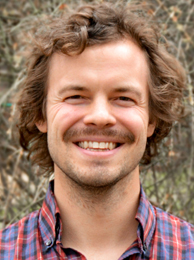
Watson, Harrison
Ecology and Evolutionary Biology

Watson’s research is on the role of large herbivore biodiversity in the exchange of carbon between soils and the atmosphere in savanna ecosystems, as well as to utilize a long-term experimental set-up established across a variable rainfall landscape with different groupings of herbivores to clarify these contributions from grasses and trees to savanna soil carbon stores. Watson is advised by Lars Hedin, professor of ecology and evolutionary biology and the High Meadows Environmental Institute.
-
Gray, Christian (‘22 - ‘24)
Ecology and Evolutionary Biology
Christian’s research focuses on the role mycorrhizae play in plant-soil feedbacks, and how this role is influenced by changes in soil resources. Christian studies this by leveraging an existing nutrient manipulation experiment in the Fynbos, and compares the shift in mycorrhizal communities and host fitness against changes in soil nutrients. Christian is advised by Lars Hedin, professor of ecology and evolutionary biology and the High Meadows Environmental Institute.
-
Tierney, Julie (‘21 - ‘23)
Ecology and Evolutionary Biology
Tierney seeks to understand the biogeochemical and evolutionary mechanisms that limit forest productivity in the Amazon Basin. Her dissertation work takes place in Peru, where she studies how plant traits shape community composition and nutrient cycling in Amazonian white-sand forests. Tierney is advised by Lars Hedin, the George M. Moffett Professor of Biology and professor of ecology and evolutionary biology and the High Meadows Environmental Institute.
-
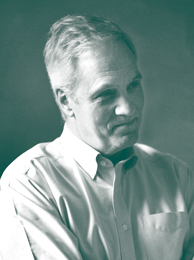
Pacala, Stephen
Ecology and Evolutionary Biology
Steve’s interests include the processes that govern ecological communities, the interplay between community and ecosystem-level processes, and the interactions between the global biosphere and climate. Pacala’s research involves all aspects of the global carbon cycle; currently he is focusing on a new model for the terrestrial biosphere. Ph.D. Stanford University.
-
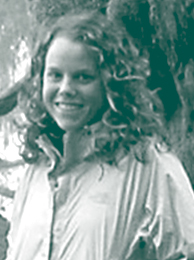
Liao, Wenying (‘17 - ‘19)
Ecology and Evolutionary Biology
Wenying’s research focuses on understanding and managing the global nitrogen cycle. Nitrogen is a key element controlling ecosystem functioning. Human activities have significantly altered global nitrogen cycle with nitrogen fertilization, driven by increased food energy demand. The current nitrogen loading has reached an alarmingly high amount, with potentially detrimental effect on global climate and public health. Wenying’s research aims to explore possible solutions via a socio-ecological perspective. Specifically, she is interested in developing theoretical models to investigate the effective policy framework for global collaboration on reducing and redistributing nitrogen fertilizer input.
-
Trierweiler, Annette (‘12 - ‘14)
Ecology and Evolutionary Biology
Annette studies how nutrient limitation and rising CO2 affect nitrogen fixation and primary productivity in the tropics. Her work focuses on how geologically-derived nutrients such as phosphorus and molybdenum can limit nitrogen fixation in tropical forest ecosystems now and into the future. By understanding what controls nitrogen fixation, the primary source of new nitrogen in the tropics, we can also understand how the role of these forests as a major carbon sink may change. Annette is using a combination of experimental field studies, greenhouse studies and modeling to explore the interactions of nutrients, nitrogen-fixation and climate change.
-
Rabin, Sam (‘13 - ‘15)
Ecology and Evolutionary Biology
My research is focused on understanding how climate, vegetation, and people interact to determine patterns of vegetation fire around the world. To that end, I’m building a global model that will estimate the amount of burning attributable to cropland, pasture, deforestation, and other land types. I’m especially interested in how increasing fire frequency in parts of the Amazon rainforest will combine with climate change to alter the structure and composition of the forest over the next century, and how carbon conservation initiatives such as REDD+ can account for those changes.
-
Farrior, Caroline (‘09 - ‘11)
Ecology and Evolutionary Biology
Modeling the pattern of plant distributions has proven to be a critical component in climate models. Plants species are constrained by physical limits such as cold and drought tolerance as well as competition from other species. Treating both types of mechanisms appropriately has been difficult to do while maintaining tractability for efficient use in climate models. Caroline is working on extending a new model of plant competition developed in the Pacala lab. This model has produced an accurate and tractable model of plant competition.
Caroline is currently extending and analyzing this model to understand the distribution of dominant plant strategies under the global range of climatic conditions (i.e. the biome distributions).
-
Treuer, Tim (‘16 - ‘18)
Ecology and Evolutionary Biology
Tim’s research is focused on regenerating tropical dry forests in Central America. As the forces of globalization and urbanization have combined to trigger the abandonment of agricultural lands throughout much of the Mesoamerican Biodiversity Hotspot, forest restoration offers a potential opportunity to pursue combined biodiversity and climate mitigation goals. However, thus far it is poorly understood how different environmental and historical drivers may modulate success in achieving these goals. Tim’s work focuses on how three factors–legacy pasture vegetation, soil quality, and landscape composition–influence the recovery of forest structure and community composition in young dry forest in the world’s largest tropical forest restoration site, el Área de Conservación Guanacaste, Costa Rica. In addition, Tim is investigating how nutrient rich agricultural waste products can be used to ameliorate the negative impacts of low soil quality on dry forest recovery.