Civil and Environmental Engineering
-
Li, Qi (‘14 - ‘16)
Civil and Environmental Engineering
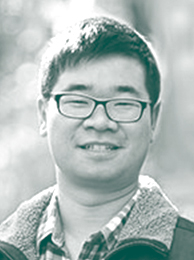
Qi is interested in issues related to urban micro-meteorology and designing more sustainable cities. Her work uses high-resolution numerical models to study the turbulent transport of momentum, heat and mass in the atmospheric boundary layer, especially boundary layer characterized by topographically complex roughness elements, such as the atmospheric boundary layer in urban environment. Understanding the basic mechanisms of turbulent transport in these complex surfaces will be a crucial step to better micro-meteorological models and urban design from a quantitative perspective.
-
Li, Xiaoyuan "Charles" (‘16 - ‘18)
Civil and Environmental Engineering
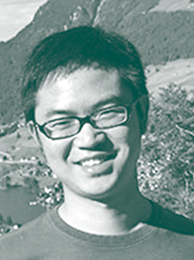
Charles is a 5th year PhD student in Civil and Environmental Engineering, where he is advised by Prof. Denise Mauzerall. His research focused on the better representation of the aerosol-radiation interaction through implementation of the internal mixing between black carbon and other aerosol species in order to accurately quantify the radiative forcing of aerosols. He is now conducting interdisciplinary research that detail how air pollution affect solar energy resource, solar photovoltaics electricity generation, grid integration of renewable energy and investment return. The objective of his research is to reveal the close interaction between air pollution, climate and renewable energy resource, and that air pollution mitigation would create co-benefits for renewable resource and climate change mitigation.
-
Herrera-Estrada, Julio (‘15 - ‘17)
Civil and Environmental Engineering
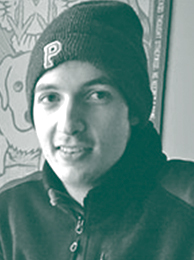
Julio’s research revolves around the study of droughts with the goal of improving their seasonal forecasting, their future projections under climate change, and the estimates of their impacts on the Water-Energy-Food Nexus. He studies how droughts evolve in time and space throughout the North American continent, and the role that feedback mechanisms between the land surface and the atmosphere play in controlling droughts’ dynamics. Other projects that Julio is working on seek to quantify the effect that droughts and heat waves have had on the prices of retail electricity in the American West, and on quantifying and reducing the uncertainties in the future projections of droughts in the 21st century that arises from the diversity of global climate models considered.
-
Guo, Bo (‘14 - ‘16)
Civil and Environmental Engineering
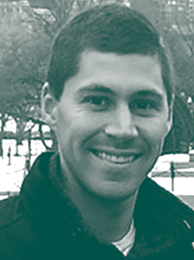
Bo Guo is a PhD candidate in the department of Civil and Environmental Engineering. His research focuses on fundamental understanding and computational modeling of flow in porous media. Currently, Bo has been developing a family of multi-scale models for fluid injection into large-scale geological systems. These multi-scale models will provide computationally efficient modeling tools to study the fluid migration and pressure response in geological formations due to fluid injection, which are essential for risk assessments of the environmental systems, for example, geological CO2 sequestration and seawater intrusion, and engineering optimization of energy systems, such as geo-energy storage.
-
Golston, Levi (‘15 - ‘17)
Civil and Environmental Engineering
Levi studies in the field of atmospheric chemistry where he is advised by Dr. Mark Zondlo. His research interests focus on the topic of quantifying emissions from local sources using mobile laboratory and UAV-based techniques. This work is facilitated by the development and testing of new, mid-infrared based, compact laser spectrometers that can meet the low power and weight requirements of these platforms. This capability is especially applied to understanding the magnitude and sources of methane leakage from unconventional natural gas production systems, which have proliferated recently in the U.S. and globally. This research has implications for climate risks from shale gas production and is key to understanding the footprint of natural gas relative to other energy sources.
-
Edwards, Ryan (‘15 - ‘17)
Civil and Environmental Engineering
Ryan’s research is investigating the potential environmental impacts and opportunities associated with unconventional oil and gas production. His work involves the development of numerical models of fluid flow in unconventional reservoirs. Ryan’s projects include an investigation into the fate of the aqueous hydraulic fracturing fluid that is injected into unconventional formations during fracturing operations, and an investigation into the potential for CO2 sequestration in depleted shale gas formations. He is also interested in the practical and policy implications of his technical work and is assessing the feasibility and cost of CO2 sequestration in shales, informed by the results of his modeling study.
-
Charpentier, Victor (‘15 - ‘17)
Civil and Environmental Engineering
Victor is a graduate student in the Department of Civil and Environmental Engineering advised by Professor S. Adriaenssens. His research interests lie in reducing energy consumption of buildings and elastic deformation of shell structures. The Department of Energy estimates that around 30% of the total american energy consumption takes place in buildings. Victor is working on active façades (shading systems) for energy efficiency and specifically on the use of large elastic deformations of thin shell structures.
-
Bou-Zeid, Elie
Civil and Environmental Engineering
Combining numerical, experimental, and analytical tools, Bou-Zeid and colleagues study the basic dynamics of flow and transport in environmental systems, with a focus on how these dynamics relate to problems in energy, hydrology, atmospheric sciences, and air quality. The current research interests of the Bou-Zeid group center on measurements and simulations of thermal exchanges between buildings and the atmosphere; urban microclimatology and hydrology; boundary layer meteorology and the representation of the atmospheric boundary layer in weather and climate models; environmental fluid mechanics and turbulence; nested multiscale modeling, and wireless sensor networks.