Chemistry
-
Elikan, Max
Chemistry

AY 24-25 PECS Group Project Coordinator
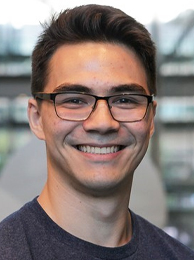
Elikan is interested in advancing the biology, chemistry, and engineering interface towards applications in energy and the environment. Elikan’s current research involves engineering new photoswitchable high-affinity protein-protein interactions to be used in metabolic engineering for green chemical synthesis, new biomaterials, and protein purification. Ultimately, Elikan’s goal in the long-term is to engineer proteins and whole microorganisms for sustainable chemical production, renewable energy, and bioremediation using techniques and skills from analytical chemistry and chemical and biological engineering. Elikan is advised by José Avalos, Associate Professor of Chemical and Biological Engineering and the Andlinger Center for Energy and the Environment.
-
Smith, Michael (‘21 - ‘23)
Chemistry
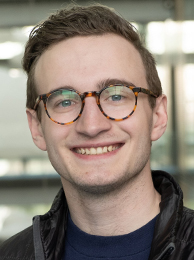
Smith’s research interests lie at the intersection of materials science and catalysis where he works on the development of carbon capture and utilization (CCU) technologies for producing recycled carbon-based fuels from renewable energy inputs. His research focuses on utilizing metal-organic framework materials as electrocatalysts for CO2 reduction because their material properties can provide dexterity in controlling reaction microenvironments, supporting and stabilizing electrochemically active metal nanoparticles, and modulating bulk heterojunctions to increase the CO2 concentration near catalyst surfaces. He is advised by Assistant Professor Michele Sarazen and Professor Bruce Koel in chemical and biological engineering.
-
Reinhold, Adam (‘21 - ‘23)
Chemistry
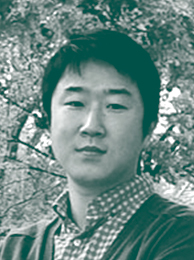
Reinhold is enrolled in the joint-degree program with the Princeton Institute for the Science and Technology of Materials (PRISM) where he hopes to help develop more efficient and cleaner photovoltaic materials using ultrafast spectroscopic techniques. His current research focuses on understanding the fundamental photophysical properties underlying new small-molecule acceptors utilized in highly efficient organic photovoltaic cells. He is advised by Gregory Scholes, the William S. Tod Professor of Chemistry.
-
McNeely, Kelsey (‘08 - ‘10)
Chemistry
Kelsey’s research focused on increasing hydrogen production by cyanobacteria via genetic engineering. Cyanobacteria are photoautotrophs that use sunlight and water to fix carbon dioxide from the atmosphere. This method of biomass accumulation alone makes cyanobacteria exciting candidates for climate change research, but moreover they can utilize their carbon stores for hydrogen production under certain conditions. By eliminating competing pathways, either via metabolic control or genetic control, the hydrogen produced can be dramatically increased. It is our goal to construct a modified strain of cyanobacteria that could produce hydrogen at economically viable levels.
-
Hu, Yuan (‘13 - ‘15)
Chemistry
The theme of Yuan’s research at Princeton is called carbon mitigation – chemically converting CO2 into useful products, such as fuels or small organics. Specifically, Yuan conducts photoelectrochemical reduction of CO2 using photocathodes made of various semiconducting materials to harvest solar energy to drive the electrochemical reaction, and trying different molecular catalysts as well.
-
Paris, Aubrey (‘16 - ‘18)
Chemistry
Aubrey Paris is a National Science Foundation Graduate Research Fellow in the Chemistry Department advised by Dr. Andrew Bocarsly. Her research involves optimizing catalyst systems that electrochemically transform carbon dioxide into reduced, energy-dense products for the dual purposes of achieving atmospheric remediation and developing new fuel sources. Aubrey is also a Senior Fellow at the Institute on Science for Global Policy (ISGP), an international science policy think-tank, which has led her to work on issues ranging from sea level rise and severe storms to infectious disease, food safety, and synthetic biology. As an active science communicator, she is a co-host of “The Forum,” the ISGP’s bi-weekly audio podcast which has accumulated listeners in over 50 countries across six continents. Aubrey received B.S. degrees in Chemistry and Biology from Ursinus College in 2015.