



2025 Internship Project Overview
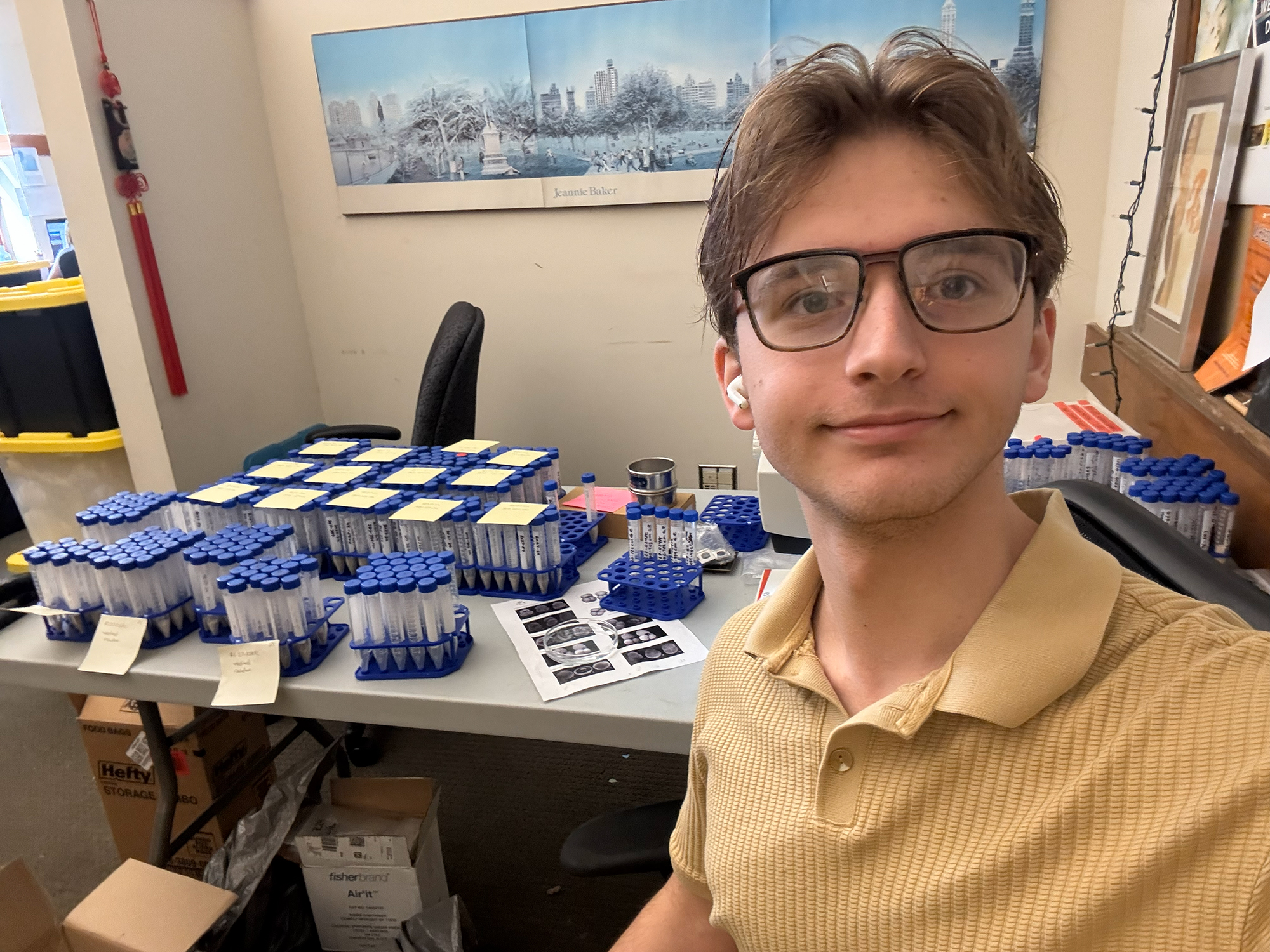
To investigate the Messinian Salinity Crisis, we examined N-15/N-14 nitrogen ratios in forams. Phytoplankton take up nitrate from the sea and preferentially take nitrate that has N-14 because it’s lighter and takes less energy to use. They usually take N-14 unless there is less nitrate in the sea, in which case they are forced to take N-15 nitrate. During the Messinian Salinity Crisis, the gateway between the Atlantic Ocean and the Mediterranean Sea closed, which cut off nitrate flow into the Mediterranean Sea from the Atlantic Ocean. My primary responsibilities in this investigation were processing sediment samples. I did this by cleaning up sediment samples and organizing them by their characteristics, such as core depth, age, etc. I then meticulously searched for a specific type of forams: Orbulina universa and Globigerinoides ruber. After isolating the samples, my mentor walked me through the process of creating nitrous oxide and measuring it in a mass spectrometer to determine the N-15 vs. N-14 ratio.
ORGANIZATION/RESEARCH GROUP
Sigman Research Laboratory, Department of Geosciences, Princeton University
LOCATION
Princeton, New Jersey
Interns

Principal Investigator

Mentors
- Udara Amarathunga, Postdoctoral Research Fellow, Geosciences