



2025 Internship Project Overview
Per- and polyfluoroalkyl substances (PFAS), often referred to as “forever chemicals,” are a class of synthetic compounds that are widespread in the environment, highly persistent and harmful to humans. Recently, the bacteria Acidimicrobium sp. strain A6 was discovered to be capable of biodegrading PFAS. The Jaffé Lab is working to further understand the behavior of A6 and develop methods to implement its biodegradation potential for wastewater treatment. One approach under investigation is the microbial electrolysis cell (MEC), in which A6 degrades PFAS within a controlled system, independent of other species it typically relies on in the environment. Specific MEC parameters, such as anode material and the diffusive properties of the membrane, were evaluated to identify conditions that optimize PFAS removal. Another strategy explored was the use of clay sorbents, which claimed to adsorb PFAS onto their surfaces, promoting A6 access to the contaminant and thus more efficient degradation. Findings from this summer’s research indicate that these clays are effective adsorption materials and facilitate PFAS biodegradation.
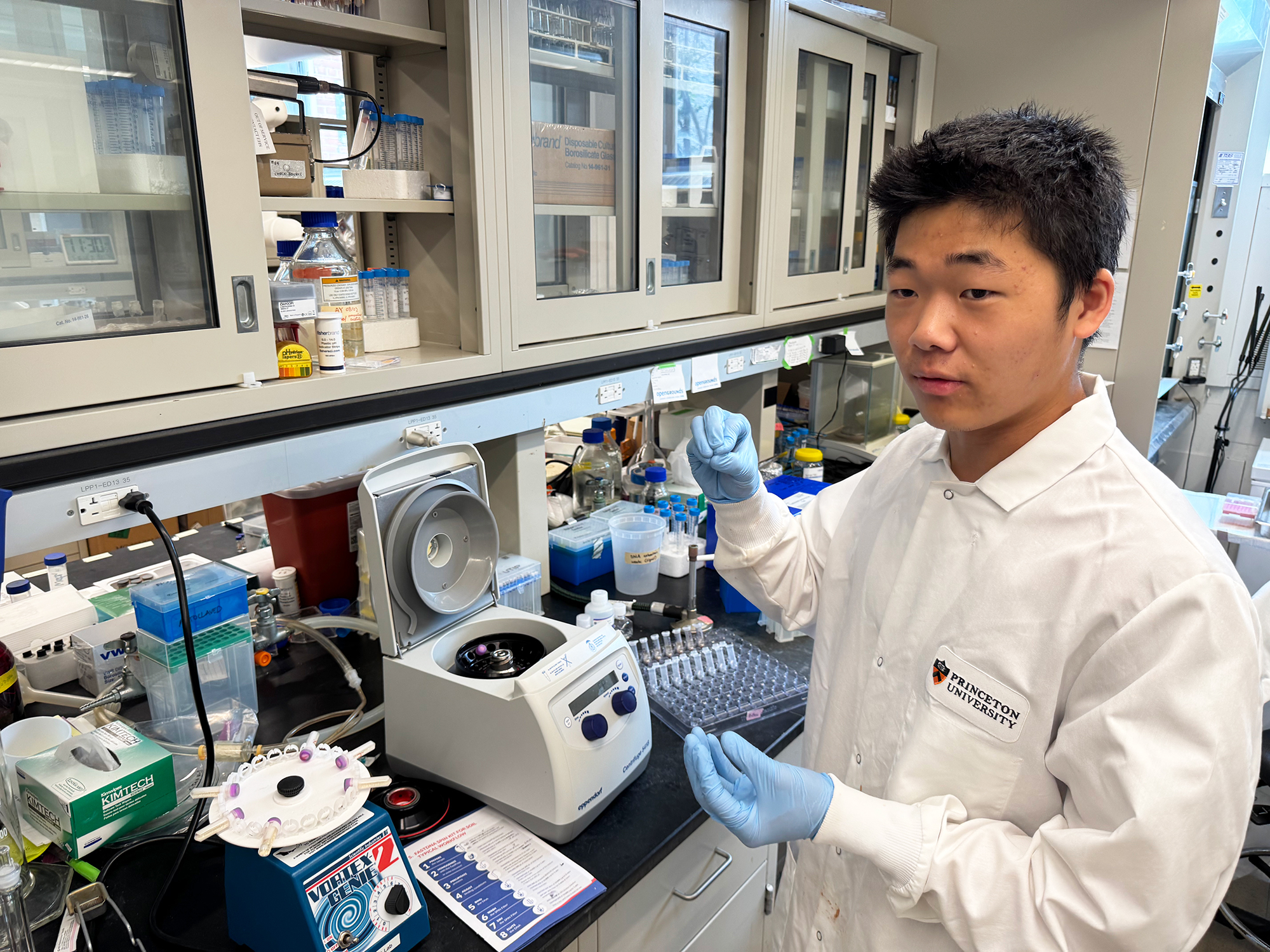
ORGANIZATION/RESEARCH GROUP
Environmental Biogeochemistry Research Group, Department of Civil and Environmental Engineering, Princeton University
LOCATION
Princeton, New Jersey
Interns


Minor(s): Bioengineering, Music
Click to view the end-of-project presentation
Principal Investigator
Mentors
- Camila Llerena-Olivera, Ph.D. Candidate, Civil and Environmental Engineering
- Chiara Smorada, Ph.D. Candidate, Civil and Environmental Engineering