



2025 Internship Project Overview
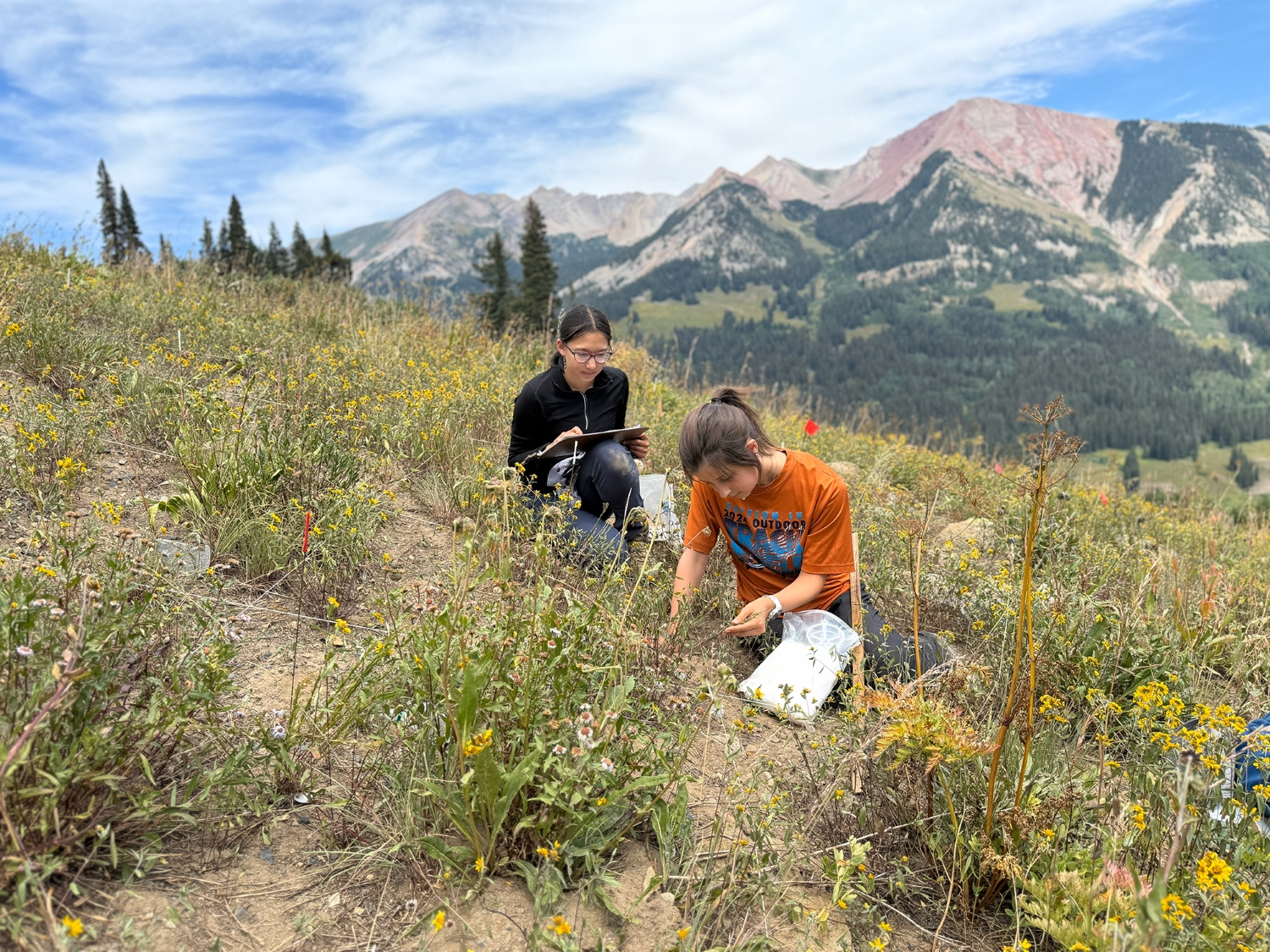
We investigated the relationship between Linum lewisii (Lewis flax) and Melampsora lini (rust) in Colorado using epidemiological and evolutionary perspectives to understand how this unique plant pathogen system is changing. Past work shows that disease varies with elevation and our data collection aims to understand the environmental factors that drive this pattern. In addition to collecting weekly epidemiologic data from our 12 permanent sites, we employed a common garden experiment to study if the disease varied based on the genetics of the flax at different elevations or the differing conditions which flax experiences at different elevations. Researching Lewis flax’s resistance patterns offers insight into how plants might adapt to climate change. This can be further extrapolated through its close relationship to agricultural flax. As climate change alters global food production, understanding genetic resistance patterns to help cultivate more resistant and hardy plants will become increasingly more important.
This internship is connected to the HMEI Water Grand Challenges project, “Does Hydrology Drive Pathogen Impact on Plant Health? Beyond the Drought Paradigm.”



ORGANIZATION/RESEARCH GROUP
Metcalf Lab, Department of Ecology and Evolutionary Biology, Princeton University
LOCATION
Rocky Mountain Biological Laboratory, Gothic, Colorado
Interns

Minor(s): Chinese, Environmental Science

Minor(s): Sustainable Energy
Click to view the end-of-project presentation
Principal Investigator

Mentors
- Amanda Gibson, Associate Professor of Biology, University of Virginia
- Juliana Jiranek, Ph.D. Candidate, University of Virginia