Organizers
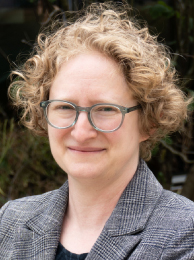 |
Anna Lehr MueserPOSTDOCTORAL RESEARCH ASSOCIATE, HIGH MEADOWS ENVIRONMENTAL INSTITUTE, PRINCETON UNIVERSITYAnna Mueser is a historian of science and the environment in the twentieth century. Her work explores place, historical memory, knowledge production, and environmental regulations . Her current book project, The Sixth Borough, examines citizen relationships with the environmental regulatory state in the twentieth century through the example of New York City’s drinking water. The book shows how decisions about environmental regulation, land use, and government services have been shot through with historical memories about the meaning and lost futures of the rural watershed. |
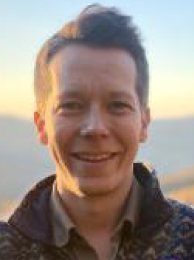 |
John KanbayashiDEPARTMENT OF HISTORY AND SOCIOLOGY OF SCIENCE, UNIVERSITY OF PENNSYLVANIAJohn Kanbayashi (né Hayashi) is a historian of environment, science, and technology. His research seeks to understand how people in East Asia came to know and use the non-human world in new ways amidst global political turmoil, with a focus on Japan and Taiwan in the 20th century. His current book project, Colonial Watershed, examines Taiwan’s rivers as sites of contestation and transformation under the rule of the Japanese Empire (1895-1945) and the Republic of China (1945-present). In it, he argues for the importance of the watershed–as scientific concept and infrastructural object–in propelling state power into remote regions and the lives of people residing there. In 2026-2027, John Kanbayashi is a Fellow of the Shelby Cullom Davis Center for Historical Studies. |
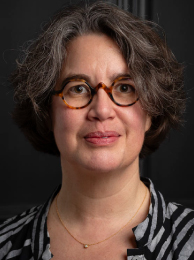 |
Erika Lorraine MilamCHARLES C. AND EMILY R. GILLISPIE PROFESSOR IN THE HISTORY OF SCIENCE, DEPARTMENT OF HISTORY, PROGRAM IN THE HISTORY OF SCIENCE, PRINCETON UNIVERSITYErika Milam has published widely on the history of evolutionary theory and animal behavior. Her work explores how scientists and public audiences have used animal exemplars to naturalize particular behaviors in humans, from aggression to sex. Her current research charts the post-WWII efflorescence of long-term field studies of animal behavior, the consolidation of behavioral ecology as a discipline, and the networks of collaboration that sustain field research in far flung locales. Its working title is The Hyena & the Jay: Long-Term Research and the Birth of Behavioral Ecology. |
Participants
 |
Patrick BittermanKENT STATE UNIVERSITYPatrick Bitterman is an Assistant Professor of Geography at Kent State University, where he studies the institutional and spatial constraints on adaptation in watershed governance. His work spans the Chesapeake Bay, Lake Champlain, and the Great Lakes, with recent attention to the role of models in shaping restoration policy. |
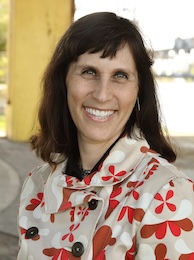 |
Rachel HavrelockPROFESSOR, DEPARTMENTS OF ENGLISH AND URBAN PLANNING/POLICY, UNIVERSITY OF ILLINOIS AT CHICAGORachel Havrelock is a professor in the Departments of English and Urban Planning/Policy at University of Illinois at Chicago. Following decades of work on transboundary water issues in the Middle East, Rachel turned her attention to the North American Great Lakes and founded The Freshwater Lab. |
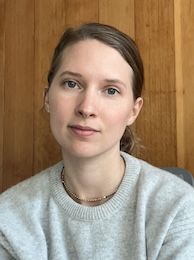 |
Jane Robbins MizeASSISTANT PROFESSOR OF LIBERAL ARTS, SCHOOL OF THE ART INSTITUTE OF CHICAGOJane Robbins Mize is an Assistant Professor of Liberal Arts and the School of the Art Institute of Chicago. Her first book, Water Works: Experimental Narratives of Settler Industrialization (under contract, Duke University Press), examines case studies including the Los Angeles Aqueduct, the Central and South Florida Flood Control Project, the James Bay Project, and the Hoover Dam to reveal how writers retheorize human-water relations at sites of large-scale industrial transformation. |
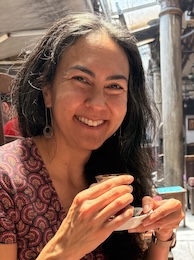 |
Kimberley Ahn ThomasASSOCIATE PROFESSOR AND GRADUATE CHAIR, DEPARTMENT OF GEOGRAPHY, ENVIRONMENT AND URBAN STUDIES, TEMPLE UNIVERSITYKimberley Thomas is an Associate Professor of political ecology and Graduate Chair in the Department of Geography, Environment and Urban Studies at Temple University. Her research on environmental justice and agrarian change examines the political economy of adaptation, the relational production of security and insecurity, and the vulnerabilizing effects of water infrastructure at multiple scales. She directs the Climate Justice Field School and serves as Vice-Chair for the Development Geographies Specialty Group of the American Association of Geographers. |
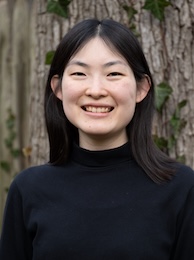 |
Shoko YamadaASSISTANT PROFESSOR, ANTHROPOLOGY, SOPHIA UNIVERSITYShoko Yamada is an anthropologist studying social and ethical life in the aftermath of environmental ruination. Her current book project, Promises of Repair: Social Life after Environmental Injury in Japan, chronicles decades-long attempts to repair damaged landscapes in a river basin in northcentral Japan. In tracing the everyday dynamics of these prolonged efforts across generations, the book illuminates how people grapple with the vast timescales of environmental predicaments today. Before joining Sophia, Yamada was a postdoctoral fellow at the Princeton Institute for International and Regional Studies at Princeton University. She received her Ph.D. with distinction in Anthropology and Environmental Studies from Yale University. She currently serves on the board of the Society for East Asian Anthropology, a section of the American Anthropological Association. |
 |
Lizzie YarinaASSISTANT PROFESSOR OF ARCHITECTURE AND PLANNING, NORTHEASTERN UNIVERSITYLizzie Yarina is an Assistant Professor of Architecture and Planning at Northeastern University, where her research focuses on regional planning and climate resilience. Her current book project Plans that Leak (University of California Press) investigates the design politics of climate change adaptation in Vietnam’s Mekong Delta through the lens of representation. |
Guests and Speakers
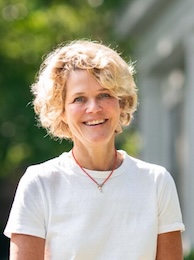 |
Eliza GriswoldDIRECTOR, PROGRAM IN JOURNALISM; PROFESSOR OF THE PRACTICE, PRINCETON UNIVERSITYEliza Griswold is a Pulitzer Prize-winning journalist, translator, and poet. As director of the Program in Journalism at Princeton University, she oversees the undergraduate program, develops new curricular offerings, and collaborates with campus partners in planning University-wide programs and events. Griswold has been a contributing writer for The New Yorker for more than two decades, where she has extensively covered religion, politics, and the environment. She has received prestigious fellowships from Harvard University, Harvard Divinity School, the New America Foundation, and the Guggenheim Foundation. She previously served as a distinguished writer in residence at New York University. Recognized across disciplines, Griswold has been awarded top prizes in various fields, including the Rome Prize in Poetry by the American Academy of Arts and Letters, the J. Anthony Lukas Prize for nonfiction, and a PEN award for translation. An alumna of Princeton, Griswold earned a bachelor of arts in English from the University in 1995. She previously taught in the Program in Journalism as a Ferris Visiting Professor in 2014-15. |
 |
Jim WaltmanEXECUTIVE DIRECTOR, THE WATERSHED INSTITUTEJim Waltman has served as Executive Director of The Watershed Institute since April 2005. He has led the organization through a period of strong program expansion and accomplishment, spearheaded the broadening of its mission and a change to its name and brand. He also led the creation of the Watershed Center for Environmental Advocacy, Science & Education. During Jim’s tenure, The Watershed Institute has helped secure major environmental laws and regulations aimed at reducing polluted stormwater runoff and flooding in New Jersey; gained regulatory protection for the Stony Brook, Back Brook, and Jacob’s Creek; preserved more than 800 acres of open space that had been proposed for development; removed several dams from the Millstone and Raritan Rivers to help restore American shad and other migratory fish species; stopped the proposed PennEast gas pipeline; and created more than a dozen new programs and events including the annual New Jersey Watershed Conference. Jim received a biology degree from Princeton University and a Master of Environmental Studies from the Yale School of the Environment. |
 |
Amanda D’AmicoBOOK ARTIST, TINY REVOLUTIONARY PRESSAmanda D’Amico is a book artist working under the imprint Tiny Revolutionary Press in Philadelphia, PA. She was the Master Printer at the Borowsky Center for Publication Arts and taught in the MFA Book Arts/Printmaking Program at the University of the Arts for 13 years, as well as at Tyler School of Art at Temple University. |